Toys
The toy industry designs, makes, tests, licenses and ships toys and games for children, from dolls, plush and building sets to die-cast cars and electronic toys.
1400
Nuremberg's tax lists name two "Tockenmacher", makers of small clay figures and turned dolls, by the account of the economic historian Helmut Schwarz, a former director of the city's toy museum. The city's own page says the first doll maker, then called a "Dockenmacher", appears in its tax books that year.
37
Milestones achieved across 6 domains.
8
To watch for: announced, not yet confirmed outside.
12
Open deliverables. Nobody has shipped them.
In one minute
Where it started
Nuremberg's tax lists named doll makers in 1400, and by 1914 the city had 243 toy businesses, many of them stamping toys from tinplate. In the 20th century plastic took over: the LEGO Group filed for a patent on its stud-and-tube brick in 1958 and switched to ABS plastic in 1963, and Hong Kong passed Japan as the largest toy exporter in 1972 before its firms moved their factories to mainland China. Characters became a business of their own, from Lionel's Mickey Mouse handcar of 1934 to Kenner's Star Wars figures of 1978.
Where it stands
World toy sales reached $123.0 billion in 2025, up 8% on 2024, and licensed toys made up 37% of sales, by the market research firm Circana's count. China made 78.3% of the toys the United States imported in 2024, by the US International Trade Commission's count, and the LEGO Group reported 2025 revenue of DKK 83.5 billion, with a new factory in Vietnam. Safety rules have tightened since the lead-paint recalls of 2007, and toys that talk through AI chatbots are the newest worry: in September 2026 California banned toys with companion chatbots for children under 16 until 2031.
What is open
Much of the open work is measuring things that are still judged by eye or claimed without data: how tightly bricks grip, what age a toy suits, whether marketplace listings show choking warnings, and whether a collectible is fake. AI toys need a spoken safety test anyone can rerun and a measured map of the data they send. Other jobs are open records: a ledger of toy licenses, a census of the dolls on sale, text building instructions for blind builders, and a score for each autumn's hot-toy lists.
Domains
AchievedWatch forOpen
Domain
Progress
Last achieved
Watch for
Open
Design
Design decides what a toy is and how it plays: designers sketch and model it, build prototypes, try them with children, and protect the result with patents and other rights.
6 · 1 · 2
Last achievedDesigned with the community2023
Watch forText to buildable brick models
2
openMolding and assembly
Molding and assembly turns a toy design into finished pieces: shaping parts from metal or plastic, printing and painting them, sewing soft toys, and putting everything together and into boxes.
6 · 1 · 2
Last achievedBottle-plastic brick dropped2023
Watch forHalf renewable or recycled resin
2
openSafety testing
Safety testing checks that a toy cannot choke, cut, poison or otherwise hurt a child, by measuring it against laws and standards, often in a laboratory outside the company that made it.
7 · 1 · 2
Last achievedMarketplace toys fail tests2025
Watch forA digital passport per toy
2
openElectronics in toys
This work puts sound, chips, radios and now AI conversation into toys, and has to keep the data such toys collect safe.
7 · 3 · 2
Last achievedCalifornia pauses chatbot toys2026
Watch forMattel toys with OpenAI
2
openLicensing
Licensing lets a toy company make toys of a character, brand or story that someone else owns, in return for royalties, a share of each sale, and often a guaranteed minimum payment.
6 · 1 · 2
Last achievedAn artist's monster sells billions2025
Watch forA Labubu feature film
2
openSeasonal supply
Seasonal supply is the yearly cycle of showing, ordering, making and shipping toys so that they are in shops before the holidays, when most toys are bought.
5 · 1 · 2
Last achievedEmergency tariffs struck down2026
Watch forTariff refunds under appeal
2
open
Narrower industries
Trading cards and collectibles
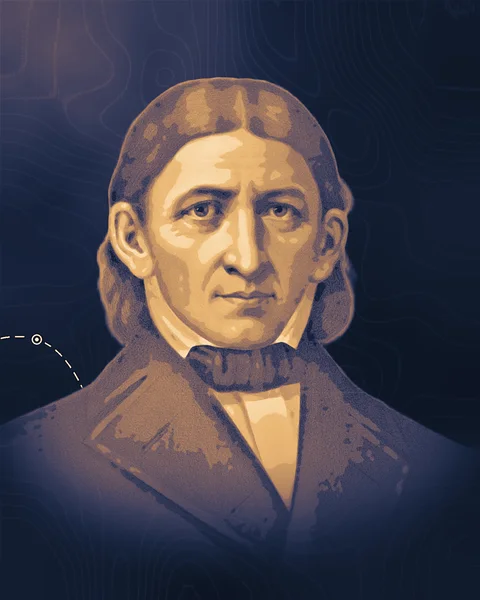
Figureheads
1 person
Advances to build with
2 research notes
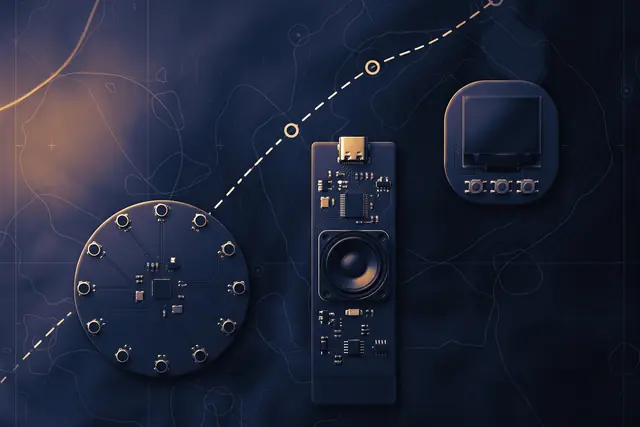
Claude Fable 5.2
Three working devices
Anthropic says its AI model Claude Fable 5.2 designed three prototype devices that worked without electrical modifications, with no outside test reported.

NVIDIA GR00T 2
Five demonstrations per task
By NVIDIA's own test, its robot model GR00T 2 averages 95% success after five demonstrations of a task, on 50 tasks picked from those it learns that way.
Open in toys
3 of 12 open deliverables
Open · Design
Text instructions for brick models
An open tool that reads the building steps of a brick model in the LDraw file format (the open format fans and the BrickLink Studio program use) and writes instructions a blind builder can follow by screen reader, braille display or audio: which part to pick, described by shape, size and color, where it goes relative to parts already placed, and a check to make after each step.
Built with what exists
The LDraw parts library and its Official Model Repository of set models, an LDraw reader such as LPub3D or a Python parser, a large language model such as Claude Fable 5.2 to phrase the descriptions (see the Note "Three working devices"), a text-to-speech voice, and a screen reader such as NVDA or VoiceOver for testing.
Open · Molding and assembly
Open clutch-power benchmark
A test stand and public data set that measure the force needed to press two building bricks together and to pull them apart, for genuine LEGO bricks of different ages and factories and for compatible bricks from other brands, before and after repeated use. Clutch power depends on how closely the mold holds its sizes, so the data would show how well each maker's molding holds tolerance.
Built with what exists
A load cell of about 5 kg with an HX711 amplifier, a motorized linear stage or a 3D-printed screw stand driven by a stepper motor, an Arduino or Raspberry Pi Pico, digital calipers, and Python for analysis; or a commercial motorized force tester where one is available.
Open · Safety testing
Choking-warning audit of listings
A repeatable public audit of toy listings on large online marketplaces that checks whether listings for toys with small parts, small balls, marbles or latex balloons show the choking warning that US law has required in Internet advertising since December 2008. A browser agent collects public listing pages at a slow rate, a model decides whether each product needs a warning and whether the page shows one, and people check a random sample.
Built with what exists
A browser agent such as Browser Use (see the Note "Deleting 80% to start over"), a vision-language model to read listing photos and text, a model that answers many fixed-answer questions per listing such as Gemini Decision 1 (see the Note "A thousand questions, one pass"), Python, and Label Studio for the human checks.