Industries / Health / Healthcare
Medical labs
Medical labs test blood, urine, tissue and other samples taken from patients and report the results to the doctors and hospitals who use them to diagnose and treat.
1895
The William Pepper Laboratory of Clinical Medicine opened beside the University Hospital in Philadelphia, with rooms for microscopic, chemical and bacteriological tests on patients' samples, and became the hospital's center for all laboratory testing. The University of Pennsylvania calls it the nation's first fully equipped laboratory for both routine and investigative work.
46
Milestones achieved across 7 domains.
13
To watch for: announced, not yet confirmed outside.
14
Open deliverables. Nobody has shipped them.
In one minute
Where it started
Chemists such as Johann Joseph Scherer at the Juliusspital in Würzburg were testing patients' blood and urine in the 1840s, and Gram's stain of 1884 sorted bacteria under the microscope. In 1895 the Pepper Laboratory in Philadelphia gave a hospital its own building for microscopic, chemical and bacteriological tests. Machines arrived in the 1950s with Wallace Coulter's cell counter and Leonard Skeggs' AutoAnalyzer, and outside checks began in the late 1940s, when surveys sent the same samples to many labs and got very different answers.
Where it stands
Routine testing is now largely automated: conveyors carry tubes between analyzers, and one US hospital's software released 99.5% of its chemistry results with no person reviewing them. The weak points sit around the analyzer, not in it: a 1997 Padova study traced 68% of lab mistakes to the steps before the test, and a 2009 US study found 7.1% of abnormal results never reached the patient. Software that reads culture plates and prostate biopsies now has FDA authorization, while a widely quoted figure, that lab results drive 70% of medical decisions, has no traceable source.
What is open
Many of the open jobs are public tables and answer keys that nobody has built: which substances throw off which tests, how far each brand of hormone test sits from the reference method, what normal ranges labs actually print, and HER2 scores from many pathologists at once. Others are outside tests of new tools: AI that phones critical results, AI that reads quality-control charts, slide-reading agents on fresh slides, and a low-cost robot that racks tubes by barcode. None needs a real patient sample; each uses published data, made-up results, practice tubes filled with dyed water, or actors.
Domains
AchievedWatch forOpen
Domain
Progress
Last achieved
Watch for
Open
Collecting and moving samples
Drawing blood and other samples, labeling each tube, and getting it to the analyzer in the state it left the patient.
6 · 1 · 2
Last achievedFingertip draws for routine panels2024
Watch forA robot draws blood
2
openBlood and chemistry analyzers
Machines that count blood cells and measure salts, sugars, proteins, hormones and drugs in blood, from the hospital's main lab to a handheld reader at the bedside.
7 · 1 · 2
Last achievedBone marrow read on screen2026
Watch forMass spectrometry goes routine
2
openMicrobiology
Finding which bacteria, fungi or viruses are causing an infection, and which drugs will still kill them.
7 · 2 · 2
Last achievedCutoffs reach the machines2025
Watch forDrug results in two hours
2
openPathology slides
Cutting tissue removed from patients into thin slices, staining it on glass slides, and reading it under a microscope or on a screen to diagnose diseases such as cancer.
7 · 2 · 2
Last achievedBigger models, small gains2025
Watch forAI reads frozen sections
2
openGenetic testing
Reading a person's chromosomes and DNA, or a tumor's, to find changes that cause disease, predict it or guide treatment.
7 · 3 · 2
Last achievedScreening is not diagnosis2022
Watch forA sharper splicing predictor
2
openQuality control
Checking that a lab's results are right: running control samples of known value alongside patients' samples, comparing results with other labs, and being inspected against the rules.
6 · 2 · 2
Last achievedCourt strikes the test rule2025
Watch forNeural networks catch drift sooner
2
openReporting results
Getting each result, with its units and normal range, to the person who has to act on it, and making sure the dangerous ones are noticed in time.
6 · 2 · 2
Last achievedSoftware releases most results2014
Watch forLabs explain results with AI
2
open
Narrower industries
Advances to build with
2 research notes

NVIDIA GR00T 2
Five demonstrations per task
By NVIDIA's own test, its robot model GR00T 2 averages 95% success after five demonstrations of a task, on 50 tasks picked from those it learns that way.
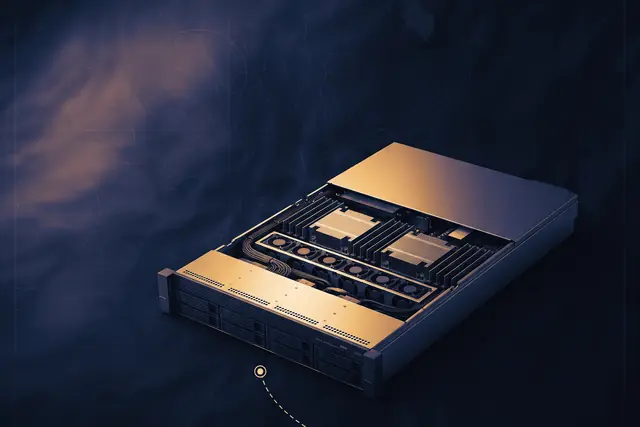
Mistral Large 4
A trillion open parameters
Mistral published its Large 4 AI model, a trillion numbers by its count, free to download and sell, though firms that rent out models need a separate license.
Open in medical labs
3 of 14 open deliverables
Open · Collecting and moving samples
A robot that racks tubes
A low-cost robot arm that takes mixed blood tubes from a bin, reads each barcode, and places each tube in the rack slot for its destination analyzer, trained from human demonstrations. Use practice tubes with colored caps, filled with dyed water and labeled with made-up barcodes, so no real samples are involved.
Built with what exists
an SO-101 arm and Hugging Face's LeRobot software (see the Note "No download"); a small vision-language-action model, one that turns camera images and an instruction into arm movements, such as SmolVLA, NVIDIA's GR00T 2 (see the Note "Five demonstrations per task") or Runway's open Praxis-1 weights (see the Note "Open robot model weights"); a USB camera; the open-source ZXing barcode reader. The advance is robot models that learn a pick-and-place task from tens of recorded demonstrations instead of hand-written motion code.
Open · Blood and chemistry analyzers
An open table of interferences
A free, searchable table of which substances disturb which blood tests, and at what levels: hemoglobin from burst red cells, bilirubin, fats, biotin and common drugs. Build it with AI models from the FDA's public 510(k) decision summaries, the review documents for each cleared test, and have trained people check a sample.
Built with what exists
the FDA 510(k) database and its decision summary PDFs; pdftotext or another PDF table reader; AI models that read tables and scanned pages, such as Claude or Gemini, or an open-weight model such as Mistral Large 4 (see the Note "A trillion open parameters"); a simple web page for lookups. The advance is AI agents that can work through hundreds of long technical documents and cite the page for each value, as in Enveda's Claude-based review of drug-making records (see the Note "Seven more flagged").
Open · Microbiology
A dated FDA cutoff table
A machine-readable table of every breakpoint the FDA has recognized, added or set aside since its breakpoint website opened on 13 December 2017, each row dated and linked to the FDA page or Federal Register notice it came from. Add a small checker that reads a lab's exported breakpoint table and flags each cutoff that no longer matches current CLSI, EUCAST (the European committee) or FDA values.
Built with what exists
the Federal Register API; the FDA breakpoint pages; the AMR package's breakpoint table (EUCAST and CLSI, 2011 to 2026) to compare against; an AI model such as Claude, Gemini or the open-weight Mistral Large 4 (see the Note "A trillion open parameters") to turn pages into rows, with a script that checks every extracted value against the source text. AI models that review long regulatory records are the advance that makes this a small job (see the Note "Seven more flagged").
Where it sits
Broader