Industries / Finance and business services
Legal and professional services
Legal and professional services sell expert judgment for a fee: lawyers research, draft and argue the law, accountants keep and audit the books, tax practitioners work out and file what is owed, and consultants advise managers.
1292
Edward I of England ordered the judges of the Common Bench to choose "the best lawyers from the counties" to serve the king's court, "and no others", which put both kinds of lawyer, attorneys and pleaders, under the judges' control.
37
Milestones achieved across 7 domains.
8
To watch for: announced, not yet confirmed outside.
12
Open deliverables. Nobody has shipped them.
In one minute
Where it started
By the 1280s England's royal courts had paid lawyers, and in 1292 Edward I put them under the control of the judges. The method behind accounting reached print in Venice in 1494, in a treatise on double-entry bookkeeping in Luca Pacioli's Summa, and Edinburgh's accountants received a royal charter in 1854. Consulting grew partly out of a Boston testing laboratory that Arthur D. Little co-founded in 1886.
Where it stands
The work is still mostly reading and writing: case law, contracts, ledgers, tax returns and reports. Legal search moved online with LEXIS in 1973, and in 2012 a US judge approved software-assisted document review in what he called the first opinion to do so. AI tools now draft and check much of this work, and outside tests give mixed results: in a 2025 test, AI tools beat a lawyer baseline on research questions, while a public tracker lists 2,306 court decisions, as of 16 November 2026, about AI-made content such as invented citations.
What is open
The common gap is checking. Most of the open jobs below are free tests and answer keys, such as page numbers to check citations against, a blind test for AI document review and a check of every reference in published consulting reports, or public records turned into data, such as city accounts. Each can be started this month with public data, open-source tools and current AI models, and none of them gives advice to a real client.
Domains
AchievedWatch forOpen
Domain
Progress
Last achieved
Watch for
Open
Legal research
Finding the statutes, court decisions and rules that govern a question, and checking that they say what they are cited for.
7 · 1 · 2
Last achievedAI beats a lawyer baseline2025
Watch forChecking that citations support claims
2
openContracts
Drafting, negotiating, signing and keeping track of agreements between parties.
5 · 1 · 2
Last achievedLawyers still lead at redlining2025
Watch forAgents that strike deals
2
openLitigation and discovery
Preparing and fighting lawsuits, including discovery: each side's duty to hand over relevant documents and data to the other.
5 · 2 · 2
Last achievedA court accepts generative review2026
Watch forGenerative review beats TAR
2
openCourts and filings
How courts receive, store and publish case papers and hearings, and how people reach them.
4 · 1 · 2
Last achieved2,306 rulings on fake citations2026
Watch forA new federal filing system
2
openAccounting and audit
Recording what a business or government owns, owes, earns and spends, and having an independent auditor check that the accounts are fair.
5 · 1 · 2
Last achievedRules for data-driven audits2024
Watch forAudit agents for 130,000 auditors
2
openIn depthAccounting
Tax
Working out, filing and collecting taxes, and helping people and companies comply.
6 · 1 · 1
Last achievedModels tested on returns2025
Watch forEU invoices go digital
1
openIn depthTax preparation
Consulting
Advising companies and governments on strategy, operations and technology, for a fee.
5 · 1 · 1
Last achievedConsulting reports withdrawn2026
Watch forAgents beside every consultant
1
openIn depthConsulting
Other narrower industries
Court reportingLegalTechE-discovery
Figureheads
2 people
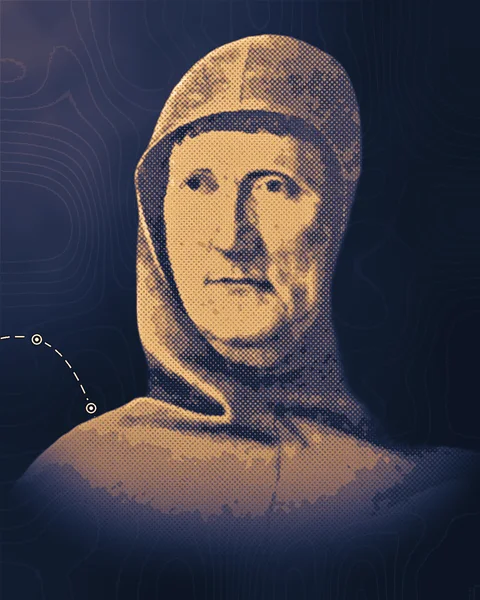
Luca Pacioli
c. 1445–1517
An Italian friar and mathematician, he put the Venetian merchants' double-entry bookkeeping into print in 1494, and his account became the model for bookkeeping manuals across Europe.
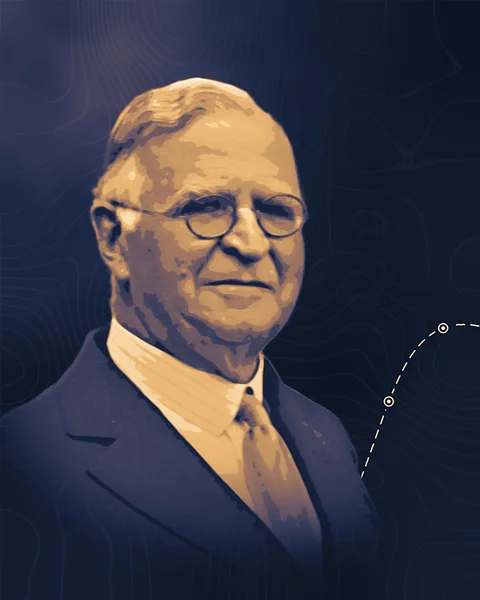
Paul D. Cravath
1861–1940
He ran his New York law firm on salaried associates hired straight from law school, trained in the office and either made partner or sent away, the model that large law firms and consulting firms still follow.
Advances to build with
1 research note

Open in legal and professional services
3 of 12 open deliverables
Open · Legal research
A free pin-cite checker
A free tool that reads a brief, finds each pin cite, and checks the quote or point against that page of the printed law report. A pin cite gives the exact page: "1 F.3d 1, 5" means volume 1 of the Federal Reporter, Third Series, a case that starts on page 1, and a point made on page 5.
Built with what exists
The Caselaw Access Project's free case files, whose web versions mark where each printed page begins (for example "2" and "3" in 1 F.3d 1, checked in this session); eyecite and the CourtListener citation lookup API, both from Free Law Project; a language model such as Claude or GPT-5 to compare each quote or point with the page text.
Open · Contracts
Two agents, one NDA
A public test in which two AI agents negotiate a mutual non-disclosure agreement (NDA, a contract to keep each other's information secret) for opposite sides. Each agent gets a written playbook of what its side may accept. Lawyers grade each final draft blind, beside drafts negotiated by pairs of people with the same playbooks. No real client is involved.
Built with what exists
Common Paper's Mutual NDA, a free standard form written by a committee of lawyers and licensed CC BY 4.0, whose one-page cover sheet holds the terms that get negotiated, such as purpose, term and governing law; two agents built with a framework such as the Claude Agent SDK; a shared document that records each change. (see the Note "Many agents, one budget")
Open · Litigation and discovery
Blind test for AI review
A shared test in which any document-review tool, generative or not, is run on the same public collection and the same document requests, and scored by assessors who do not know which tool marked which document.
Built with what exists
the TREC Legal Track collections (scanned tobacco-industry records, and the EDRM email collection used in 2010 and 2011) with their answer keys; new document requests written for this test; review tools built on Claude, Gemini, GPT and open-weight models; random sampling to estimate recall. (see the Note "A thousand questions, one pass")