Industries / Transport and vehicles
Aviation
Aviation is the business of flying passengers and cargo, together with the airports, air traffic control and maintenance shops that every flight depends on.
1914
On 1 January 1914 the St. Petersburg–Tampa Airboat Line flew its first scheduled trip across Tampa Bay, Florida, with Tony Jannus as pilot and the former St. Petersburg mayor Abram Pheil as passenger; IATA's history page calls it "the world's first regularly scheduled heavier-than-air airline".
40
Milestones achieved across 7 domains.
14
To watch for: announced, not yet confirmed outside.
14
Open deliverables. Nobody has shipped them.
In one minute
Where it started
On 1 January 1914 a Benoist flying boat carried one paying passenger across Tampa Bay on the first trip of a scheduled airline, which flew for about four months. From 1918 the US Post Office flew scheduled airmail, and its contracts later kept the first private airlines going. Britain opened the first control tower at Croydon in 1920, and computers began booking seats and building crew schedules in the 1960s.
Where it stands
IATA, the airlines' trade association, expects airlines to carry 5.1 billion passengers and 71.7 million tonnes of cargo in 2026, on revenue of $1.165 trillion, and to keep 2.0% of it as profit, half the 2025 margin, because of fuel costs and disruption in the Middle East. ICAO, the United Nations aviation agency, counted 85 accidents on 38.08 million scheduled flights in 2025, or 2.23 per million departures, down from 2.56 in 2024, though deaths rose from 296 to 387. Much of the daily work, such as stacking bags in holds and rebuilding crew rosters after a storm, is still done by hand or with closed software.
What is open
Nobody may experiment on a live aircraft or in live airspace, so the open jobs here are in public data, simulation and bench tests. This research found no public benchmark for crew recovery, transcribing controllers' radio, solving conflicts on real traffic, matching contrails to flights, reading maintenance logbook pages or converting cargo messages to IATA's new data standard. Low-cost robot arms, robot models that learn from a few demonstrations, and AI models that read documents and web pages put each of these within reach of a small team.
Domains
AchievedWatch forOpen
Domain
Progress
Last achieved
Watch for
Open
Flight operations
Flight operations is the work of planning and flying each trip: choosing the route and fuel load, finding the way, and handing parts of the flying to the autopilot.
5 · 1 · 2
Last achievedSolo cruise not shown safe2025
Watch forContrail avoidance at airline scale
2
openAir traffic control
Air traffic control is the work of keeping aircraft safely apart and moving them in an orderly flow, mostly through radio instructions from controllers on the ground.
6 · 2 · 2
Last achievedTracking aircraft from space2019
Watch forA rebuilt US control system
2
openAirports and ground handling
Airports and ground handlers move passengers and their bags between the curb and the aircraft door, and turn each aircraft around between flights: check-in, security screening, border checks, boarding, baggage sorting and loading.
5 · 3 · 2
Last achievedThe liquids limit eases2025
Watch forDriverless baggage tractors at Changi
2
openMaintenance and repair
This is the work of keeping airliners fit to fly: inspecting, servicing, repairing and overhauling aircraft and engines on a planned schedule, and keeping the records and parts paperwork that prove each job was done right.
6 · 2 · 2
Last achievedForged papers on engine parts2023
Watch forAI checks parts paperwork
2
openScheduling and crews
Airline planners decide which flights to run and when, sell the seats at prices that change with demand, and assign pilots and cabin crew to every flight within legal limits on duty and rest.
6 · 2 · 2
Last achievedNew rules, too few pilots2025
Watch forFares priced by AI
2
openSafety
This is the work of finding and removing the causes of accidents across the whole air transport system, through independent investigation, flight recorders, confidential reporting, warning systems, crew training and the rules that tie them together.
7 · 2 · 2
Last achievedRecorders keep 25 hours2026
Watch forRadar against runway incursions
2
openCargo
Air cargo is the work of flying freight and mail, in the holds of passenger flights or in dedicated freighters, together with the contracts, data, safety checks and handling that go with each shipment.
5 · 2 · 2
Last achievedElectronic air waybill becomes default2019
Watch forONE Record in live use
2
open
Narrower industries
Helicopter servicesAirlinesAirportsAircraft maintenancePrivate aviationFlight schoolsAir taxis
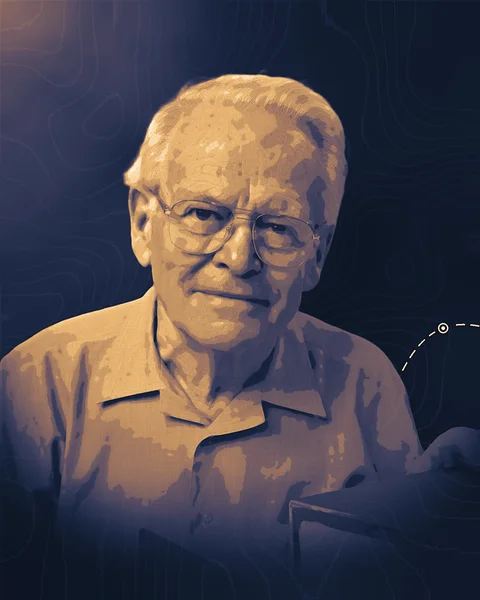
Figureheads
1 person
Advances to build with
2 research notes

NVIDIA GR00T 2
Five demonstrations per task
By NVIDIA's own test, its robot model GR00T 2 averages 95% success after five demonstrations of a task, on 50 tasks picked from those it learns that way.

GitHub Copilot Fusion
Effort, not model
GitHub Copilot Fusion picks the AI models for each request, and in a test GitHub paid for, its top setting scored 2 points below a rival at about half the cost.
Open in aviation
3 of 14 open deliverables
Open · Flight operations
Contrails matched to flights
A public test set of real contrails seen in satellite images, each matched by people to the flight that made it, using public ADS-B tracks (ADS-B is the position report each aircraft broadcasts). Anyone could then score the automatic contrail-to-flight matching that avoidance trials rely on.
Built with what exists
GOES-16 satellite images (the images behind OpenContrails); OpenSky Network ADS-B history; pycontrails, an open-source (Apache 2.0) Python library for modeling aviation's climate effects, to predict where each flight could have made a contrail; an open-source labeling tool such as CVAT.
Open · Air traffic control
Public ATC transcription scoreboard
A fixed test and public scoreboard for turning recorded ATC radio into text, using only audio anyone can download, with one scoring script for every system and new speech-to-text models added as they appear.
Built with what exists
the free one-hour ATCO2 test set; the ATCOSIM corpus (about 10 hours of simulated controller speech from Graz University of Technology and the EUROCONTROL Experimental Centre, posted on Hugging Face); OpenAI's open Whisper models; ElevenLabs Scribe v3 (see the Note "Fewer word errors"); a Hugging Face Space to host the table.
Open · Airports and ground handling
Robot bag stacking, measured
A repeatable bench test of a robot stacking loose bags in the lower hold of a narrowbody jet. Build a short plywood section of a narrowbody lower hold at reduced scale, using the hold height and width in the manufacturer's public airport planning document. Fill it with scaled bags (weighted foam and cardboard boxes, drawn from the reference set below), teach a low-cost robot arm to stack them, and compare it with a person stacking the same bags in the same mock hold. No aircraft and no airport are involved.
Built with what exists
The SO-101 low-cost arm with Hugging Face's LeRobot software (see the Note "No download"); a robot model that learns a task from a few demonstrations, NVIDIA GR00T 2 (see the Note "Five demonstrations per task"); a depth camera; plywood; the Airbus A320 or Boeing 737 airport planning document for hold dimensions.