Industries / Industrial equipment and services
3D printing
3D printing, also called additive manufacturing, makes parts by building them up layer by layer from a digital 3D model, in plastic, resin, metal and other materials, instead of cutting material away or pressing it into a mold.
1986
On 11 March 1986 the US Patent Office granted Charles (Chuck) Hull patent 4,575,330, "Apparatus for production of three-dimensional objects by stereolithography," and that year Hull co-founded 3D Systems to sell the process. The American Society of Mechanical Engineers (ASME) says that with the founding of 3D Systems in 1986 Hull "initiated the 3D printing industry," and 3D Systems calls itself "the first 3D printing company in the world.".
42
Milestones achieved across 6 domains.
14
To watch for: announced, not yet confirmed outside.
13
Open deliverables. Nobody has shipped them.
In one minute
Where it started
In November 1981 Hideo Kodama of the Nagoya Municipal Industrial Research Institute in Japan published a way to make a plastic model by hardening liquid polymer with ultraviolet light and stacking the hardened layers, and on 16 July 1984 three French researchers, Jean-Claude André, Alain Le Méhauté and Olivier de Witte, filed a patent for a similar laser process that their employers never developed. Hull filed his US patent three weeks later, and 3D Systems sold the first commercial machine, the SLA-1, in 1987, which ASME calls "the first commercial rapid prototyping system": the field was named for its first use, making prototypes. Patents and machines for laser sintering of plastic powder, extrusion of melted plastic and laser fusing of metal powder followed between 1989 and 1996.
Where it stands
Wohlers Associates, whose annual report is published through ASTM International, puts worldwide additive manufacturing revenue at $24.2 billion in 2025, up 10.9% on 2024, with printing done as a service 48% of that. By the count of the market research firm CONTEXT, shipments of printers under $2,500 rose 26% in 2025, more than 90% of them from Chinese makers, while units of industrial printers over $100,000 fell 3%, their fourth yearly fall in a row; between 2024 and 2026 several Western makers of industrial machines went bankrupt, were sold or left the business. Printing is now the routine way to make aligner molds, custom hearing aid shells, jet engine fuel nozzle tips and Apple's titanium watch cases.
What is open
Much of the work around the print still rests on a person's eye and hands: spotting a failed print, clipping off supports, judging whether powder is out of a channel, matching a build record to a standard's requirements, and deciding when printing beats molding on price. The figures published for AI failure detection, AI design tools, build monitors and the fastest machines are mostly their makers' own, and few public tests let anyone compare them. Public datasets from NIST and Oak Ridge National Laboratory, open slicers and CAD software, low-cost robot arms and AI models let a small team build those tests now.
Domains
AchievedWatch forOpen
Domain
Progress
Last achieved
Watch for
Open
Plastics
Plastics printing makes parts from polymers in one of four main ways: it hardens liquid resin with light, lays down melted plastic from a moving nozzle, fuses plastic powder with a laser or heat, or jets tiny droplets that harden, building the part one thin layer at a time.
7 · 3 · 2
Last achievedPrinters that set themselves up2022
Watch forNine tools, six-second swaps
2
openMetals
Metal printing builds parts layer by layer from metal powder or wire. The metal is fused with a laser, an electron beam or an electric arc, or held together with a liquid glue and then baked solid in a furnace.
7 · 2 · 2
Last achievedChina leads machine shipments2024
Watch forA 3-meter, 100-laser machine
2
openDesigning for printing
Designing for printing is the work of turning an idea into a digital model a printer can build: shaping the part in software, checking it against design rules, saving it in a file format machines can read, and slicing it into the layer-by-layer instructions the printer follows.
7 · 2 · 2
Last achievedDesign rules become a standard2018
Watch forText prompts to editable CAD
2
openFinishing parts
Finishing is the work done on a printed part after it leaves the printer: removing supports and loose powder, washing and curing resin, smoothing, coloring, heat-treating, pressing and machining it until it is fit to use.
7 · 3 · 2
Last achievedDepowdering planned from CAD2018
Watch forUltrasound shakes off supports
2
openQualifying parts
Qualifying parts is the work of proving that a printed part is good enough for its job: writing the standards it must meet, measuring and inspecting it, and getting a regulator or customer to accept the evidence.
7 · 2 · 2
Last achievedPlastic elbow fails in flight2025
Watch forQualifying parts by simulation
2
openProduction at scale
This work uses printing as a factory method. It covers making thousands or millions of parts, often each one a slightly different shape, and the print farms, service bureaus (firms that print parts to order) and companies that make money, or fail to, doing it.
7 · 2 · 3
Last achievedWatch cases printed in full2025
Watch forA 10,000-printer farm in Shenzhen
3
open
Advances to build with
2 research notes
Claude Fable 5.2
Three working devices
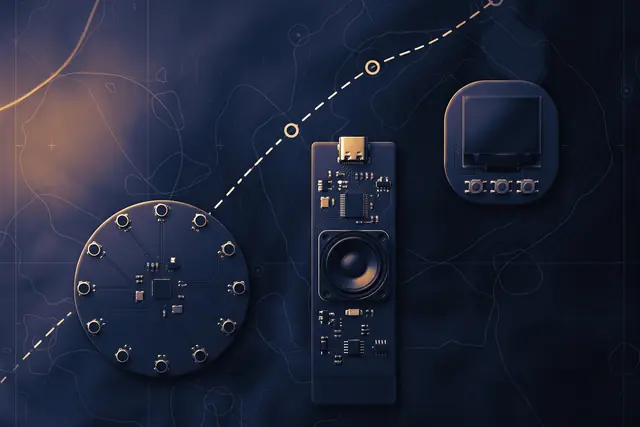
Anthropic says its AI model Claude Fable 5.2 designed three prototype devices that worked without electrical modifications, with no outside test reported.

NVIDIA GR00T 2
Five demonstrations per task
By NVIDIA's own test, its robot model GR00T 2 averages 95% success after five demonstrations of a task, on 50 tasks picked from those it learns that way.
Open in 3d printing
3 of 13 open deliverables
Open · Plastics
A labeled print-failure benchmark
Add outcome labels to a public set of whole-print videos from desktop printers: whether the print failed, the kind of failure (part knocked loose and "spaghetti" tangle, clogged nozzle, warping), and the first frame where the failure shows. Publish a scoring script that rates a detector the way a printer uses it: would it have stopped each bad print, how many minutes after the failure began, and how many good prints it would have stopped.
Built with what exists
The Bambu Timelapse Dataset as a starting set; Label Studio or CVAT (open-source labeling tools); the open-source Obico server model and Ultralytics YOLO11 as baselines; Python for the scoring script; Hugging Face for hosting. The advance that makes this practical is fast object-detection models such as YOLO11, and the AI chips now built into some printers, which run these models on every camera frame.
Open · Metals
Standing scorer for melt-pool models
A public scoring site and script set, open all year, that takes a simulation's predicted melt-pool width and depth (the size of the small pool of liquid metal under the laser) for the NIST AM Bench single-track and pad test cases and reports the error against NIST's measurements, with simple baseline entries for others to beat.
Built with what exists
NIST AM Bench public data, ORNL AdditiveFOAM (open source, GPL-3, built on OpenFOAM), the MeltpoolNet CSV datasets, Python, and a GitHub repository with automated scoring (for example GitHub Actions) or a Hugging Face Space for the leaderboard.
Open · Designing for printing
Printed benchmark for AI parts
A public set of about 30 written specifications for small working parts a desktop printer can make, such as a clip that must grip a 12 mm rod, a hinge that must open 90 degrees, or a hook that must hold 2 kg. Each AI tool designs each part from the text alone. Every design is then sliced with locked settings, printed on the same printer in the same filament, and tested with gauges and weights. The score records whether it sliced, whether it printed, whether it fit, and whether it carried the load.
Built with what exists
Claude Fable 5.2 (see the Note "Three working devices") and other AI models writing code for open CAD tools (CadQuery, build123d or OpenSCAD); cadclamp's clip and hinge prompts as a starting set, so its software scores can be set beside the physical results; PrusaSlicer or OrcaSlicer, run with one fixed settings file; one desktop filament printer; calipers, printed go/no-go gauges, and hanging weights.