Industries / Media, arts and recreation / Media and entertainment
Video games
The video game industry designs, builds, publishes and runs games played on computers, consoles and phones, sold as one-off purchases, as subscriptions and as purchases made inside the game.
1971
After a location test in August, Nutting Associates of California released Computer Space, a coin-operated space battle designed by Nolan Bushnell and Ted Dabney, in November 1971. The Australian Centre for the Moving Image (ACMI) says it is "generally accepted" to be the world's first commercially sold coin-operated video game; it came six months before the Magnavox Odyssey home console and a year before Atari's Pong, and its two designers went on to found Atari.
39
Milestones achieved across 6 domains.
9
To watch for: announced, not yet confirmed outside.
12
Open deliverables. Nobody has shipped them.
In one minute
Where it started
Video games began as demonstrations on laboratory computers in the late 1950s and 1960s and became a business in 1971 and 1972, when Computer Space went into arcades and the Magnavox Odyssey and Atari's Pong followed. Games moved onto home consoles and PCs; from the late 1990s 3D graphics cards reached home PCs, and engines, the shared software a game is built on, were given away and sold to other developers. From 1978 players also met in shared online worlds, the start of games that are run as services for years after launch.
Where it stands
Newzoo, a market research firm, forecasts that players will spend USD 213.9 billion on games in 2026, 6.1% more than in 2025, and counts 3.70 billion players; games on phones take 57% of the money. Most games are now bought as downloads, and many are built on licensed engines such as Unreal and Unity. In a January 2026 survey of more than 2,300 game workers by the organizers of the Game Developers Conference (GDC), 28% said they had been laid off in the past two years, 36% said they used generative AI tools at work, and 52% said generative AI was harming the industry, up from 18% two years earlier.
What is open
Most open jobs are public tests nobody has published: AI coding agents on a real engine's bug reports, AI play agents against human testers, audio-driven lip sync and AI-made 3D props against artists' work, and voice chat moderation across accents. Others are counts built from what stores and ad libraries already publish, such as whether Steam's accessibility tags and language lists are true, where players stop in story games, and whether mobile game ads show the game being sold. Each can be done by a small team with open-source engines, current AI models and games it owns.
Domains
AchievedWatch forOpen
Domain
Progress
Last achieved
Watch for
Open
Design
Designers decide what a game is and how it plays: its rules, its levels, how hard it is and how it teaches itself, tested on real players and, more and more, opened to players who build games of their own.
6 · 1 · 2
Last achievedPlayer-made games pay $1.5 billion2025
Watch forSquadmates that take spoken orders
2
openArt and animation
Artists and animators make what the player sees and hears: characters, places, movement, faces and voices, all built to be drawn many times a second while the game runs.
6 · 1 · 2
Last achievedAI textures cost an award2025
Watch forFaces animated from speech
2
openEngines and programming
Programmers build or license an engine, the shared software that draws each frame, plays sound, runs physics and reads the controls, and then write the game's own code on top of it.
7 · 2 · 2
Last achievedAgents scored on engine work2026
Watch forAn assistant inside the engine
2
openTesting
Testers, called quality assurance (QA) in the trade, play unfinished versions of a game to find bugs, write them up so programmers can reproduce them, and check the game against the rules of each platform it will be sold on.
7 · 2 · 2
Last achievedA contract for testers2025
Watch forAI for most testing work
2
openPublishing and stores
Publishing is the work of getting a finished game rated for age and into players' hands, through shops, online stores and subscriptions.
7 · 1 · 2
Last achievedOver a quarter laid off2026
Watch forRival stores inside Google Play
2
openRunning a live game
Running a live game means keeping an online game's servers, rules, shop and community working for its players after launch, often for years.
6 · 2 · 2
Last achievedShut down within weeks2024
Watch forModerating voice chat at scale
2
open
Narrower industries
Advances to build with
2 research notes
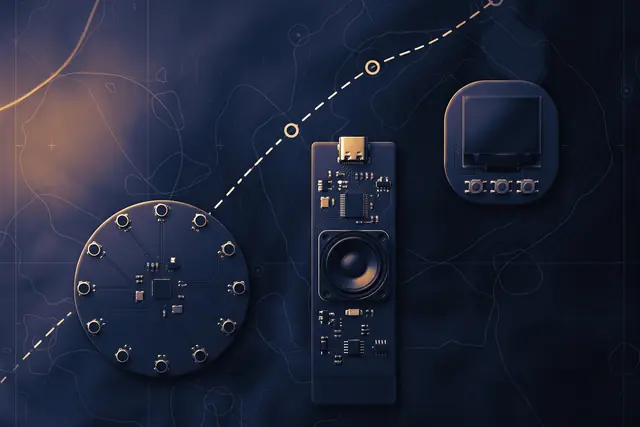
Claude Fable 5.2
Three working devices
Anthropic says its AI model Claude Fable 5.2 designed three prototype devices that worked without electrical modifications, with no outside test reported.

GitHub Copilot Fusion
Effort, not model
GitHub Copilot Fusion picks the AI models for each request, and in a test GitHub paid for, its top setting scored 2 points below a rival at about half the cost.
Open in video games
3 of 12 open deliverables
Open · Design
Audit store accessibility tags
A public check of the accessibility features that games list on their Steam store pages. Testers try each listed feature in 100 games, such as "Subtitle Options," "Adjustable Text Size" and "Playable without Timed Input," record whether it works as Steam describes it, and keep a video clip as evidence.
Built with what exists
Steam store pages, whose accessibility sections a script or a web agent can collect (see the Note "Deleting 80% to start over"); Microsoft's published test steps for the matching Accessible Games Initiative tags, used as the pass rule; OBS Studio, free recording software, for evidence clips; a shared spreadsheet; testers who use these features themselves, paid for their time.
Open · Art and animation
Rate AI lip sync blind
A blind viewing test of speech animation made from audio alone. Record the same lines in five languages, animate one character's face three ways (with an audio-driven tool such as Audio2Face, with facial capture of the actor, and by hand), and have native speakers rate how well each clip's mouth matches the words without knowing how it was made.
Built with what exists
NVIDIA's open Audio2Face models and their Maya or Unreal Engine 5 plugin; a free rigged character head; a phone or webcam facial-capture app; consenting voice actors in five languages; a speech recognizer such as ElevenLabs Scribe v3 to time each word (see the Note "Fewer word errors"); an online survey form for raters.
Open · Engines and programming
Fix real engine bugs
A test of AI coding agents on the bug reports of an open-source engine, in the style of SWE-bench, the benchmark built from real GitHub issues. Collect closed bug reports for the Godot engine whose fix was merged together with a new unit test. Set the code back to just before the fix, give an agent the bug report, and count the fix as good only if the new test passes and no old test breaks.
Built with what exists
Godot's public GitHub repository, its unit tests and its SCons build; the open-source SWE-bench harness and Docker to rebuild each task; agents such as Claude Code running Claude Fable 5.2 (see the Note "Three working devices"), GitHub Copilot Fusion (see the Note "Effort, not model") and OpenHands; the GitHub API to collect issues and pull requests.
Where it sits
Broader
In outline