Industries / Retail, hospitality and personal services
Photography
Photography as a trade takes pictures to order for people and businesses, such as portraits, weddings and product shots, and sells pictures already taken, together with the editing, printing and delivery that follow.
1839
On 19 August 1839 Louis Daguerre's process, whose rights the French state had acquired in exchange for a lifetime pension, was explained step by step before a joint session of the Académie des Sciences and the Académie des Beaux-Arts in Paris, so that anyone could learn it.
40
Milestones achieved across 7 domains.
8
To watch for: announced, not yet confirmed outside.
15
Open deliverables. Nobody has shipped them.
In one minute
Where it started
Daguerre's process was made public in Paris in 1839, and by March 1841 Richard Beard had opened what the Victoria and Albert Museum calls Europe's first public photographic studio, in London. From 1854 the carte-de-visite gave many cheap prints from one sitting, and from 1888 Kodak sold developing and printing as a service to anyone with a camera, by its own account.
Where it stands
Almost everyone now takes pictures: Photutorial, a photography website, estimates that about 2.1 trillion photos were taken in 2025, and that 94% were taken on smartphones in 2024. The paid trade is made of many small firms: Eurostat counts 201,479 photography businesses in the European Union in 2024, up from 165,004 in 2021, with a combined turnover it estimates at about €10 billion, an average of about €50,000 each. Software now does part of the work: by IKEA's account most of its single product images were computer-generated by 2014, Zalando says more than 90% of its content is made with AI, and Shutterstock sells its archive to makers of AI models.
What is open
Most claims about the tools the trade now uses come from their sellers, and nobody else has measured them: how faithfully AI tools show a garment or a customer's face, whether retouching shifts skin colour, how often selfie search shows a guest someone else's photos, how labs crop and colour prints, and which services strip a photographer's name and rights from the files. Each can be tested with consenting adult volunteers, test files and free software. AI models that read pictures and documents now let a small team score thousands of photos, contracts or claims.
Domains
AchievedWatch forOpen
Domain
Progress
Last achieved
Watch for
Open
Portraits
This work makes posed pictures of people for them to keep, give or use, from studio sittings and school picture days to passport photos and business headshots.
6 · 1 · 2
Last achievedPhoto checker fails darker skin2020
Watch forPassport photos from a phone
2
openWeddings and events
This work photographs weddings, parties, races and other one-day events for the people in them, and gets each person the pictures they appear in.
5 · 1 · 2
Last achievedWedding photos ruled as speech2025
Watch forSelfie search at events
2
openCommercial work
This is photography made to order for businesses: fashion and advertising pictures, product shots for shops and catalogues, food, interiors and corporate work.
5 · 1 · 2
Last achievedConsent for digital models2025
Watch forShop content made by AI
2
openStock and licensing
This is selling photographs already taken, through picture libraries and agencies, and the rights and licences that let others use them.
7 · 1 · 2
Last achievedGetty drops the Shutterstock deal2026
Watch forGetty's appeal on AI models
2
openEditing
This is the work done to a picture after it is taken and before it is delivered: combining and retouching, setting colour and tone, removing what should not be there, and labelling pictures whose people have been changed.
7 · 2 · 3
Last achievedFill by typing a request2023
Watch forEdits made by asking
3
openDelivery and prints
This work gets finished pictures to the client: developing and printing, albums and prints that hang on a wall, online galleries for viewing and download, and keeping prints from fading and files from being lost.
5 · 1 · 2
Last achievedCostco closes its photo labs2021
Watch forSearching a gallery in words
2
openBooking and pricing
This work finds clients, sets and shows prices, writes the booking contract, takes deposits and deals with cancellations and complaints.
5 · 1 · 2
Last achievedHidden fees banned in Britain2025
Watch forLead scores and instant replies
2
open
Advances to build with
3 research notes
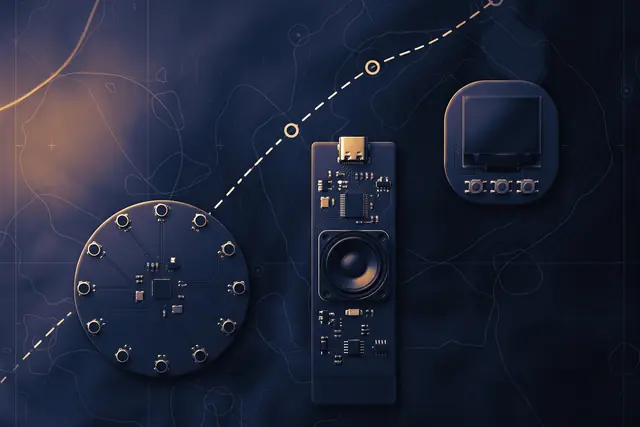
Claude Fable 5.2
Three working devices
Anthropic says its AI model Claude Fable 5.2 designed three prototype devices that worked without electrical modifications, with no outside test reported.

NVIDIA GR00T 2
Five demonstrations per task
By NVIDIA's own test, its robot model GR00T 2 averages 95% success after five demonstrations of a task, on 50 tasks picked from those it learns that way.
Microsoft ThinkingBox
All twenty times
By Microsoft's own count, 50 steps of training took an AI model from passing 38 of 507 test tasks on all 20 tries to passing 107.
Open in photography
3 of 15 open deliverables
Open · Portraits
Passport photo apps, tested
A public test of the phone apps and shop software that sell passport photos with an automatic rule check. Adult volunteers who agree to take part are photographed under a fixed method, once in a correct pose and again with one planted fault each (mouth open, glasses, a shadow on the face, a tilted head, a busy background). Every photo goes through every app. The test counts how often each app passes a faulty photo and how often it rejects a good one, for each skin-tone group. No photo is sent to any government system.
Built with what exists
OFIQ, the open-source face image quality software from Germany's Federal Office for Information Security (BSI) that implements ISO/IEC 29794-5, as a reference checker; the compliance model trained on DFIC, from its GitHub page, as a research baseline; commercial passport photo apps such as PhotoAiD; Google's Monk Skin Tone Scale for labeling skin tone; a fixed light and a plain backdrop.
Open · Weddings and events
Selfie search, tested on volunteers
A staged event, such as a mock reception or a 5 km fun run, where every person photographed has signed up for the test, followed by a test of commercial selfie-search galleries on its photos. Every face in every photo is labeled by hand. For each service, the test measures the share of a volunteer's photos it finds and the share of photos it shows to the wrong volunteer, which is a privacy leak as well as a miss.
Built with what exists
Trial accounts on commercial gallery services with selfie search, such as Kamero and Pic-Time; InsightFace's open face models as a baseline; CVAT or Label Studio for labeling faces; signed consent forms that cover the test and its deletion date.
Open · Commercial work
AI garment photos, measured
A public test of how faithfully AI tools show a real garment when they put it on a generated model or a new background. Measure 100 garments at marked spots with a spectrophotometer, an instrument that reads a colour as numbers. Photograph each garment flat and on a consenting model under controlled light, with a colour chart in the frame. Give the flat photos to several AI on-model tools, then measure the colour error of each result against the garment itself in CIEDE2000 (ΔE00), the standard measure of how different two colours look, and have two people count changed details such as buttons, pockets, seams, prints and logos.
Built with what exists
A handheld spectrophotometer such as an X-Rite Ci64 or a Nix Spectro 2; a Calibrite ColorChecker chart; a camera and continuous lights; open try-on models such as IDM-VTON or CatVTON from Hugging Face, and trial accounts of commercial on-model tools; Python with the open colour-science library to compute ΔE00.