Industries / Construction and property
Pest control
Pest control is the trade of finding, naming, trapping, treating and keeping out the insects, rodents, termites and other animals that damage buildings, spoil food or spread disease, done mostly by service firms on contract to homes, businesses and cities.
1695
A London stay-maker found bed bugs in his house, made a compound that killed them, and began treating his customers' houses; his family's firm, Tiffin and Son, "Bug-Destroyers to Her Majesty", told Henry Mayhew in 1851 that it could trace its business back to that year.
36
Milestones achieved across 6 domains.
10
To watch for: announced, not yet confirmed outside.
13
Open deliverables. Nobody has shipped them.
In one minute
Where it started
In 1851 the London firm Tiffin and Son told Henry Mayhew that its business went back to 1695 and that it examined each customer's house every spring under a yearly contract. Over the next century the trade gained the spring snap trap (patented in 1894), the rat-proofing of whole districts after plague reached San Francisco in 1900, DDT dust and blood-thinning rat poisons in the 1940s, and licenses for the people who do the work, such as California's from 1935.
Where it stands
The work is done mostly by contract service firms, many of them small: the US Census Bureau counted 16,535 US pest control establishments with 139,150 employees in 2023, and 9,415 of them had fewer than five employees. The largest firm, Rentokil Initial, which owns Terminix, reported $5.70 billion of pest control revenue in 2025 from about 90 markets, Rollins, which owns Orkin, reported $3.76 billion, and Rentokil cites outside reports that put the world market at $29.0 billion. Rats, cockroaches and bed bugs have outlived one poison after another, and several countries now restrict rat poisons and glue traps, so the trade leans more on sealing buildings and on connected traps and cameras.
What is open
Much of the trade still runs on a person's eye and ear: naming an insect or a dropping, judging a gap under a door, deciding whether a camera alert is a rat, listening for termites in a wall. The makers of the new cameras, sensors and identification apps publish their own accuracy figures, and outside tests are few, so most open jobs are independent tests and open data sets built with phone cameras, cheap recorders and open AI models; others gather rules, service records and inspection results into public tables. None involves applying a pesticide.
Domains
AchievedWatch forOpen
Domain
Progress
Last achieved
Watch for
Open
Inspection and identification
Finding where pests live in a building or on a property and naming the species correctly, because the right response depends on what the pest is.
5 · 3 · 2
Last achievedPhone apps misname ticks2026
Watch forSwab strips for bed bugs
2
openTraps and monitoring
Devices that catch pests or count them over time, from spring traps and scented lures to sensors and cameras that report activity without a site visit.
5 · 2 · 2
Last achievedSensor traps report catches2022
Watch forAI cameras confirm rodents
2
openChemical treatment
Killing insects and rodents in and around buildings with insecticides, rodenticides and fumigant gases, and with heat and other methods that replace some of them.
7 · 1 · 2
Last achievedHeat treatment for bed bugs2011
Watch forBirth control for city rats
2
openTermites
Finding termites in buildings, keeping them out with soil treatments, baits and physical barriers, and wiping out colonies that get in.
7 · 2 · 2
Last achievedDetection tools compared on timber2012
Watch forConnected termite bait stations
2
openPrevention and sealing
Keeping pests out by closing the ways into buildings, taking away the food, water and shelter that let them settle, and running programs across whole buildings, cities or regions that do this before anyone reaches for poison.
5 · 1 · 2
Last achievedPoison alone fails in Salvador2022
Watch forSealed bins cut city rats
2
openRecords and regulation
The licenses pest controllers must hold, the laws on which poisons and traps may be used, by whom and where, and the records the trade keeps for customers, auditors and regulators.
7 · 1 · 3
Last achievedGlue traps need a license2024
Watch forCalifornia proposes 35-day baiting limit
3
open
Advances to build with
2 research notes

Muse Ember
The jobs agents repeat
Meta's Muse Ember matched Claude Haiku 5.5 on an outside firm's tests at a third of the cost per task, though both list the same prices for text in and out.
Ring Rover Cam
A camera on patrol
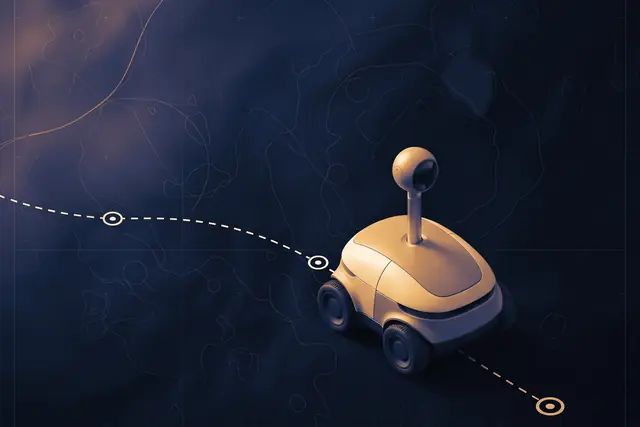
Amazon says Ring's $999.99 Rover Cam, a camera on wheels, maps an indoor space and drives itself to saved spots, and launch coverage reports no outside test.
Open in pest control
3 of 13 open deliverables
Open · Inspection and identification
Bed bug look-alike test set
A public set of phone photos of bed bugs at every life stage, with their eggs, cast skins and fecal spots, and of the insects most often mistaken for them, such as bat bugs, carpet beetles and their larvae, cockroach nymphs, booklice, spider beetles, fleas and ticks. An entomologist confirms each specimen under a microscope. A scoring sheet records what free identification apps and general AI models say about every photo and reports accuracy by group and life stage.
Built with what exists
Two or three phones with clip-on macro lenses; a stereo microscope; preserved specimens borrowed from a university insect diagnostic lab or a natural history museum, so no live insects are needed; Label Studio for labels; Google Lens and Seek by iNaturalist, run by hand on each photo; general AI models that read images, such as Claude or Gemini, called by a Python script.
Open · Traps and monitoring
Test AI rodent cameras
A side-by-side field test of the AI rodent cameras that pest control companies offer, a motion-triggered trail camera and an open model, all scored against continuous infrared video reviewed by people, in several kinds of building. Release the labeled footage.
Built with what exists
Two or more commercial camera services, leased through pest control contractors; a trail camera such as a Bushnell TrophyCam; a continuous recorder, such as a Raspberry Pi with a NoIR camera module and infrared lights, or a CCTV recorder; CVAT or Label Studio for labels; MegaDetector and Ultralytics YOLO11 as open baselines; optionally a roaming indoor camera such as Ring's Rover Cam to check spots between fixed cameras (see the Note "A camera on patrol").
Open · Chemical treatment
Map sugar-averse cockroaches
A public, dated map of German cockroach populations tested for glucose aversion. Collect live cockroaches from infested kitchens and apartments with the help of pest controllers. Offer groups of them a choice of two plain jellies, one sweetened with glucose and one with fructose, with no insecticide in either. Record the share that refuse glucose, with the city, date and type of building.
Built with what exists
Agar, glucose and fructose from a lab supplier; sealed Petri dishes or small arenas; a phone camera to record feeding; the accept-or-reject scoring used in the 2013 taste study's published data; a glucose-accepting colony from a university lab or insect supplier as a control; a freezer to kill every insect after testing; Python with pandas and geopandas for the map.