Greeting cards
The greeting card trade writes, illustrates, prints and sells folded cards that people send or hand over to mark birthdays, holidays, weddings, deaths and other occasions, through card shops, supermarkets, chain stores and websites that print each card to order.
1843
In London, Henry Cole asked his friend the artist John Callcott Horsley to design a Christmas card, then had a printer make a thousand copies, each with room for a handwritten greeting. They sold at a shilling each, which the Victoria and Albert Museum (V&A) calls expensive for the time, and the venture "was judged a commercial flop." The V&A says Cole "sent the first Christmas card in 1843.".
30
Milestones achieved across 6 domains.
8
To watch for: announced, not yet confirmed outside.
12
Open deliverables. Nobody has shipped them.
In one minute
Where it started
Henry Cole had a thousand Christmas cards printed in London in 1843, and they did not sell well. In Worcester, Massachusetts, Esther Howland began selling valentines in 1849 and filled her orders with a small assembly line of friends. In Boston, Louis Prang printed Christmas cards in color from the mid-1870s and was selling nearly five million holiday cards a year by 1880, by the account of The Henry Ford museum.
Where it stands
By the US Greeting Card Association's count, published by the US Postal Service in 2019, Americans buy about 6.5 billion cards a year, worth $7 billion to $8 billion. The UK association put its market at £1.53 billion in September 2025. Specialist chains have shrunk: Clinton Cards went into administration in 2012, and Papyrus's owner moved to close its whole chain in 2020. Card Factory, which designs and prints its own cards, had 1,117 shops in January 2026, and Moonpig, which prints each card to order, says customers used its creative features, AI-made stickers among them, in 31 million cards in the year to April 2026.
What is open
Most open jobs are tests the trade has not run on itself: whether readers prefer verses by people or by AI, whether detectors can tell AI-made card art from an artist's, which finishes stop a card being recycled, and whether people can tell robot handwriting from the real thing. Others are tools: a robot that assembles pop-up cards, a phone app that counts empty pockets on a card rack, and print software that sets messages in Arabic, Hindi or Chinese correctly. Each can be started this month with cards from a shop, open-source software and current AI models.
Domains
AchievedWatch forOpen
Domain
Progress
Last achieved
Watch for
Open
Design and writing
Design and writing is the creative work on a card: the picture or lettering on the front, the verse or joke inside, and the choice of which occasions and relationships to make cards for.
5 · 1 · 2
Last achievedGhostwriting brings guilt2026
Watch forAI-written Christmas cards
2
openPrinting and finishing
Printing and finishing turns a design into a card: printing it, cutting and folding it, and adding finishes such as foil, glitter, embossing, sound chips and pop-up parts.
7 · 1 · 2
Last achievedFoil passes a repulping test2020
Watch forPlastic sleeves mostly gone
2
openShop displays
Shop displays are how cards reach buyers: the racks and pockets, the card shops and supermarket aisles, and the staff and contracts that keep them filled.
6 · 1 · 2
Last achievedPapyrus closes its shops2020
Watch forShelf checks without a plan
2
openSeasonal planning
Seasonal planning decides which occasions get cards, how many of each to print, and when they reach the shops, working back from dates such as Valentine's Day, Mother's Day and Christmas.
4 · 2 · 2
Last achievedFather's Day proclaimed1972
Watch forNew ranges in four weeks
2
openDigital cards
Digital cards are greetings sent and opened on a screen, from e-cards sent by email to printed cards with a code that plays a video.
4 · 1 · 2
Last achievedVideo added for free2023
Watch forE-cards that animate you
2
openPersonalization
Personalization is making a card for one sender and one recipient: a name or photo on the front, a typed or handwritten message printed inside, and the card printed and posted to order.
4 · 2 · 2
Last achievedYour handwriting, printed2021
Watch for31 million cards personalized
2
open
Advances to build with
2 research notes
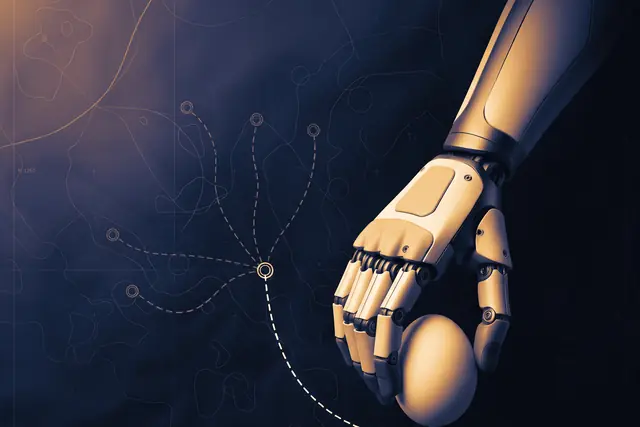
NVIDIA GR00T 2
Five demonstrations per task
By NVIDIA's own test, its robot model GR00T 2 averages 95% success after five demonstrations of a task, on 50 tasks picked from those it learns that way.
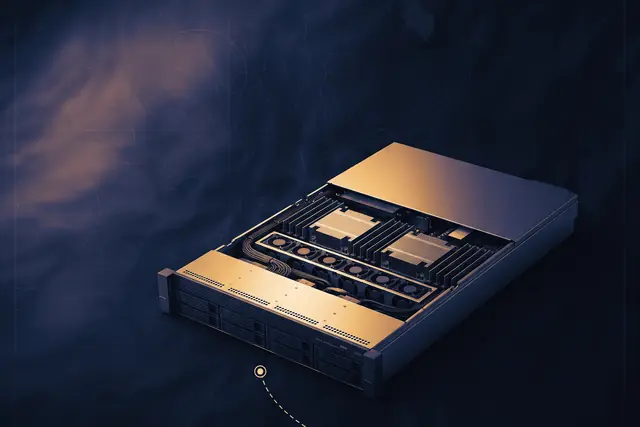
Mistral Large 4
A trillion open parameters
Mistral published its Large 4 AI model, a trillion numbers by its count, free to download and sell, though firms that rent out models need a separate license.
Open in greeting cards
3 of 12 open deliverables
Open · Design and writing
Verses read blind
A blind reading test of card verses. For each of 40 occasions, readers see three unsigned verses: one by a professional card writer, one by an AI model, and one by an AI model then edited by a writer. They pick the one they would buy and guess who wrote each.
Built with what exists
current models such as Claude, Gemini and Mistral Large 4, whose weights are free to download (see the Note "A trillion open parameters"); verses commissioned from freelance card writers; a paid survey panel such as Prolific; a short analysis script.
Open · Printing and finishing
A robot that builds pop-ups
A robot cell that takes the laser-cut parts of a slice-form pop-up card, an interlocking grid of paper strips, and assembles them: slotting the pieces together, gluing the shape into the card and folding it flat.
Built with what exists
a pair of low-cost arms such as the SO-101, run with Hugging Face's LeRobot software (see the Note "No download"); a robot model that learns from a few demonstrations, such as NVIDIA's GR00T 2 (see the Note "Five demonstrations per task"), or Runway's Praxis-1, whose weights are free to download (see the Note "Open robot model weights"); a desktop laser cutter; overhead cameras.
Open · Shop displays
Count the empty pockets
A phone app that photographs a card rack and reports which pockets are empty, which are running low, and which hold a card in the wrong section, such as a sympathy card among the birthdays.
Built with what exists
a phone camera; an object detector such as RF-DETR or YOLO, trained in Roboflow; a small vision model fine-tuned on one graphics chip, such as the vision model in Liquid AI's LFM3 family (see the Note "One GPU to fine-tune"), to read section headers and card captions.