Industries / Media, arts and recreation / Media and entertainment
Film production
Film production is the work of making feature films and television series, from finding a story and raising the money through planning, shooting, editing and visual effects to handing a finished picture to the companies that sell and show it.
1893
Thomas Edison's Black Maria, a tar-papered shed in West Orange, New Jersey, that turned on a pivot to follow the sun, was completed on 1 February 1893 at a cost of $637.67; a 1969 National Park Service study of the building calls it "the first original motion picture studio.".
41
Milestones achieved across 6 domains.
16
To watch for: announced, not yet confirmed outside.
15
Open deliverables. Nobody has shipped them.
In one minute
Where it started
Filmmaking became a trade in purpose-built studios such as Edison's Black Maria of 1893, and the trade soon set its ground rules: in 1911 the US Supreme Court ruled that a film of a novel needs the author's permission. Machines for each stage followed, from the Moviola editing machine of 1924 to the reflex camera of 1937, and each stage became a craft with its own crew.
Where it stands
ProdPro, a production-tracking firm, counts $41.4 billion of committed spending in 2025 on scripted live-action films and series budgeted at $1 million or more for major US-based buyers, 5% less than in 2024, though the number of productions started rose 8% to 1,310. Work is moving between countries: Los Angeles logged 19,694 days of filming on location in 2025, 16.1% fewer than in 2024 by FilmLA's count, while the BFI put UK film and high-end TV production spending at £6.8 billion. AI is now written into labor contracts, and Netflix says it had used generative AI on about 300 titles in 2026 by mid-July.
What is open
Much of the checking in production is still done by people with paper and spreadsheets: breaking scripts into lists, writing camera and sound reports, tracing chain of title, ticking off delivery schedules and counting who was left out of the credits. AI models that read long documents, transcribe speech and compare images now make it possible to automate these jobs and, as important, to test the AI tools already on sale against working crews: script breakdowns against assistant directors, rough cuts against editors, wire removal against paint artists, camera solves against measured points.
Domains
AchievedWatch forOpen
Domain
Progress
Last achieved
Watch for
Open
Development and finance
Development and finance is the work of finding a story, getting the right to film it, shaping the script and raising the money to make the film or series.
7 · 3 · 3
Last achievedAI cannot be a writer2023
Watch forA federal film tax credit
3
openPreparation
Preparation, or pre-production, is the work between a green-lit script and the first day of shooting: breaking the script into lists, scheduling and budgeting the shoot, casting, finding and clearing locations, drawing or animating shots in advance, designing sets and costumes, and planning for safety and intimate scenes.
7 · 3 · 3
Last achievedScouting sets in headsets2019
Watch forBreakdowns in under an hour
3
openShooting
Shooting is the work on set during principal photography, the main period of filming: running the cameras and lenses, moving and supporting the camera, lighting the scene, recording sound, and keeping the crew safe while they do it.
6 · 2 · 2
Last achievedRest time written into contract2021
Watch forGenerated shots replace locations
2
openEditing and sound
Editing and sound is the work done after filming: cutting the footage into a story, setting the color and brightness of each shot, and building, mixing and translating the soundtrack.
7 · 2 · 2
Last achievedMachine dubbing meets audiences2025
Watch forRough cuts built overnight
2
openVisual effects
Visual effects (VFX) is the work of making images that could not be filmed and joining them to filmed footage so that each shot reads as one picture.
7 · 3 · 3
Last achievedCheap AI effects, few tickets2025
Watch forRelightable splat crowds
3
openDistribution
Distribution, seen from the producer's side, is the work of selling a finished film or series to buyers one country at a time, agreeing when it may appear in each form (cinema, rental, TV, streaming), and handing over the files and papers each buyer requires.
7 · 3 · 2
Last achievedSame-day streaming, then reversal2021
Watch forSeven weekends in cinemas
2
open
Narrower industries
Animation and visual effects
Advances to build with
3 research notes
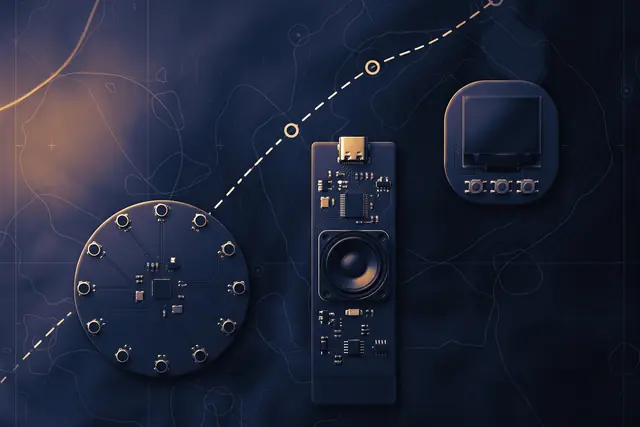
Claude Fable 5.2
Three working devices
Anthropic says its AI model Claude Fable 5.2 designed three prototype devices that worked without electrical modifications, with no outside test reported.
Genie 4
A world that follows
Google says its Genie 4 draws a world you can walk through, hear and change by typing, and its own pages give no figures for how well that world holds up.

Muse Ember
The jobs agents repeat
Meta's Muse Ember matched Claude Haiku 5.5 on an outside firm's tests at a third of the cost per task, though both list the same prices for text in and out.
Open in film production
3 of 15 open deliverables
Open · Development and finance
Blind-test AI script coverage
Coverage is the short report a studio reader writes on a script: a one-line pitch (the logline), a summary, notes and a verdict. Collect 20 feature scripts whose writers agree in writing, get coverage of each from two professional readers and two AI tools, strip anything that shows who or what wrote each report, and have five development executives grade all 80 reports on a published rubric. Separately, check every summary against its script for factual errors.
Built with what exists
Claude Fable 5.2 (see the Note "Three working devices") and other current models as the AI readers; Google's Gemini Decision 1 to run yes-or-no fact checks of each summary against its script (see the Note "A thousand questions, one pass"), spot-checked by people; a shared spreadsheet holding the blind IDs.
Open · Preparation
Score AI breakdowns against ADs
A public benchmark. Take 20 screenplays of produced films or shorts whose rights holders allow it. Two working assistant directors (ADs) each break every script down on their own into the standard lists: cast, extras, props, wardrobe, vehicles, animals, stunts, effects and locations. Run the same scripts through AI tools and score each tool's lists against the ADs', category by category, with the agreement between the two ADs as the ceiling.
Built with what exists
Filmustage and Dramatify, two commercial AI breakdown tools; general models such as Claude Fable 5.2 (see the Note "Three working devices") and Meta's Muse Ember for extraction (see the Note "The jobs agents repeat"); Gemini Decision 1 to judge whether a tool's item matches an AD's item (see the Note "A thousand questions, one pass"), with a person spot-checking its judgments.
Open · Shooting
Reports filled from the slate
A program that drafts a day's camera report and sound report without anyone typing them up. The camera report, kept by the second camera assistant, lists roll, scene, take, lens and notes; the sound report, kept by the sound mixer, lists file, scene, take, circled takes and track names. The program reads the spoken slate ("scene 12 apple, take 3") with speech-to-text and the written slate seen in the picture, adds the metadata the camera and recorder already store, and is scored against the reports the crew wrote by hand.
Built with what exists
ARRI Reference Tool to extract clip metadata; the scene, take, circle and notes fields that Sound Devices recorders store in each WAV file; ElevenLabs Scribe v3 to transcribe spoken slates (see the Note "Fewer word errors"); Gemini Decision 1 to answer yes-or-no and pick-one questions about slate frames (see the Note "A thousand questions, one pass"); Muse Ember to turn the results into report rows (see the Note "The jobs agents repeat").