Industries / Figureheads
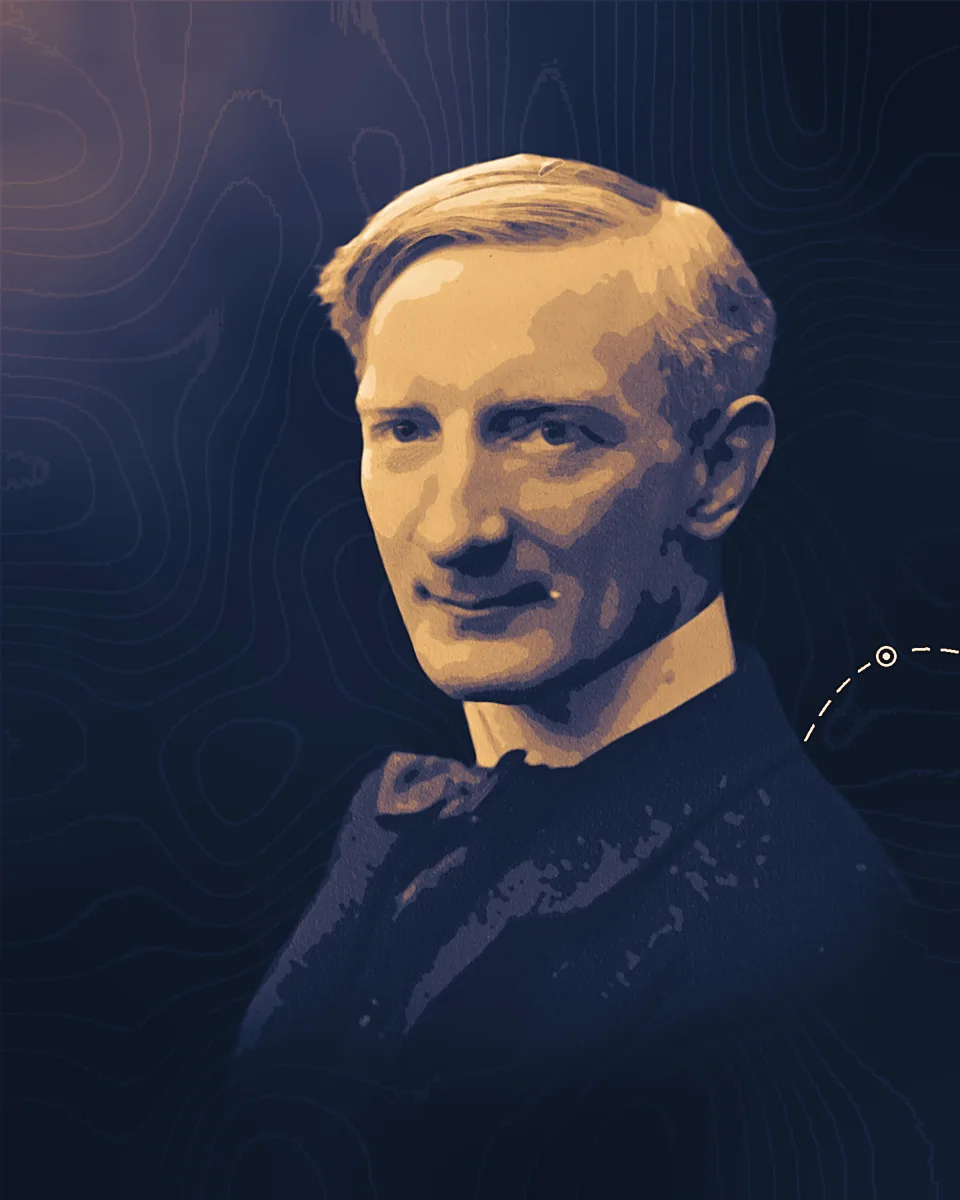
William Beveridge
He helped draft Britain's unemployment insurance law of 1911 and wrote the 1942 report that made flat-rate national insurance, paid for by contributions and paid out without a means test, the plan for Britain's post-war social security.
1879–1963
What they changed
1909
Labour exchanges and the dole
At the Board of Trade from 1908, Beveridge helped the permanent secretary, Sir Hubert Llewellyn Smith, draw up the Labour Exchanges Act of 1909 and the second part of the National Insurance Act of 1911, which brought in insurance against unemployment. From 1909 he ran the labour exchanges. He had argued in the press for a "dual policy" of labour exchanges and state insurance against unemployment.
1942
Want named and costed
His report Social Insurance and Allied Services (Cmd. 6404) called social insurance "an attack upon Want", one of "five giants on the road of reconstruction"; the others were "Disease, Ignorance, Squalor and Idleness".
1942
Flat rates, no means test
The scheme rested on six principles: a flat rate of benefit at subsistence level, a flat rate of contribution, one administration, adequate benefit, comprehensive cover and classification of the insured. In return for contributions it would pay benefits "as of right and without means test, so that individuals may build freely upon it", leaving room for voluntary insurance on top.
1946
The plan made law
The report met "a cool initial response from Whitehall and the Churchill Government" but was very popular with the public. After a revolt in Parliament in 1943 it became the blueprint for the social legislation of 1944 to 1948, by the Journal of Liberal History's account, among them the National Insurance Act 1946.
Life
William Henry Beveridge was born on 5 March 1879 at Rangpur in Bengal, the son of a judge in the Indian Civil Service. He went to school at Charterhouse and in 1897 to Balliol College, Oxford. At Toynbee Hall, a settlement house in east London, he took up the problem of unemployment and came under the influence of Sidney and Beatrice Webb, who introduced him to Winston Churchill at the end of 1907.
In the First World War he drafted, with Llewellyn Smith, the Munitions of War Act of 1915, which severely limited collective bargaining in wartime and put munitions workers under quasi-military discipline, and in 1916 a new Unemployment Insurance Act. He was director of the London School of Economics from 1919 to 1937, years that Sidney Webb called its "second foundation", and then Master of University College, Oxford. He chaired the Unemployment Insurance Statutory Committee from 1934.
He was a eugenicist. LSE's own history says so plainly, and that the cause he shared with many of his contemporaries "fed much discriminatory rhetoric and policy proposals, including forced sterilisation programmes". In 1930, with Rockefeller money, he opened a Department of Social Biology at LSE, partly with eugenic questions in mind; it closed after he left.
The 1942 report assumed three things outside insurance: a national health service open to all, family allowances paid from taxes, and a state commitment to keep unemployment down. He was elected Liberal MP for Berwick-upon-Tweed in 1944, lost the seat in 1945, and was made Baron Beveridge in 1946. He died in Oxford on 16 March 1963.
Read more
5 accounts
Social Insurance and Allied Services, William Beveridge, His Majesty's Stationery Office, 1942.
The report itself; the Fordham sourcebook gives the main text.
sourcebooks.web.fordham.edu
William Beveridge: A Biography, Jose Harris, Clarendon Press, 1997.
The standard life, revised from the edition of 1977.
archive.org
William Beveridge (Lord Beveridge), 1879–1963, Journal of Liberal History, undated.
A full biographical essay from the Liberal Democrat History Group.
liberalhistory.org.uk
Beveridge: public intellectual, LSE Director, Inderbir Bhullar, LSE History blog, 2019.
His LSE years, including his eugenics and the Department of Social Biology.
blogs.lse.ac.uk
Social Insurance and Allied Services, American edition, 1942.
A photographic copy of the full report with its tables.
archive.org