Industries / Figureheads
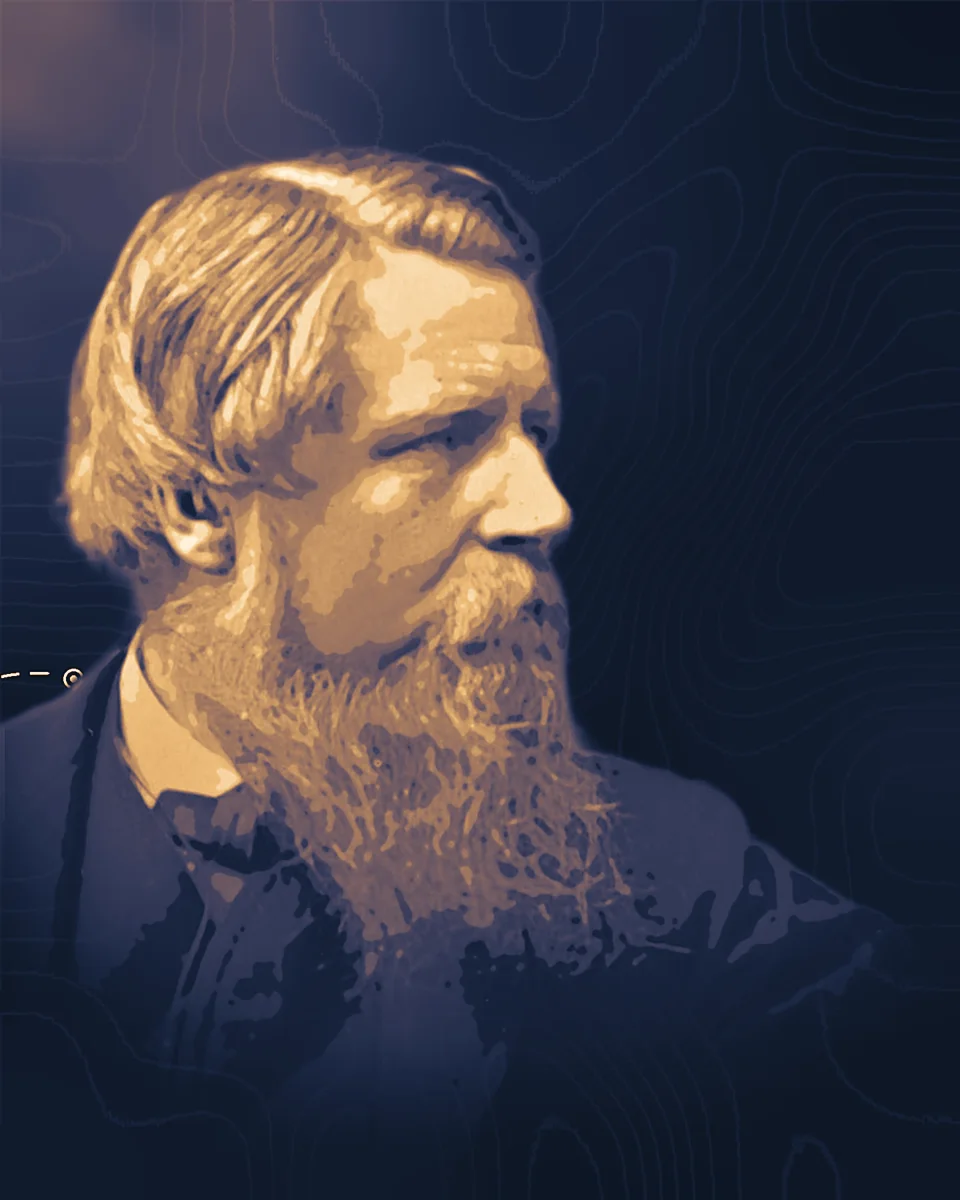
Stafford Northcote
With Charles Trevelyan he signed the 1853 report that told Britain to fill its civil service by competitive examination and promote on merit, and he later ran the Treasury as Chancellor of the Exchequer.
1818–1887
What they changed
1853
A department reorganised
In March 1853 Northcote signed, as a member of the commission, a report on reorganising the Board of Trade, one of the inquiries into single offices that came before the report on the service as a whole.
1853
Examination before appointment
On 23 November 1853 he and Trevelyan signed the report on the permanent civil service. It recommended "that a central Board should be constituted for conducting the examination of all candidates for the public service", by "a competing literary examination", and that promotion be "the reward of merit".
1855
A commission to test candidates
The Civil Service Commission was set up by Order in Council in 1855 as a result of the report, to test candidates for junior posts and certify their fitness. Until 1870 departments still nominated the candidates who sat its examinations.
1870
Open competition
An Order in Council of 4 June 1870 brought in open competition under rules set by the Commission and the Treasury for most government departments. The National Archives credits the report behind it to "Sir Stafford Northcote and Sir Charles Trevelyan".
1875
A sinking fund for debt
As Chancellor of the Exchequer, Northcote's second budget, of 15 April 1875, was "remarkable for the application of an annual sinking fund of 28,000,000l.", by the Dictionary of National Biography's account. A sinking fund is money set aside each year to pay down a debt, here the national debt.
Life
Stafford Henry Northcote was born at 23 Portland Place, London, on 27 October 1818. He went to Eton from 1831 and to Balliol College, Oxford, from 1836, took a first in classics in 1839 and was called to the bar at the Inner Temple in 1840.
On 30 June 1842 he became private secretary to W. E. Gladstone, then vice-president of the Board of Trade, and he was the board's legal assistant from 1845 to 1850. In January 1850 he was made one of the secretaries of the Great Exhibition of 1851. He succeeded to the family baronetcy in 1851.
Gladstone, as Chancellor of the Exchequer, asked his Treasury official Charles Trevelyan and Northcote to look at the civil service, according to Civil Service World. Their report was printed in 1854 with a letter from the Rev. Benjamin Jowett. It quoted an "eminent official" who said that in many years only four young men had entered his office "on the ground of well-ascertained fitness", as Northcote's biographer Andrew Lang notes. On 2 March 1854 Northcote wrote to his wife: "There is a terrible storm in the Civil Service about our plan."
He entered the House of Commons as a Conservative in 1855. He was President of the Board of Trade from 1866 and Secretary of State for India from 1867, and in 1871 sat on the British commission that agreed the Treaty of Washington with the United States. He was Chancellor of the Exchequer from February 1874 to 1880, and leader of the House of Commons from 1876. In 1862 he had published Twenty Years of Financial Policy, a history of the budgets from 1842 to 1861.
He was made Earl of Iddesleigh in 1885 and became Foreign Secretary in July 1886. He died on 12 January 1887 at 10 Downing Street, after collapsing in an ante-room of the prime minister's house, and was buried at Upton Pyne in Devon.
Read more
5 accounts
Report on the Organisation of the Permanent Civil Service, Stafford H. Northcote and C. E. Trevelyan, 1854.
The report itself, with Jowett's letter.
en.wikisource.org
Life, Letters, and Diaries of Sir Stafford Northcote, First Earl of Iddesleigh, Andrew Lang, 1890.
The full biography, built on his letters and diaries.
archive.org
Twenty Years of Financial Policy, Stafford H. Northcote, 1862.
His own summary of the chief financial measures from 1842 to 1861, with a table of budgets.
archive.org
Northcote, Stafford Henry, Lloyd Charles Sanders, Dictionary of National Biography, 1895.
The national biography's life, written eight years after his death.
en.wikisource.org
Records of the Civil Service Commission, The National Archives, undated. The catalogue's history of the commission the report led to.
discovery.nationalarchives.gov.uk