Industries / Figureheads
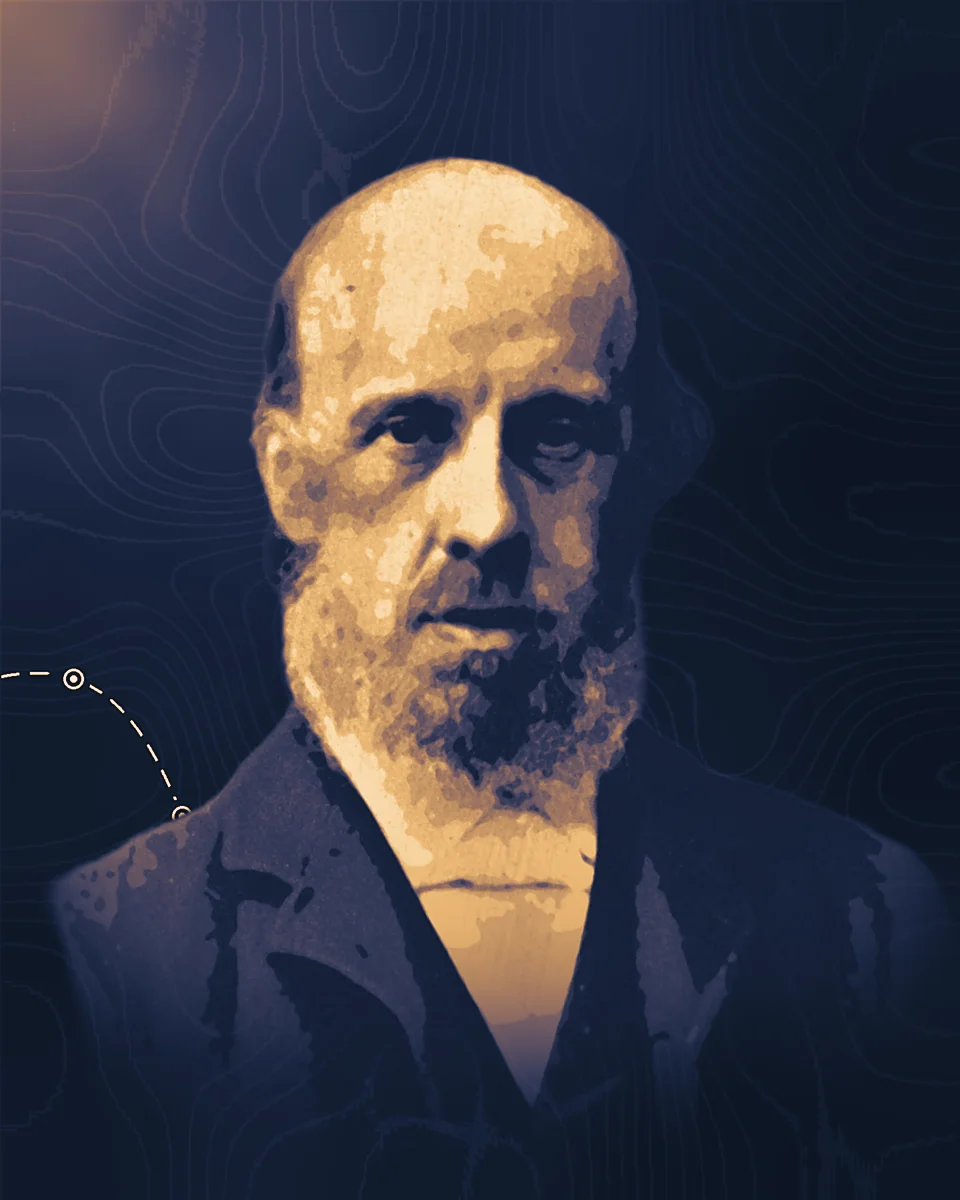
Samuel Barnett
A Whitechapel vicar, he proposed that university graduates live as volunteers in a poor district, and with his wife Henrietta opened Toynbee Hall, the first university settlement.
1844–1913
What they changed
1869
Charity organized by parish
As a young curate in Marylebone, Barnett worked with Octavia Hill and the rector, W. H. Fremantle, on the first local committee of the Charity Organisation Society, formed in October 1869 to bring order to relief that, a colleague wrote, had been "little else than the distribution of doles". The Society's name and method spread; Denver's Charity Organization Society of 1887 took the name.
1883
A plan for settlements
In a paper read at St John's College, Oxford, in November 1883, Barnett proposed a house in a poor quarter of East London where university men would live as residents under a salaried head and give their spare time to the neighborhood, so that they would "themselves bear the burdens of the poor" instead of paying a yearly subscription to a college mission. The printed text notes that the paper "resulted in the foundation of Toynbee Hall".
1884
Toynbee Hall opens
The Barnetts named the settlement after the economist Arnold Toynbee, who had died in 1883, and the first residents slept there on Christmas Eve 1884. Toynbee Hall says it was meant as a place for future leaders to live and work as volunteers in the East End, and that its residents included Clement Attlee and William Beveridge. His memorial in Westminster Abbey calls him "Founder and Warden of the first University Settlement".
1889
The model crosses the Atlantic
Jane Addams and Ellen Gates Starr visited Toynbee Hall, "where university men lived in a slum neighborhood and helped their neighbors", and opened Hull-House in Chicago in 1889, by the account of the Jane Addams Papers Project.
Life
Samuel Augustus Barnett was born in Bristol on 8 February 1844, a son of Francis Barnett and Mary Gilmore. He was taught at home and at Wadham College, Oxford, taught for a time at Winchester College and travelled in America. He was ordained in 1867 and served from then until 1873 as a curate at St Mary's, Bryanston Square, in Marylebone.
On 28 January 1873 he married Henrietta Rowland, and they moved to Whitechapel, where he was vicar of St Jude's for some twenty years. Henrietta was his partner in nearly all of his work, and the two published their essays on poverty, relief and social reform together, in Practicable Socialism (1888).
The credit for Toynbee Hall is shared, and has not always been shared fairly. Toynbee Hall itself says that Henrietta's part "has often been overlooked in favour of a focus on her husband". It was she who thought of the name, by her own account, in Balliol chapel at a service for Arnold Toynbee on 10 March 1884. Barnett was warden from 1884 to 1906.
The Barnetts also brought art to the East End. Henrietta chose the pictures for annual Whitechapel exhibitions, and in 1901 the two founded the Whitechapel Gallery to show "the finest art of the world for the people of the East End". Barnett was a canon of Bristol from 1892 to 1906 and of Westminster from 1906 until his death on 17 June 1913. At his own request he was buried not in the Abbey but at St Helen's church, Hangleton, near Hove.
whitechapelgallery.orgexplore.toynbeehall.org.ukwestminster-abbey.org
Read more
5 accounts
Canon Barnett: His Life, Work, and Friends, Henrietta Barnett, John Murray, 1918.
The two-volume life by his wife and partner, drawn from their letters.
archive.org
Practicable Socialism: Essays on Social Reform, Samuel and Henrietta Barnett, Longmans, 1888.
Their essays, among them his paper on university settlements.
archive.org
Toynbee Hall: The First Hundred Years, Asa Briggs and Anne Macartney, Routledge & Kegan Paul, 1984.
A history of the settlement by a leading social historian.
archive.org
Toynbee Hall and Social Reform, 1880–1914: The Search for Community, Standish Meacham, Yale University Press, 1987.
A historian's study of what the settlement tried to do and what it achieved.
archive.org
Samuel and Henrietta Barnett, Westminster Abbey, undated. The Abbey's account of their memorial, with the inscription and a short life of each.
westminster-abbey.org