Industries / Figureheads
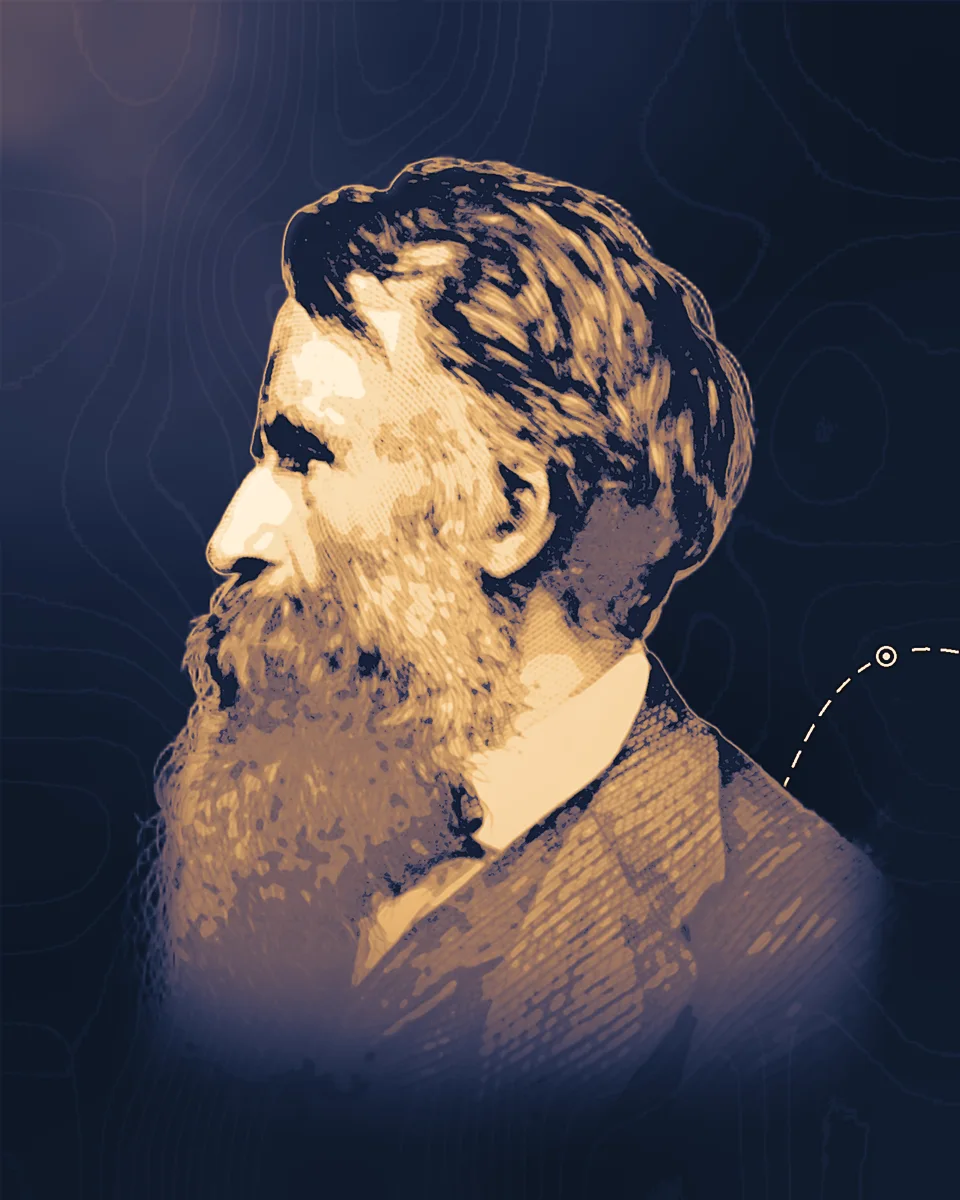
Robert William Thomson
He patented the air-filled tyre in 1845, forty-three years before the bicycle made a market for it.
1822–1873
What they changed
1845
The pneumatic tyre
Thomson patented a hollow belt of rubber, filled with air, to run around a carriage wheel. He called the wheels "Aerial Wheels". National Museums Scotland calls it "the first pneumatic rubber tyre". He took out patents in France in 1846 and in the United States in 1847.
1847
Tried on London carriages
The wheels were shown in London in March 1847 and fitted to several horse-drawn carriages. Grace's Guide records that they made the ride quieter and more comfortable and that one set ran 1,200 miles (about 1,900 km) without sign of wear.
1867
Rubber tyres for road engines
He patented thick solid rubber tyres for his "road steamers", steam traction engines for common roads. His obituary in The Illustrated London News remembered him first for these engines, "with broad indiarubber tires on the driving wheels".
1890
The patent that outlived him
When John Boyd Dunlop's bicycle tyre of 1888 became a business, Thomson's forgotten patents were found, and Dunlop lost his patent rights in 1890 because Thomson had come first. From then on no one firm owned the principle of the air-filled tyre.
Life
Robert William Thomson was born in 1822 at Stonehaven, on the east coast of Scotland, the eleventh of twelve children of a woollen mill owner. At fourteen he was sent to an uncle in Charleston, in the United States, and apprenticed to a merchant. He came home two years later and served an engineering apprenticeship in workshops at Aberdeen and Dundee.
He then worked for civil engineers in Glasgow and Edinburgh. His obituary says he was employed in blasting at Dunbar Castle and at the cliffs at Dover, where he first fired explosive charges by electricity, and that he went on to work for the Stephensons as a railway engineer in the east of England. He was twenty-three when he patented the tyre.
The tyre worked and did not sell. National Museums Scotland says it "was considered too expensive to manufacture at the time": rubber was costly, the roads were poor, and the bicycle and the motor car that would need such a tyre were about forty years away. Thomson moved on. He showed a self-filling fountain pen at the Great Exhibition of 1851, and in 1852 he went to Java to set up the machinery of a sugar plantation, became a partner in the estate and stayed until 1862. There he designed a portable steam crane.
Back in Edinburgh he built his road steamers and designed a hydraulic floating dock. He died at his home in Moray Place, Edinburgh, on 8 March 1873, aged 50. His newspaper obituary lists the traction engine, the crane, a rotary engine and the dock. It does not mention the pneumatic tyre.
Read more
4 accounts
Dunlop tyre: air apparent, National Museums Scotland, undated. The museum's account of Thomson's and Dunlop's tyres, with the objects it holds.
nms.ac.uk
Robert William Thomson, Grace's Guide to British Industrial History, undated. A dated outline with the text of his 1873 obituary in The Engineer and an extract from William Fletcher's Steam Locomotion on Common Roads (1891).
gracesguide.co.uk
The late Mr. R. W. Thomson, The Illustrated London News, 29 March 1873.
The obituary printed with his portrait.
archive.org
Who invented the "pneumatic"?, The India Rubber World, 1 August 1910.
A trade journal's piece on the proposal for an Edinburgh memorial to Thomson and on his priority over Dunlop.
archive.org