Industries / Figureheads
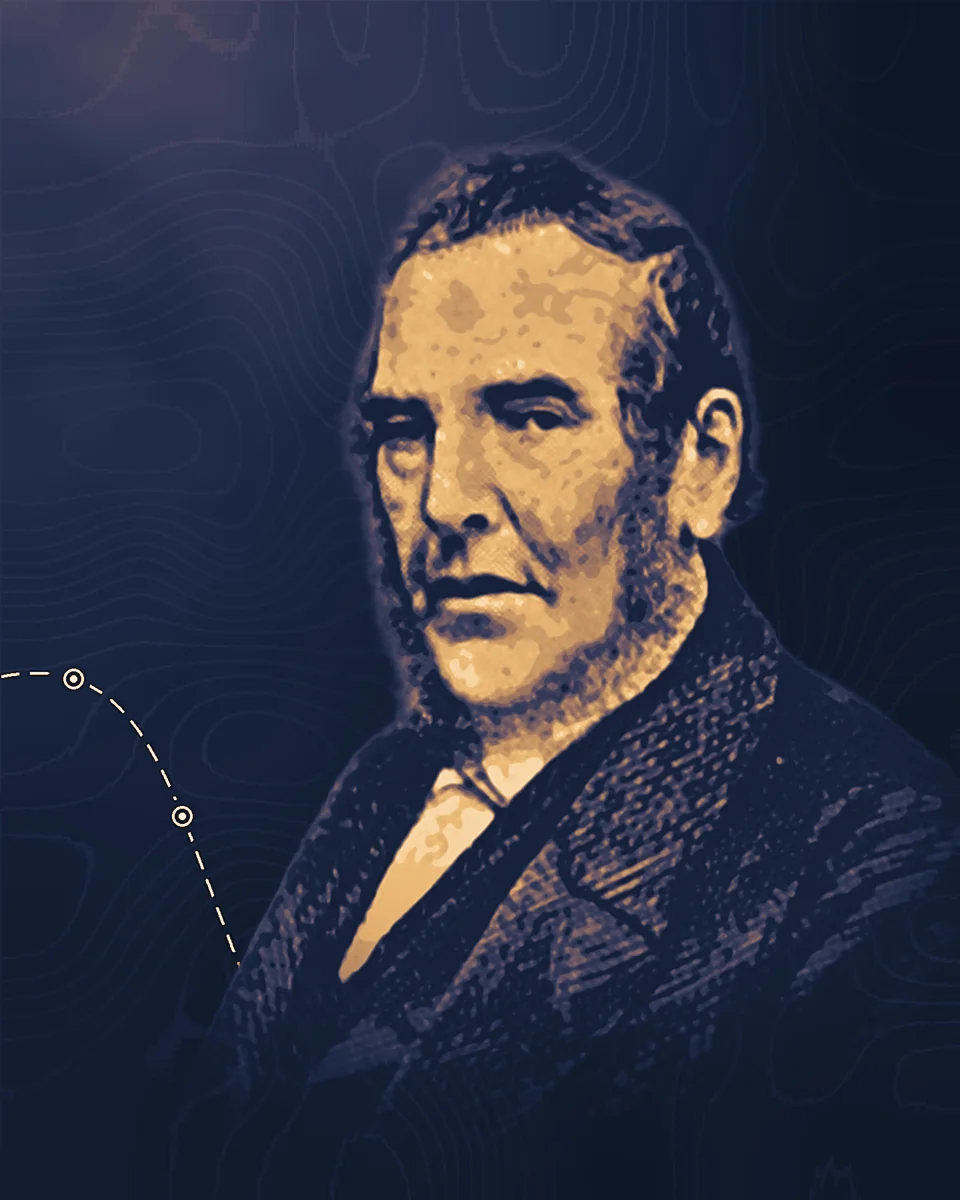
Richard Roberts
A Manchester toolmaker, he made the spinning mule work by itself, so that hundreds of spindles ran with no skilled spinner at the controls.
1789–1864
What they changed
1817
Tools that make exact parts
Roberts had worked for the London engineer Henry Maudslay from 1814. In Manchester he built one of the first machines for planing metal flat, in 1817, and a lathe with back gears. He later built his machines to templates and gauges, so that parts came out alike.
1825
A mule that runs itself
Crompton's mule was worked by a skilled spinner, who moved its carriage by hand at each stroke. During a spinners' strike in 1824, mill owners from Hyde, Stalybridge and nearby towns asked Roberts to make it automatic. He patented a self-acting mule in March 1825. Joseph Roe wrote in 1916 that in it hundreds of spindles "run themselves", with a few unskilled helpers to mend broken threads.
en.wikisource.orgarchive.orgcollection.sciencemuseumgroup.org.uken.wikisource.org
1826
Cotton machinery for Alsace
He went to Mulhouse in Alsace to design and lay out machinery for André Koechlin and Company. Roe says the visit "laid the foundation of modern French cotton manufacture."
1830
The self-actor improved
Roberts improved the machine in 1830, and in 1832 invented the radial arm for winding the yarn onto the spindles. His partners are said to have spent £12,000 on perfecting the machine. The Linda Hall Library says he "completed the automation process for making thread."
Life
Richard Roberts was born on 22 April 1789 at the toll house of Carreghofa, in the parish of Llanymynech on the Welsh border. His father kept the toll gate and made shoes. He had little schooling. He worked on canal boats and in the limestone quarries, and at about 20 became a pattern-maker, the craftsman who makes the wooden models for iron castings, at John Wilkinson's ironworks at Bradley in Staffordshire.
He was drawn for the militia in his own county and moved from town to town to avoid serving: Liverpool, Manchester, Salford, then London, where he found work with Maudslay. In 1816 he went back to Manchester and opened a small workshop in Deansgate. With Thomas Sharp as partner the business became Sharp, Roberts and Company, which sold his machines and later built locomotives, more than 1,500 of them by Roe's count.
en.wikisource.orgcollection.sciencemuseumgroup.org.ukarchive.org
The self-acting mule was ordered as a weapon in a labour dispute, and the sources say so. Roe writes that the mule spinners were the highest-paid workers in the Lancashire trade and "prone to strike", and that the owners came to Roberts three times before he agreed. He did it again in 1848: when workmen building the Conway tubular bridge went on strike, he built for the contractors a machine, which he called his Jacquard machine, that punched holes to any pattern in bridge and boiler plates.
He also built a power loom of cast iron, of which the Linda Hall Library says thousands were sold. He helped to found the Manchester Mechanics' Institute and sat on its borough council from 1838. He was a poor man of business. He left Sharp, Roberts and Company in the early 1840s, and his money ran out.
He moved to London in 1861 and died there on 11 March 1864, in poverty. A public fund that was being raised for him went to his daughter Elizabeth, who was also given a state pension of £200 a year. He is buried at Kensal Green.
Read more
4 accounts
English and American Tool Builders, Joseph Wickham Roe, 1916.
A Yale engineer's history of the machine-tool makers; pages 59 to 62 cover Roberts, with this portrait and pictures of his planer and lathe.
archive.org
Roberts, Richard, Dictionary of National Biography, volume 48, 1896.
A short life that lists his inventions in order and names the strikes behind two of them.
en.wikisource.org
Roberts, Richard (1789–1864), inventor, R.
T. Jenkins, Dictionary of Welsh Biography, 1959. The fullest account of his birth, family and last years, drawing on a Newcomen Society paper of 1946.
biography.wales
Richard Roberts, William B. Ashworth Jr., Linda Hall Library, 2025.
A historian of science's illustrated account, with a working self-acting mule and the painted portrait.
lindahall.org