Industries / Figureheads
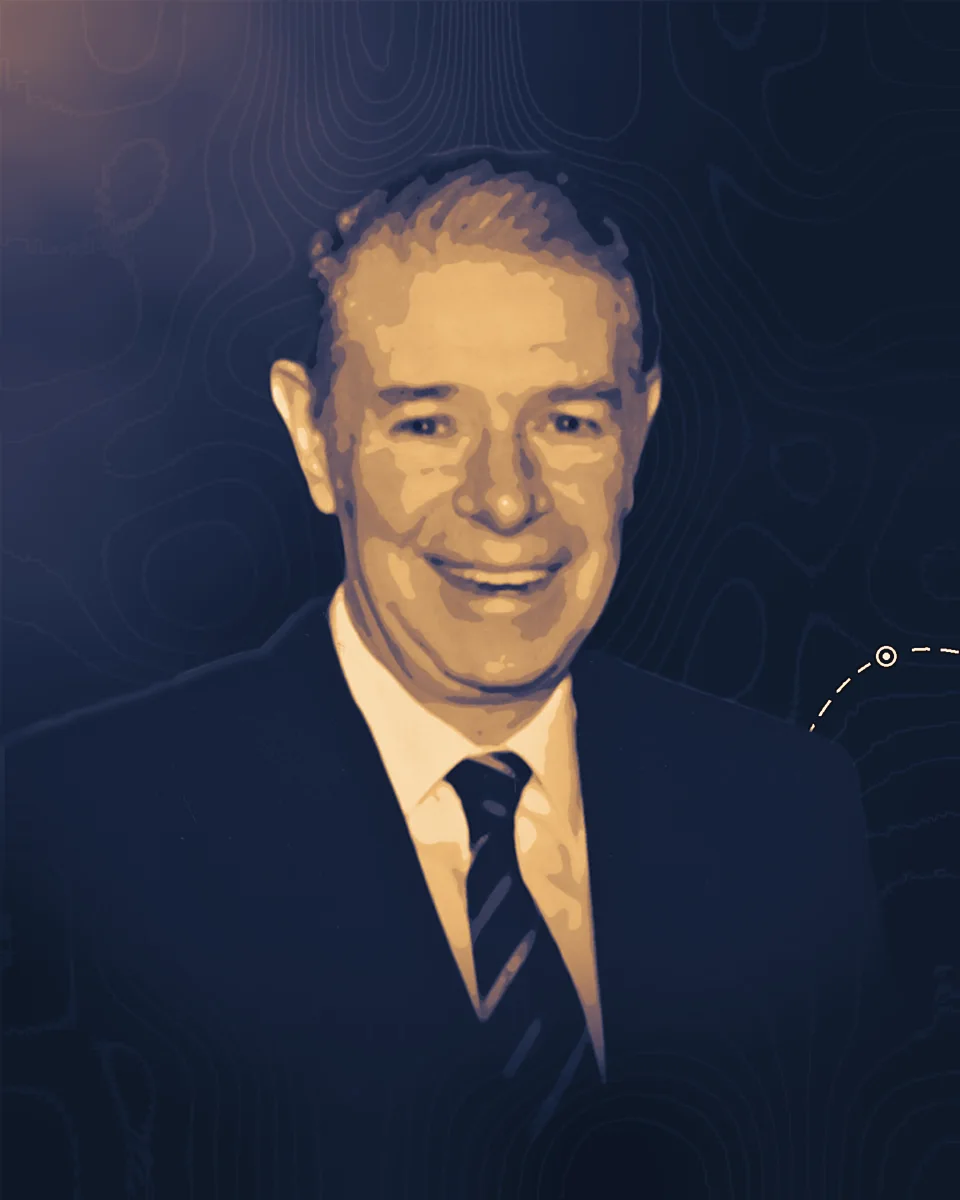
Ray Beverton
With Sidney Holt he wrote the mathematics by which fishery scientists still work out how much fishing a stock can bear.
1922–1995
What they changed
1947
A partnership at Lowestoft
Beverton joined the government Fisheries Laboratory at Lowestoft, on England's North Sea coast, in 1947 and began working with Sidney Holt, three years his junior, the same year. The director, Michael Graham, brought in Henry Hulme, a wartime operational researcher who had worked on convoys and U-boats, to talk to what Graham called "my two young boys".
1957
Fishing worked out in numbers
On the Dynamics of Exploited Fish Populations, by Beverton and Holt, set out how a fish stock responds to fishing as equations: how fast the fish grow, how many die naturally, how many are caught and at what size. Its best-known result, yield per recruit, gives the catch to expect from each young fish that enters the fishery under a chosen fishing rate and mesh size. A United States fisheries scientist introducing Beverton in 1994 said the book, "perhaps more than any other single contribution, has defined and described the theoretical and quantitative basis for fish stock management."
1959
The methods enter management
As deputy director at Lowestoft from 1959 to 1965, Beverton argued for quantitative methods as the basis for managing fisheries, and worked through the two bodies that covered the North Atlantic: the International Council for the Exploration of the Sea (ICES) and the International Commission for the Northwest Atlantic Fisheries.
1983
A journal restored
From 1983 to the end of 1991 he edited ICES's journal, the Journal du Conseil, now the ICES Journal of Marine Science. The same introduction credits him, with the help of his wife Kathy, with restoring its quality and standing.
Life
Raymond John Heaphy Beverton was born on 29 August 1922, the only child of Edgar John Beverton, a commercial artist, and Dorothy Sybil Mary Beverton. He was a keen angler from boyhood. He studied at Cambridge, worked briefly at Lowestoft in 1945 after the war, went back to finish his degree, and took first-class honours in zoology in 1947.
He stayed at Lowestoft for 18 years. The book that made his name was shared work. Sidney Holt's obituary in the Guardian says Holt worked out the equations at its core while camping in Scotland on another job and posted them to Beverton, and that the ministry published the result four years later. Of the partnership Beverton said in 1994: "We just simply found we had that sort of partnership that doesn't often happen."
In 1965 he left fisheries to become Secretary and chief executive of the United Kingdom's newly formed Natural Environment Research Council, which paid for much of the country's environmental science. He was made a Commander of the Order of the British Empire in 1968 and a Fellow of the Royal Society in 1975. After retiring from the council in the early 1980s he went back to research, first at the University of Bristol and from 1984 as Professor of Fisheries Ecology at the University of Wales in Cardiff.
He came to doubt how his own field was used. In a lecture to the World Fisheries Congress in Athens in 1992 he said it was well into the 1980s before fisheries science saw the limits of its mathematical models, and that the standard stock estimate known as VPA should stand for "very provisional assessment". He said maximum sustainable yield, the largest catch a stock can give year after year, had been wrongly treated as a target for managers, and that this had led to reliance on catch quotas. "Regulation by catch limits is fundamentally flawed," he said, excepting only the simplest fisheries on a single species, and he advised controlling the amount of fishing directly.
He also held that nature mattered more than the models allowed. Apart from the collapses of the 1960s and 1970s, he said, natural causes had shaped the long-term abundance of many fish more than fishing had. His own study of 62 years of North Sea haddock found the stock had been fished for many years at twice the rate that would have given the best lasting catch. He died on 23 July 1995.
Read more
4 accounts
The Raymond J. H. Beverton Lectures at Woods Hole, Massachusetts, edited by Emory D. Anderson, NOAA Technical Memorandum NMFS-F/SPO-54, 2002.
Three lectures he gave in May 1994, with his own memories of Lowestoft and an introduction that sets out his career.
repository.library.noaa.gov
Raymond John Heaphy Beverton, C.B.E., 29 August 1922 to 23 July 1995, David Cushing and Ronald Edwards, Biographical Memoirs of Fellows of the Royal Society, 1996.
The full life, by two colleagues.
doi.org
Dr. Beverton and the fisheries science, Ben-Yami's column, World Fishing, March 1996.
A column that reports his 1992 Athens lecture and his doubts about quotas.
penbay.org
Sidney Holt's legacy lives on in fisheries science, Emory D. Anderson and seven others, ICES Journal of Marine Science, 2021.
On the book and what became of its methods.
repository.library.noaa.gov