Industries / Figureheads
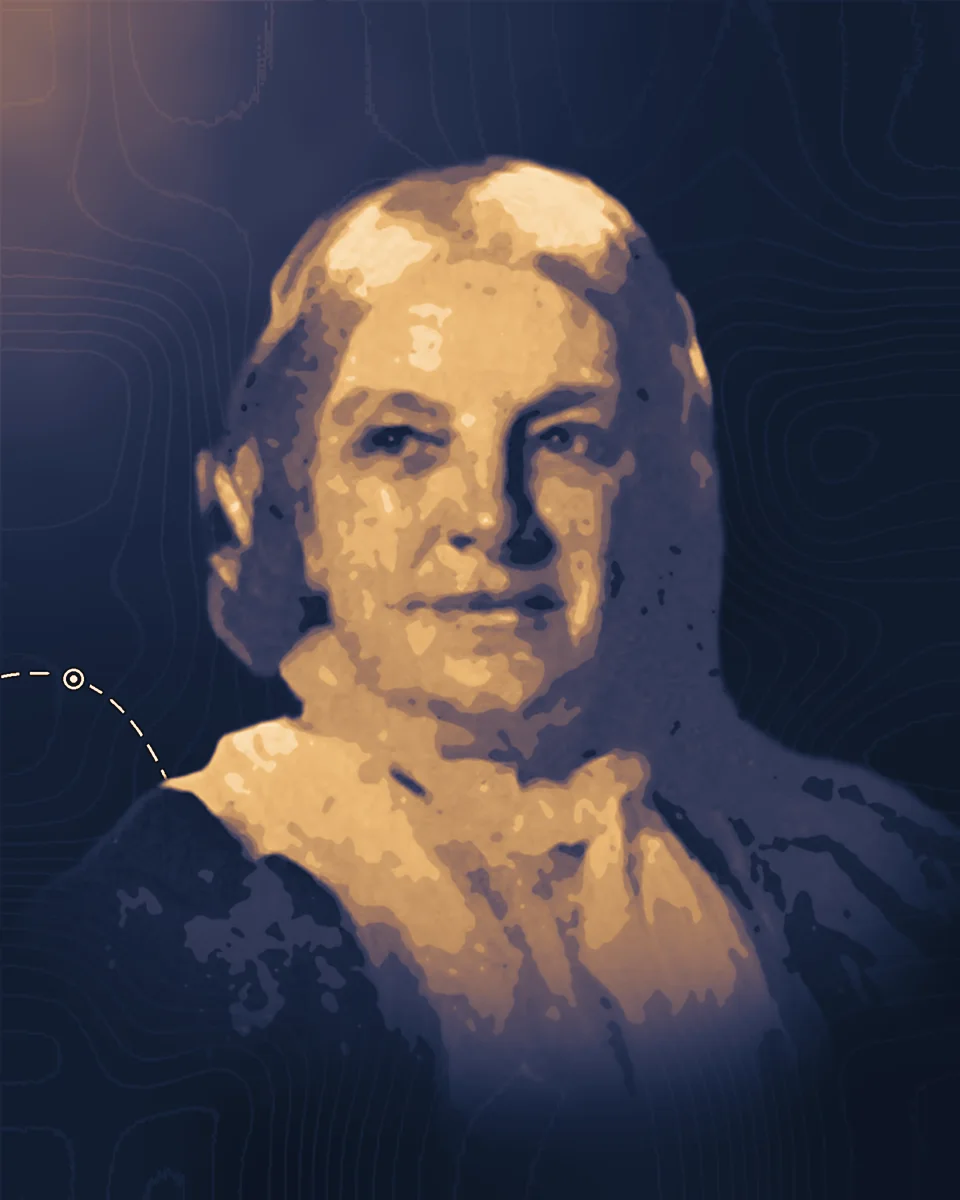
Octavia Hill
She showed that rented homes for the poor could be repaired, run and made to pay by managers who called on every tenant each week, and trained the women who made housing management a profession.
1838–1912
What they changed
1864
Three houses put under management
John Ruskin put up the money and Hill bought the last 56 years of the lease on three run-down houses in Paradise Place, Marylebone, for £750, to manage them herself. Her own account, written in November 1866, begins "Two years ago"; the Octavia Hill Birthplace House dates the purchase to 1864, and Shelter dates Ruskin's investment to 1865.
1866
Housing that paid its way
She collected the rents herself each week, set aside a fixed sum for repairs and let the tenants choose how to spend what was left. After about eighteen months the houses had paid 5% interest on all the capital and repaid £48 of it, which she put down to having no middleman and to "great strictness about punctual payment of rent".
1884
Estates for large landlords
From 1884 the Ecclesiastical Commissioners, who managed the Church of England's property, put houses under her management, among them 133 in Deptford. When she knew she was dying in 1912 she asked them and five other owners to hand their houses to the managers she had trained, and they agreed.
1896
The method goes abroad
The Octavia Hill Association in Philadelphia began in 1896 to buy and run houses on her lines, and an Octavia Hill Verein worked in Berlin. Historians name the two as the best known bodies to take up her ideas outside Britain.
1916
Trained women form a profession
Hill trained more housing managers than her own houses needed. Her trainees' Society of Women Housing Workers, formed in 1916, insisted on training and professional status, and after a merger with a men's institute in 1965 it became the Chartered Institute of Housing.
Life
Octavia Hill was born in Wisbech, Cambridgeshire, on 3 December 1838, the eighth daughter of James Hill, a corn merchant and former banker who followed the ideas of Robert Owen. Her mother, Caroline Southwood Hill, wrote on education, and her grandfather was the public health reformer Thomas Southwood Smith.
As a young woman she spent about ten years as a paid copyist of paintings for the critic John Ruskin, and he paid for her first houses on the understanding that they would return 5% a year. She collected the rents each week herself and later trained women to do it, so the weekly call was also a talk with the tenants and a check on the house. In her own words "the main tone of action must be severe": if the rent was not ready, "notice to quit must be served". Her friendship with Ruskin broke in 1877, when he attacked her in print; she collapsed and spent a long time away from her work. In 1881 she bought Paradise Place from him, and her lawyer William Shaen bought the neighbouring Freshwater Place so that her management could go on.
Her work went well beyond housing. She was active in the Charity Organisation Society, founded in 1869, and in the Kyrle Society, which her sister Miranda began in 1875 to bring art and gardens to poor districts. In Southwark the Ecclesiastical Commissioners leased her a derelict factory site in 1886 for a farthing a year, and she built cottages, a hall and a garden there. She campaigned to save Hampstead Heath and Parliament Hill Fields, and the National Trust grew from her idea and the lawyer Robert Hunter's: its inaugural meeting was in July 1894 and its provisional council first met in January 1895. From 1905 to 1909 she sat on the Royal Commission on the Poor Laws.
She was criticized in her lifetime and after. She opposed women's suffrage in parliamentary elections, and she opposed state welfare such as unemployment benefit and old-age pensions, holding that help should come from family and neighbours. The historian Elizabeth Baigent writes that these views, and her support for the Charity Organisation Society, "came to epitomize middle-class busybodies" to later readers, and that the picture of Hill evicting tenants for arrears is a cliché: her managers could be flexible when a tenant was ill or had just had a baby.
She had been short of breath for more than a year when, at Easter 1912, she learned that her illness was serious, and she spent her last months handing on her work. She died at her home at 190 Marylebone Road, London, on the night of 13 August 1912, and was buried beside her sister Miranda at Crockham Hill in Kent. Before her death she left the Sargent portrait to the National Portrait Gallery.
Read more
4 accounts
Homes of the London Poor, Octavia Hill, 1875.
Her own essays from the Fortnightly Review and Macmillan's Magazine, starting with the account of her first houses, in a New York reprint.
archive.org
Life of Octavia Hill as told in her letters, edited by C. Edmund Maurice, Macmillan, 1913.
Her letters from childhood to her death, gathered by her brother-in-law.
archive.org
Nobler imaginings and mightier struggles: Octavia Hill, social activism and the remaking of British society, edited by Elizabeth Baigent and Ben Cowell, Institute of Historical Research, 2016.
Fourteen historians on her housing, open spaces, the National Trust, her portraits and her reputation, free to read.
archive.org
Good housing that pays, Fullerton L. Waldo, Harper Press, Philadelphia, 1917.
The history of the Octavia Hill Association's first twenty years of buying and running houses on her lines.
archive.org