Industries / Figureheads
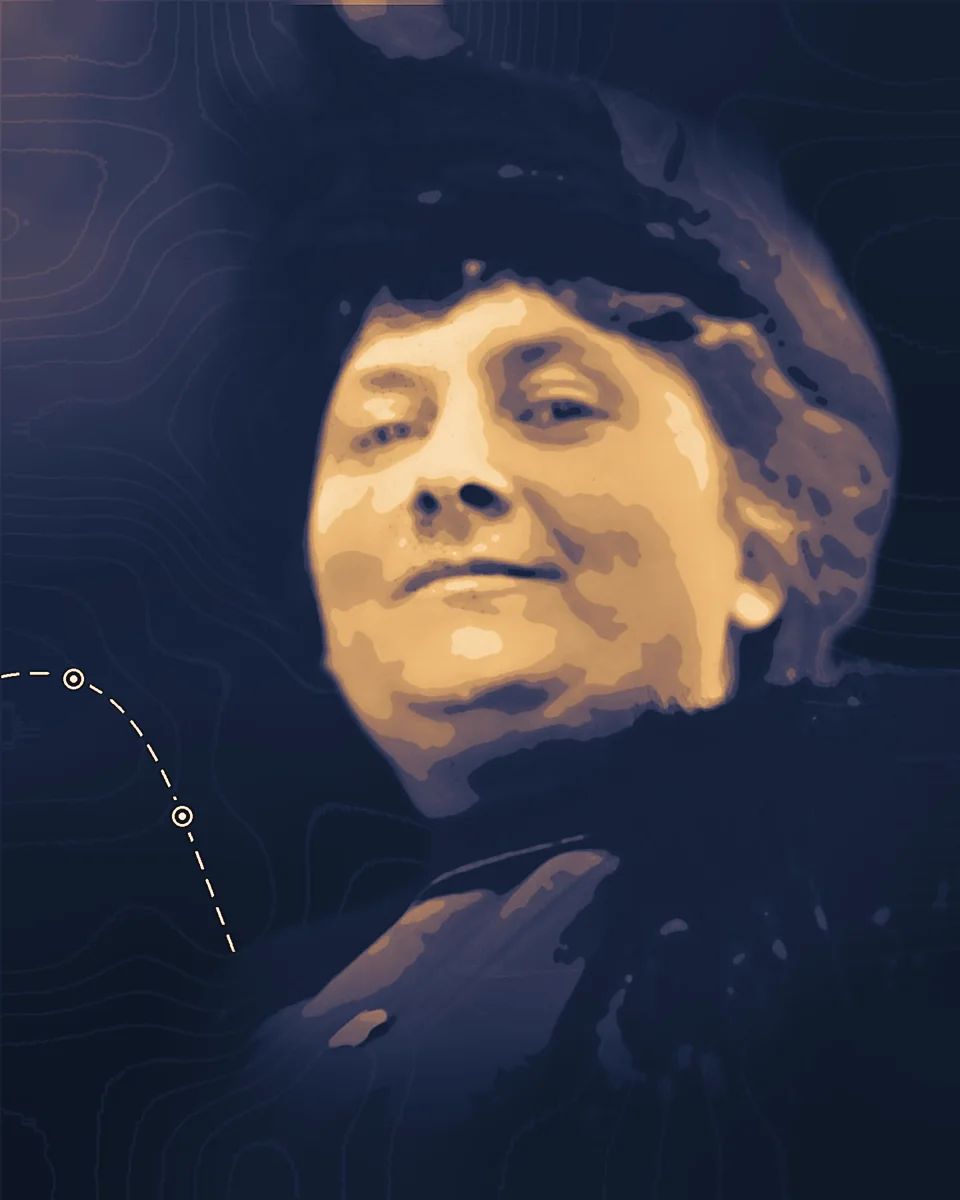
Maria Montessori
A physician, she built a way of teaching young children through self-chosen work with graded materials in a room fitted to their size, and trained the teachers who carried it to schools in dozens of countries.
1870–1952
What they changed
1900
Teaching children held unteachable
From 1900 Montessori and Giuseppe Montesano ran the Scuola magistrale ortofrenica in Rome, a school that trained teachers of children with mental disabilities. Its results led her, by the account of the Dizionario Biografico degli Italiani, Italy's national biography, to take the methods of the French physicians Jean Itard and Édouard Séguin in a new direction.
1907
The Children's House
At the invitation of the engineer Edoardo Talamo, whose company built housing for workers in Rome's San Lorenzo quarter, she organized a school for the tenants' small children. The first Casa dei Bambini opened on 6 January 1907 and a second on 7 April.
1909
The method in a book
Her book on the method, written in 1909 with the backing of Leopoldo and Alice Franchetti, began with training of the senses through structured materials and moved on to reading, writing and number, with the child free to choose the work. It came out in English in 1912, and by the national biography's count it appeared in 58 countries and 36 languages.
1913
Courses that trained teachers
In January 1913 she taught the first international course on her method in Rome, to students from the United States and 17 other nations, which the national biography calls the birth of the Montessori movement. Her son Mario was a moving force in founding the Association Montessori Internationale in 1929.
1939
The method in India
In 1939 she went to India with Mario to run a course for Indian teachers. The Second World War kept her there, and she went on with her studies of infants, published at Adyar in 1949 as The Absorbent Mind.
Life
Maria Montessori was born at Chiaravalle, near Ancona, on 31 August 1870, the only child of Alessandro Montessori, a finance ministry official, and Renilde Stoppani. The family settled in Rome in 1875. She meant to be an engineer and went to technical schools, then entered the science faculty in 1890 and moved to medicine in 1892, one of the very first Italian women to do so. She graduated in July 1896, with a thesis from the university's psychiatric clinic.
On 31 March 1898 she secretly gave birth to a son, Mario, by her colleague Montesano. To avoid a scandal that would have ended both their careers they kept it hidden. The boy was raised by another family and then at boarding school, and she visited him without telling him who she was. She took him to live with her in 1913, presenting him as an adopted son or a nephew. She also campaigned for women's rights, at the International Council of Women in Berlin in 1896, and in 1906 she petitioned parliament for women's votes.
Her American success faded after 1914. The national biography puts this down to criticism from the progressive educators, John Dewey and above all William Heard Kilpatrick, whose book The Montessori System Examined called her method too individual, and to her split in 1917 with Helen Parkhurst, who had led her American movement.
In Italy she sought the support of the Fascist government. In 1924 Mussolini promised it, and the philosopher Giovanni Gentile chaired the Opera nazionale Montessori, which opened schools, made her materials and ran training courses. Mussolini presided over the honour committee of the first course in Milan in 1926. The alliance broke down over her internationalism and her temper: she and Mario left the Opera in January 1933 and Italy in 1934, and Montessori schools were then closed in Italy and in Nazi Germany.
She lived in Spain until the civil war, then in the Netherlands, and spent the Second World War in India, where the British briefly interned Mario as an enemy alien. After the war she returned to Italy to reopen schools but kept her home in Amsterdam. She was put forward for the Nobel Peace Prize. She died at Noordwijk aan Zee on 6 May 1952.
Read more
4 accounts
The Montessori Method, Maria Montessori, translated by Anne E. George, Frederick A. Stokes, 1912.
Her book on the Children's Houses in its first English edition.
archive.org
MONTESSORI, Maria, Fulvio De Giorgi, Dizionario Biografico degli Italiani, vol. 76, 2012.
The Italian national biography's account, in Italian, frank about her son and the Fascist years.
treccani.it
Maria Montessori: A Biography, Rita Kramer, Putnam, 1976.
The standard full life in English.
archive.org
The Montessori System Examined, William Heard Kilpatrick, Houghton Mifflin, 1914.
The American critique that checked her method's spread in the United States.
archive.org