Industries / Figureheads
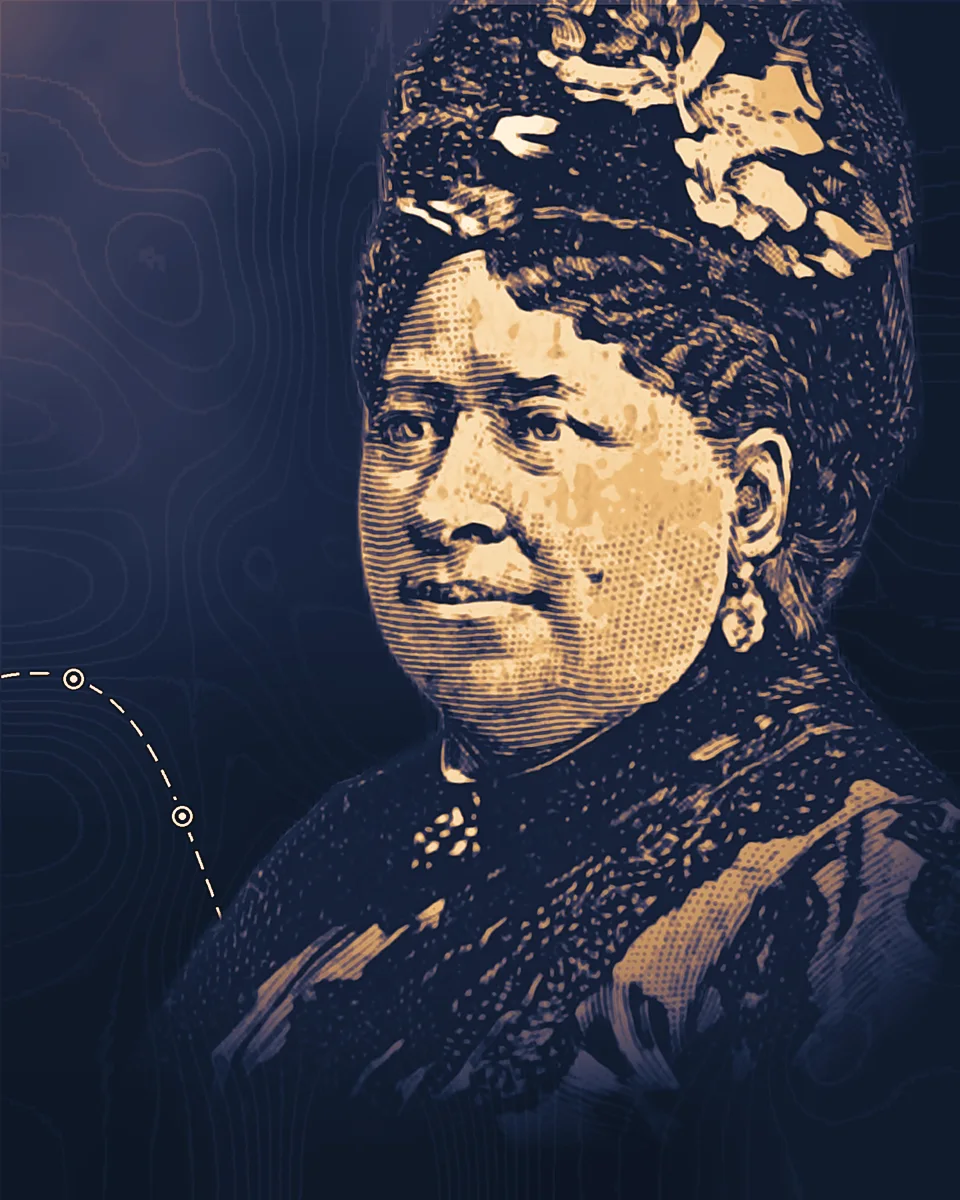
Marguerite Boucicaut
Co-founder with her husband Aristide of Le Bon Marché in Paris, she ran it alone after 1879 and made its employees part-owners of the business and holders of a pension.
1816–1887
What they changed
1852
Co-founder of the store
Marguerite and Aristide Boucicaut became partners of the Videau brothers in Au Bon Marché, a Paris shop, and bought them out in 1863. The Banque de France's economics museum, Citéco, says the store "was set up in Paris by Aristide and Marguerite Boucicaut", and the history by Jacques Trotoux and Michel Germain in the bulletin of the Académie nationale de médecine (2016) credits the couple with its free entry, accepted exchanges, prices on show, home delivery, sales by mail and small margins.
1879
Running the store alone
Aristide died in 1877 and their only son, Antony-Aristide, in 1879. The Larousse dictionary entry that the store reprinted in 1894 says she then took sole charge of the Bon Marché and gave her last years to carrying on and enlarging the work "qu'elle avait contribué à fonder" (that she had helped to found).
1880
Employees become owners
To make the store outlast her, she gave its employees shares in the business in 1880. By the Larousse entry, an employee could now move from wage earner to a share in the profits and then to owning a part of the store, and by 1887 358 employees held such a share.
1886
A pension fund for staff
She founded a retirement fund (caisse de retraite) for the store's employees and paid into it from her own fortune 1 million francs in 1886 and 4 million in 1887. By the Larousse entry, it paid 25 pensions of 600 to 1,500 francs a year in its first year. She also kept adding to the provident fund her husband had begun in 1876.
Life
Marguerite Guérin was born at Verjux, in the Saône-et-Loire department of Burgundy, on 3 January 1816. Trotoux and Germain write that her father was unknown and that she was sent out as a small child, at four by one account, to keep geese. At twelve, in 1828, she went to Paris to an uncle and worked in a laundry and then in a dairy shop, where she met Aristide Boucicaut, a clerk at the Petit Saint-Thomas on the rue du Bac.
His family opposed the marriage because of her origins. The two lived together, and married on 5 October 1848 when she was pregnant, by the Académie's account. Sources that credit the Bon Marché to Aristide alone, such as EBSCO's Research Starters, do not name her. LVMH, which owns the store now, names both as founders and as the owners from 1863.
After 1879 she ran the store and grew the fortune through a company, and spent much of it on gifts, among them schools and help towards building the Pasteur Institute. The Larousse entry says she had given Louis Pasteur 150,000 francs in her lifetime, and that she and Aristide had founded homes for the old at Fontenay-aux-Roses and at Bellême, his birthplace.
She died at Cannes on 8 December 1887. Her will left every employee of the Bon Marché 1,000 to 10,000 francs by length of service, left large sums to refuges, schools, charities, artists' and inventors' societies and the main religious bodies, and named the Assistance publique, the Paris hospitals authority, as heir to the rest, about 8 million francs, on condition that it build a hospital. The will also barred buildings of more than two storeys and reserved free care for the store's staff. The Hôpital Boucicaut opened on 22 November 1897, and its last ward moved out a few days before Christmas 2000, to the new Hôpital européen Georges-Pompidou.
Read more
3 accounts
L'Hôpital Boucicaut : 100 ans de médecine, Jacques Trotoux and Michel Germain, Bulletin de l'Académie nationale de médecine, 2016.
The history of the hospital her will paid for, which opens with her life and the couple's trade.
academie-medecine.fr
Souvenir offert par les magasins du Bon Marché fondés par Aristide Boucicaut, Au Bon Marché, 1894.
The store's own booklet, with both founders' portraits and the Larousse entries on their lives, her will included.
archive.org
The Bon Marché: Bourgeois Culture and the Department Store, 1869–1920, Michael B.
Miller, Princeton University Press, 1981. The standard history of the store, written from its archives.
archive.org