Industries / Figureheads
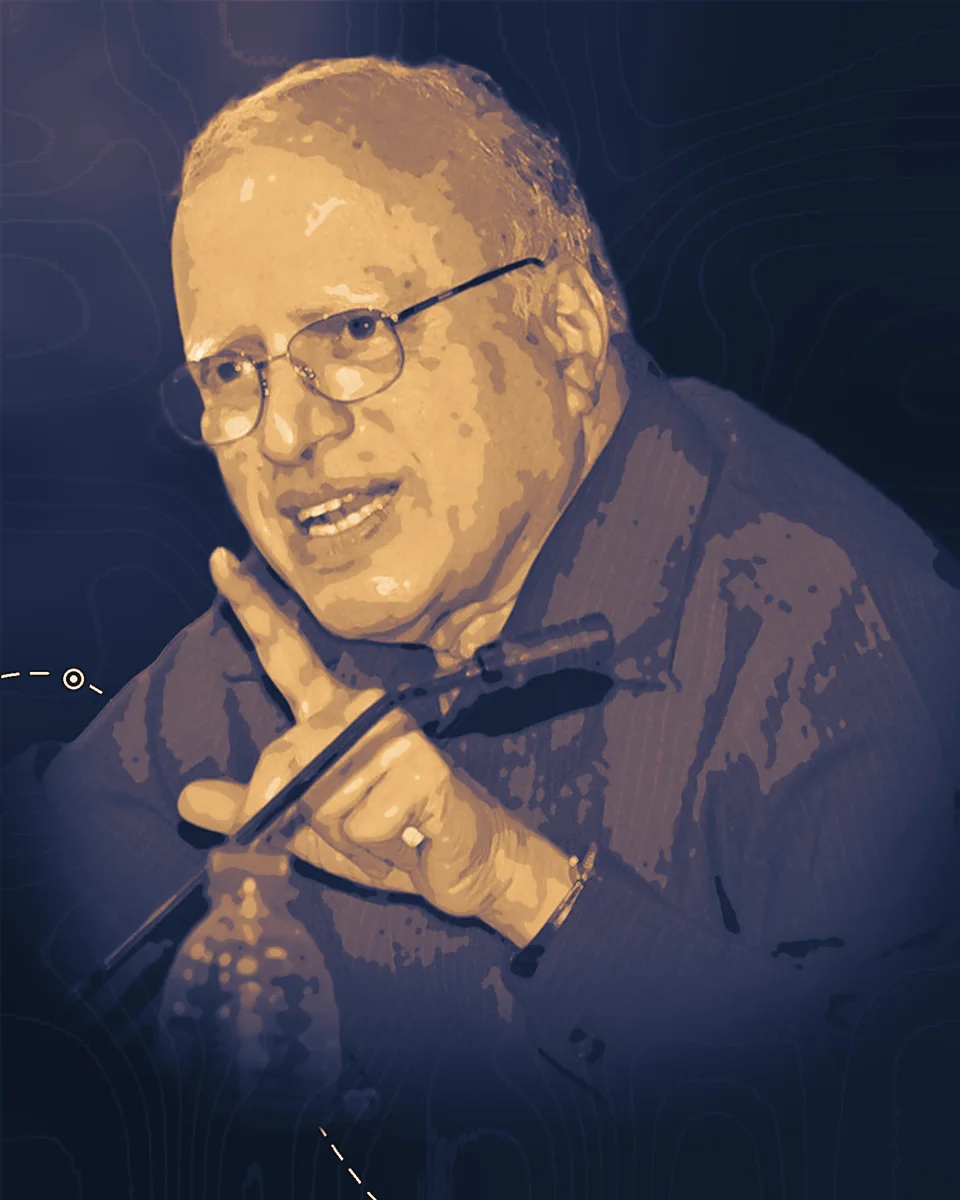
M. S. Swaminathan
He brought Mexico's dwarf wheats into India's fields and built the program that spread them.
1925–2023
What they changed
1963
Mexican dwarf wheat reaches India
In 1962 Swaminathan, a geneticist at the Indian Agricultural Research Institute in New Delhi, learned of the short, high-yielding wheats Norman Borlaug had bred in Mexico. Borlaug came with seed in March 1963, and in Indian trials the new wheats gave more than four tonnes a hectare where the control plots gave one. Swaminathan set the institute to test the Mexican wheats, select from them, cross them with Indian varieties and change the color of their grain.
1967
A wheat buyers would take
The Mexican variety Sonora 64 had red grain, which Indian buyers did not want. In 1967 Swaminathan and his co-workers released Sharbati Sonora, a dwarf wheat with amber grain, made from Sonora 64 by inducing mutations in its seed.
1968
Demonstrations in farmers' fields
Under a High-Yielding Varieties Program that Swaminathan designed, scientists laid out thousands of demonstration plots on farmers' own land, and one village near Delhi was turned over to multiplying seed for its state. India's wheat harvest rose from 12 million tonnes to 17 million tonnes in the four years to 1968, by Nature's figures.
1987
Prize money into a foundation
He received the first World Food Prize in 1987 and used the US$200,000 to set up the M. S. Swaminathan Research Foundation in Chennai, which works with farmers to improve farming methods and pass them on.
Life
Mankombu Sambasivan Swaminathan was born on 7 August 1925 in Kumbakonam, in what is now Tamil Nadu. He was a surgeon's son and meant to study medicine. The Bengal famine of 1943, which killed about three million people, turned him to agriculture. He graduated from Coimbatore Agricultural College, studied potato genetics at Wageningen in the Netherlands, took a doctorate at Cambridge in 1952 and worked at the University of Wisconsin. He came home in 1954 to the Indian Agricultural Research Institute.
In the 1960s India's harvests were failing and the country imported grain from the United States. India's own wheats were tall and fell over when they were fertilized. The Mexican wheats stood up, and Swaminathan saw what they could do under Indian irrigation. He became director of the institute in 1966.
The wheats were Borlaug's and the work in India was shared. Borlaug wrote that the green revolution was "a team effort" of Indian officials, organizations, scientists and farmers, and that "a great deal of the credit" went to Swaminathan "for first recognising the potential value of the Mexican dwarfs", in words India's agriculture minister quoted in 1980. Swaminathan said much the same when he took the Ramon Magsaysay Award in 1971: it was a tribute "to the entire community of agricultural scientists in my country".
One claim from his institute did not stand unchallenged. In the 1970s figures it had published for lysine, an amino acid, in the grain of Sharbati Sonora were disputed, and an inquiry committee of the Indian Council of Agricultural Research had the grain tested. A 1979 Britannica yearbook article, drawing on a report in New Scientist, named him among scientists who might have quoted wrong data. The agriculture minister replied in 1980 that Swaminathan had never claimed to have measured lysine himself, that he had quoted his institute's scientists, and that the wheat was not released for its lysine.
By the 1990s the green revolution itself was under criticism. Nature's obituary lists the charges: farmers took to growing one crop and India lost about 100,000 local rice varieties, overused fertilizer degraded the soil, and irrigation drew down the groundwater. Swaminathan agreed with much of it. In a 2013 paper he wrote that rice and wheat yields in Punjab had more than tripled since 1960 and had then stalled, and he gave the reasons as a "steep fall in ground water table", poorer soil and farmers deep in debt. He called for an "evergreen revolution", which he defined as higher yields "in perpetuity without associated ecological harm".
He served as India's secretary of agriculture and on its Planning Commission, chaired the council of the UN Food and Agriculture Organization from 1981 to 1985, and in the 1980s headed the International Rice Research Institute in the Philippines and the International Union for Conservation of Nature. He was president of the Pugwash Conferences, which work against nuclear weapons, from 2002 to 2007. He died at home in Chennai on 28 September 2023, aged 98.
Read more
5 accounts
M. S. Swaminathan (1925–2023), leader of India's 'green revolution', Gayathri Vaidyanathan, Nature, 2023.
An obituary that covers the science, the government posts and the criticism.
nature.com
Obituary: M.S. Swaminathan (1925–2023), Crop Trust, 2023.
His education, his posts and the seed-conservation bodies he helped found, with his own words from interviews.
croptrust.org
Swaminathan, Moncompu Sambasivan, Ramon Magsaysay Award Foundation, 1971.
The award citation and his acceptance speech, written while the wheat program was four years old.
rmaward.asia
Food production and availability: essential prerequisites for sustainable food security, M. S. Swaminathan and R. V. Bhavani, Indian Journal of Medical Research, 2013.
His own late account of what the green revolution gained and what it used up.
pmc.ncbi.nlm.nih.gov
Letter from Rao Birendra Singh to Bhai Mahavir, M S Swaminathan Papers, Archives at the National Centre for Biological Sciences, 1980.
The agriculture minister's reply on the lysine dispute, as a scanned typescript.
collections.archives.ncbs.res.in