Industries / Figureheads
Lord Shaftesbury
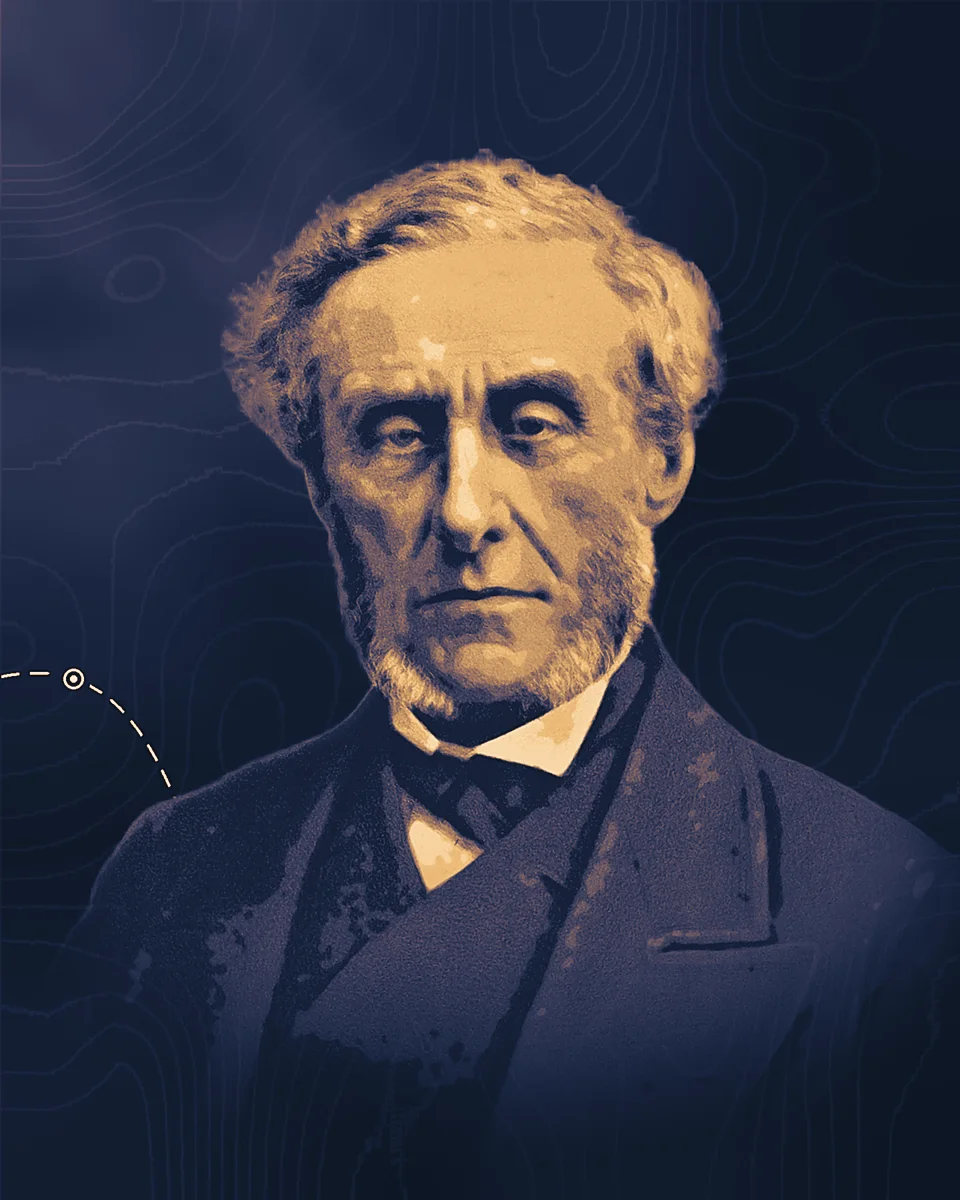
He led the campaign in Parliament that put a legal limit on the working day in Britain's textile mills, first for children and then for women and the young.
1801–1885
What they changed
1833
Taking the ten hours bill
Michael Sadler, who had brought a bill to limit mill work to ten hours a day, lost his seat in the general election of 1832. Delegates of the workers' Short Time Committees chose Lord Ashley, as Shaftesbury was then called, to carry it on. The government answered his bill with one of its own. That Act of 1833 covered textile mills only: no child under nine, 48 hours a week for children of nine to thirteen, 12 hours a day up to eighteen, and four inspectors to enforce it.
1844
Fenced machines, shorter hours
The Factories Act of 1844 made it a crime to leave dangerous machinery unfenced, cut children's work to six and a half hours a day and gave women the 12-hour limit of the young. The UK Parliament's history calls it "in effect" Britain's first health and safety act. Ashley's own proposal that year, a ten-hour limit, was voted down.
1847
Ten hours becomes law
The Factory Act of 1847 limited women and people aged 13 to 18 to ten hours a day, or 58 a week. Ashley was out of Parliament when it passed. He had given up his seat in January 1846 after changing his mind on the Corn Laws, and John Fielden, a cotton master and member for Oldham, took charge of the bill. Parliament's history credits the Act to Ashley's campaign.
1850
A compromise on hours
Mill owners worked women and children in relays, so that no inspector could tell how long anyone had worked, and in February 1850 a court ruled the practice legal. In May Ashley advised the workers to accept the government's answer: ten and a half hours on weekdays, 60 a week, all between 6 a.m. and 6 p.m. His letter said a fixed day would prevent "shifts, relays, and other evasions". Bernice Martin dates the end of relays to an Act of 1853, which put every protected worker in a mill on the same fixed twelve hours.
Life
Anthony Ashley Cooper was born at 24 Grosvenor Square, London, on 28 April 1801, the eldest son of the man who became the sixth Earl of Shaftesbury. He went to Harrow and to Christ Church, Oxford, where he took a first in classics in 1822. He entered Parliament in 1826 as Lord Ashley, the title he used until he succeeded his father as earl in 1851.
The ten hours movement was not his. It began in the mill towns of Yorkshire and Lancashire. Its leaders there were Richard Oastler, a land agent whose letters to the press in 1830 caused a stir in Yorkshire, John Fielden, John Doherty of the cotton spinners' union, and John Wood, a Bradford worsted spinner who with Fielden paid for most of it. Sadler led it in Parliament until he lost his seat. J. L. and Barbara Hammond, who wrote Shaftesbury's life in 1923, say he knew nothing of Sadler's speech on the bill when the delegates came to him. They also say he was always hostile to trade unions and kept the campaign away from questions of wages.
The compromise of 1850 cost him the trust of many of the workers he spoke for. His letter accepting the government's plan was printed in The Times before the Short Time Committees had seen it. A meeting of their delegates at Halifax resolved that he had "basely and treacherously betrayed the interests of the factory children." Oastler had written days before that the workers were unanimous against the plan.
The laws needed people to enforce them. The Hammonds wrote that it is hard to overstate what inspectors such as Leonard Horner did for the reforms of the age, and Bernice Martin, Horner's biographer, judged that his work to make the law enforceable was almost certainly more decisive than that of the champions in Parliament whom the inspectors "educated and informed."
Factories were one cause among many. An Act of 1842, passed under his care, kept women and boys under thirteen from working underground in mines. He worked for the reform of the lunacy laws from 1828, chaired the Ragged School Union for 39 years, and in 1875 carried an Act to protect the boys whom chimney sweeps sent up flues. In 1879 he raised the question of factory labour in India in the House of Lords. He died at Folkestone on 1 October 1885.
Read more
4 accounts
Lord Shaftesbury, J. L. Hammond and Barbara Hammond, Constable, 1923.
A critical life by two historians of labour, strongest on the factory campaign and the compromise of 1850.
archive.org
The Life and Work of the Seventh Earl of Shaftesbury, K.G., Edwin Hodder, Cassell, 1886.
The authorized life in three volumes, built on his diaries.
archive.org
Cooper, Anthony Ashley, seventh Earl of Shaftesbury, William Garden Blaikie, Dictionary of National Biography, 1887.
The national biography's entry, written two years after his death.
en.wikisource.org
Later factory legislation, UK Parliament, Living Heritage, undated. Parliament's own short history of the Acts of 1844, 1847 and after.
parliament.uk