Industries / Figureheads
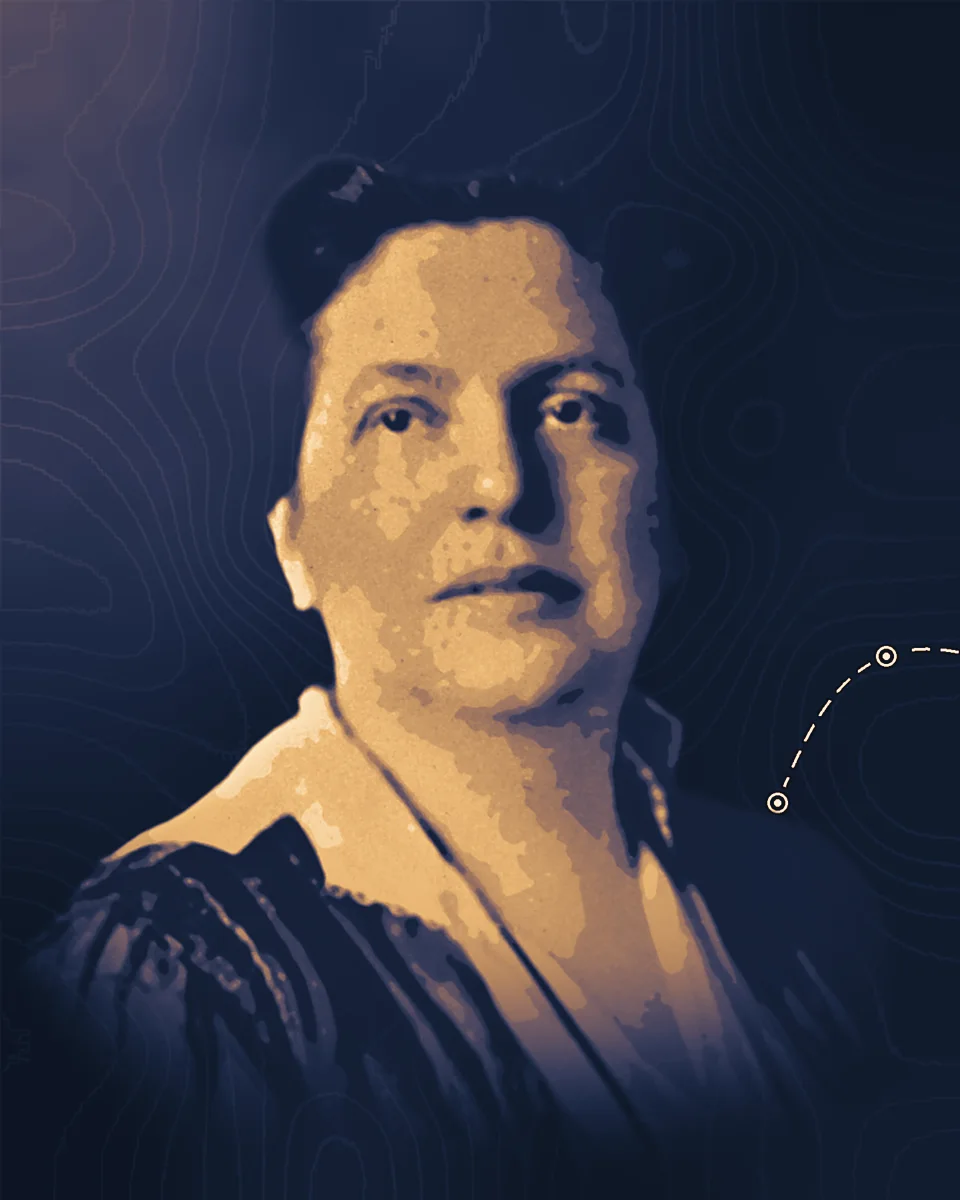
Lillian Wald
She sent trained nurses into New York's tenements, named their work public health nursing, and got it paid for by schools, cities and an insurer.
1867–1940
What they changed
1893
Nurses in the tenements
Wald and Mary Brewster, a classmate from nursing school, moved to New York's Lower East Side in 1893 to live among their patients as nurses. The Jewish Women's Archive says Wald coined the term "public health nurse" that year for nurses who worked outside hospitals, and that they came on the call of doctors or of patients themselves and charged fees by what the patient could pay.
1902
A nurse in the schools
Wald pressed New York's school system to provide nurses, and Lina L. Rogers, a Henry Street nurse, was hired in 1902 as the city's first public school nurse. In her first month Rogers treated 893 pupils and made 137 home visits, and the Board of Health then hired its first twelve school nurses.
1909
Home nursing through insurance
Wald suggested to an official of the Metropolitan Life Insurance Company that it nurse its industrial policyholders and showed his colleagues evidence that visiting nurses cut deaths and sped recovery. In 1909 the company hired Henry Street's nurses to do it, and by 1915 its nursing service practically covered those policyholders in the United States and Canada. She wrote that insurance was "the only basis that makes it possible for persons of small means to receive nursing without charity".
1910
Nursing taught at a university
Wald helped start a series of lectures for nurses at Columbia University's Teachers College in 1899, with field training at Henry Street. The series led to the university's Department of Nursing and Health in 1910.
1912
Standards for public health nurses
As visiting nurses multiplied, Wald and her colleagues formed the National Organization for Public Health Nursing in 1912 to set standards for the work, and she was elected its first president.
Life
Lillian D. Wald was born on 10 March 1867 in Cincinnati, Ohio, the third of four children of a Jewish family; her father, Max Wald, sold optical goods. The family moved to Rochester, New York, in 1878. She met a young nurse in 1889 who inspired her, trained at the New York Hospital Training School, and graduated in 1891. She worked at the New York Juvenile Asylum, an orphanage, and began classes at the Women's Medical College in New York.
In 1893 she taught a class in home nursing to immigrant women on the Lower East Side. During a lesson a girl asked her to come to her sick mother and led her through the tenements, a visit Wald later called "a baptism of fire", and she left medical school to work in the neighborhood. She and Brewster stayed at the College Settlement on Rivington Street that summer and before September found a top-floor flat on Jefferson Street. By Wald's own account, the work had no formal organization until they moved into the house on Henry Street in 1895. Donors paid for it; the Jewish Women's Archive names Jacob Schiff as an early benefactor.
The Henry Street Settlement grew into a center for neighborhood health and social work. By 1913 it had seven buildings on Henry Street and two branches, and 92 nurses making an estimated 200,000 home visits a year. Wald lent its rooms to the National Association for the Advancement of Colored People for meetings. She joined the National Child Labor Committee in 1904, conceived the federal Children's Bureau in 1905, and campaigned for it until it was set up in 1912.
She opposed the entry of the United States into the First World War, then worked for the Red Cross and chaired the Committee on Home Nursing of the Council of National Defense. In the influenza pandemic of 1918 she directed the response of New York City's public health nurses, recruiting nurses and setting up treatment centers across the city, by the account of the nursing historian C. A. Wanyo. In 1910 she toured Hawaii, Japan, China and Russia to explain the Henry Street methods.
Her health began to fail in 1925, and after a stroke in 1933 she retired to her house in Westport, Connecticut, where she wrote Windows on Henry Street (1934). She died on 1 September 1940, aged 73. A few months later 2,500 people filled Carnegie Hall to hear tributes to her. The Henry Street Settlement and the Visiting Nurse Service of New York, which grew out of her nursing service, still work today.
Read more
6 accounts
The House on Henry Street, Lillian D. Wald, Henry Holt, 1915.
Her own account of the first twenty years, with the founding of the nursing service and the insurance scheme.
archive.org
Windows on Henry Street, Lillian D. Wald, Little, Brown, 1934.
Her second memoir, written after she retired.
archive.org
Lillian Wald: a biography, Marjorie N. Feld, University of North Carolina Press, 2008.
A full-length life by a historian.
archive.org
Women of Valor: Lillian Wald, Jewish Women's Archive, undated. An illustrated account of her work drawn from her papers at Columbia University, with a timeline.
jwa.org
Wald's leadership: public health nurses' response to the 1918 influenza pandemic, C.
A. Wanyo, Public Health Nursing, 2023. A case study from the Lillian Wald Papers of how she ran the city's nursing in the second wave.
europepmc.org
The cost of caring: the Metropolitan Life Insurance Company's Visiting Nurse Service, 1909-1953, Diane Hamilton, Bulletin of the History of Medicine, 1989.
A history of the insurer's nursing service from its start to its end.
europepmc.org