Industries / Figureheads
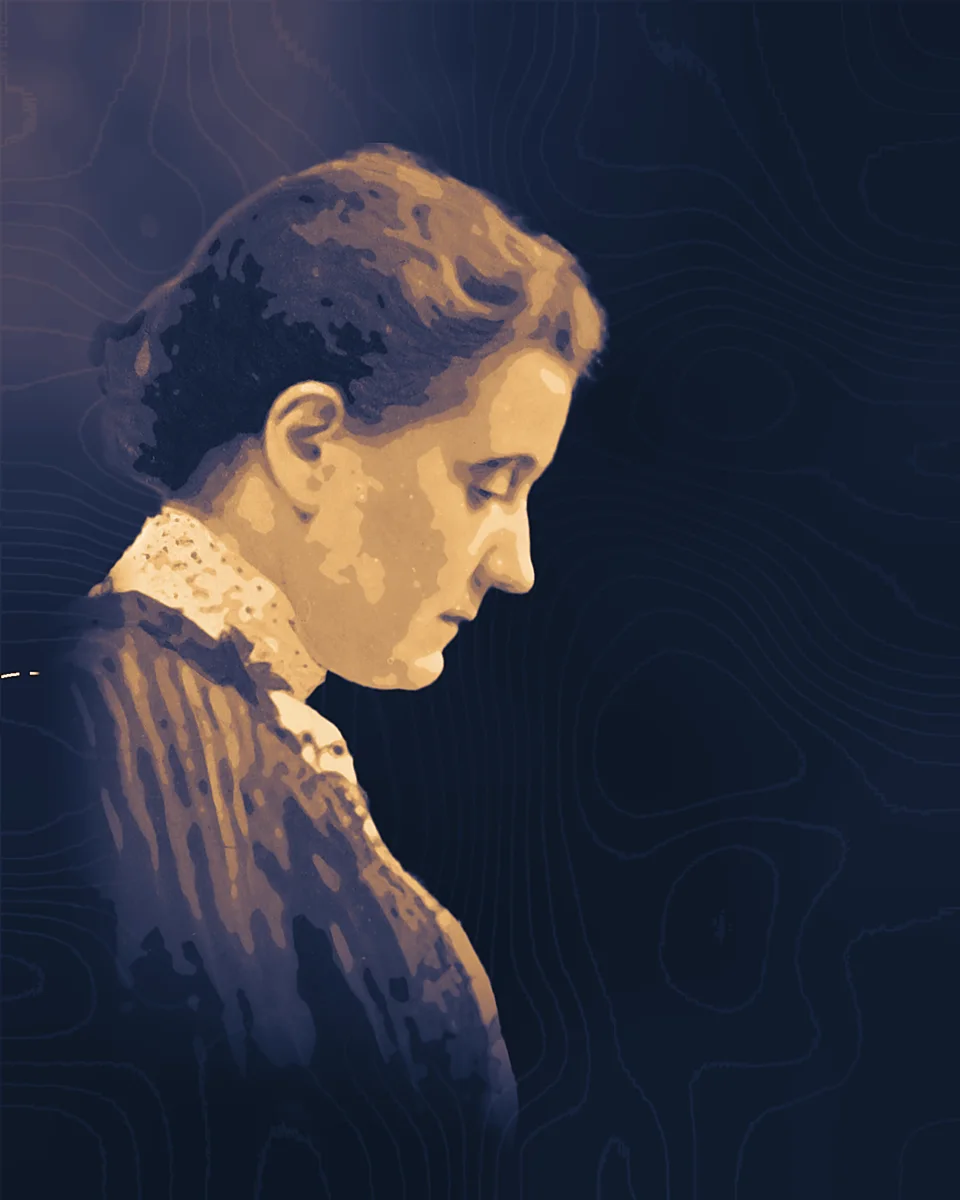
Jane Addams
With Ellen Gates Starr she opened Hull-House in Chicago, where charity workers lived among their neighbors and built programs around what those neighbors asked for.
1860–1935
What they changed
1889
A house among neighbors
Addams and Ellen Gates Starr leased a large house built by Charles Hull at Halsted and Polk Streets in Chicago and moved in. They raised money, recruited young women from well-off families, looked after children and nursed the sick. By its second year Hull-House drew 2,000 people a week to kindergarten classes, clubs and evening courses, and it went on to add a public kitchen, a gymnasium, a library and an employment bureau.
1889
Programs the neighbors asked for
Addams and Starr began with poetry readings and art classes, then found that their neighbors needed day care, English lessons and places to meet, and provided those. The Jane Addams Papers Project calls this "a break with older charity work, where programs were designed for the poor". It says Hull-House was not the first settlement in the United States but became the best known and most influential.
1895
Facts before action
Hull-House residents mapped the nationalities and wages of the Nineteenth Ward and published the maps in Hull-House Maps and Papers, which the National Endowment for the Humanities calls "a systematic inventory of an American urban slum". They went on to study child labor, truancy, tuberculosis and midwifery. Addams wrote that a reformer "must be a patient collector of facts".
1909
Charity work becomes a profession
Addams took part in founding the Chicago School of Civics and Philanthropy in 1908, and in 1909 became the first woman president of the National Conference of Charities and Corrections, the national meeting of charity workers. The Papers Project credits her and other settlement workers with helping to define the profession of social work.
1915
Women organize for peace
Addams presided over the International Congress of Women at The Hague in 1915, called largely at the urging of the Dutch suffragist Aletta Jacobs. When it founded the Women's International League for Peace and Freedom, she led it until 1929. In 1931 she shared the Nobel Peace Prize with Nicholas Murray Butler.
Life
Laura Jane Addams was born on 6 September 1860 in Cedarville, Illinois, the eighth of nine children. Her father was a miller who sat for sixteen years in the Illinois state senate. A spinal defect kept her from good health for much of her youth. She graduated in 1881 from Rockford Female Seminary as valedictorian, began to study medicine in Philadelphia and gave it up when her health failed, and spent several years travelling and unsure of what to do.
On a second tour of Europe, with Starr, a friend from Rockford, she visited Toynbee Hall in London's East End, a settlement run by Samuel and Henrietta Barnett where university men lived among the poor. The visit settled her plan for Chicago. Hull-House was the work of many. Starr was its co-founder, and women such as Florence Kelley, Alice Hamilton and Grace Abbott lived and worked there and carried its reforms to the city and the nation.
Her work spread from the house into the city. In 1895 she took the paid post of garbage inspector for the Nineteenth Ward. She served on Chicago's Board of Education from 1905, helped found the Juvenile Protective Association, and was a vice-president of the National American Woman Suffrage Association. In 1910 Yale gave her the first honorary degree it awarded a woman. Her books included Democracy and Social Ethics (1902) and Twenty Years at Hull-House (1910).
She opposed America's entry into the First World War, and paid for it. The press called her a traitor, the Daughters of the American Revolution expelled her, and some allies at Hull-House kept their distance. One biographer, quoted by the National Endowment for the Humanities, writes that she came home from the peace congresses to "FBI surveillance, blacklists and heckling audiences". During the war she worked with Herbert Hoover to send food to women and children in the enemy countries. She was among the founders of the American Civil Liberties Union and the National Association for the Advancement of Colored People.
A heart attack in 1926 left her weak. On 10 December 1931, the day the Peace Prize was presented in Oslo, she was being admitted to a hospital in Baltimore. She died in Chicago on 21 May 1935, three days after an operation found cancer, and her funeral was held in the courtyard of Hull-House.
Read more
6 accounts
Twenty Years at Hull-House, Jane Addams, Macmillan, 1910.
Her own account of how the house began and what it did.
archive.org
Hull-House Maps and Papers, Residents of Hull-House, T. Y. Crowell, 1895.
The residents' survey of the Nineteenth Ward, with its maps of nationalities and wages.
archive.org
Citizen: Jane Addams and the Struggle for Democracy, Louise W. Knight, University of Chicago Press, 2005.
A 582-page biography that follows her from childhood through the first ten years of Hull-House, to 1899.
archive.org
Jane Addams: biographical, Nobel Lectures, Peace 1926–1950, edited by Frederick W.
Haberman, 1972. The Nobel Foundation's life of her, with a bibliography of her books.
nobelprize.org
A Hero for Our Time: Remembering Jane Addams, Peter Gibbon, Humanities, National Endowment for the Humanities, 2021.
A long essay on her life, her critics and her reputation.
neh.gov
About Jane Addams, Jane Addams Papers Project, Ramapo College, undated. The biography from the project that is editing her papers.
janeaddams.ramapo.edu