Industries / Figureheads
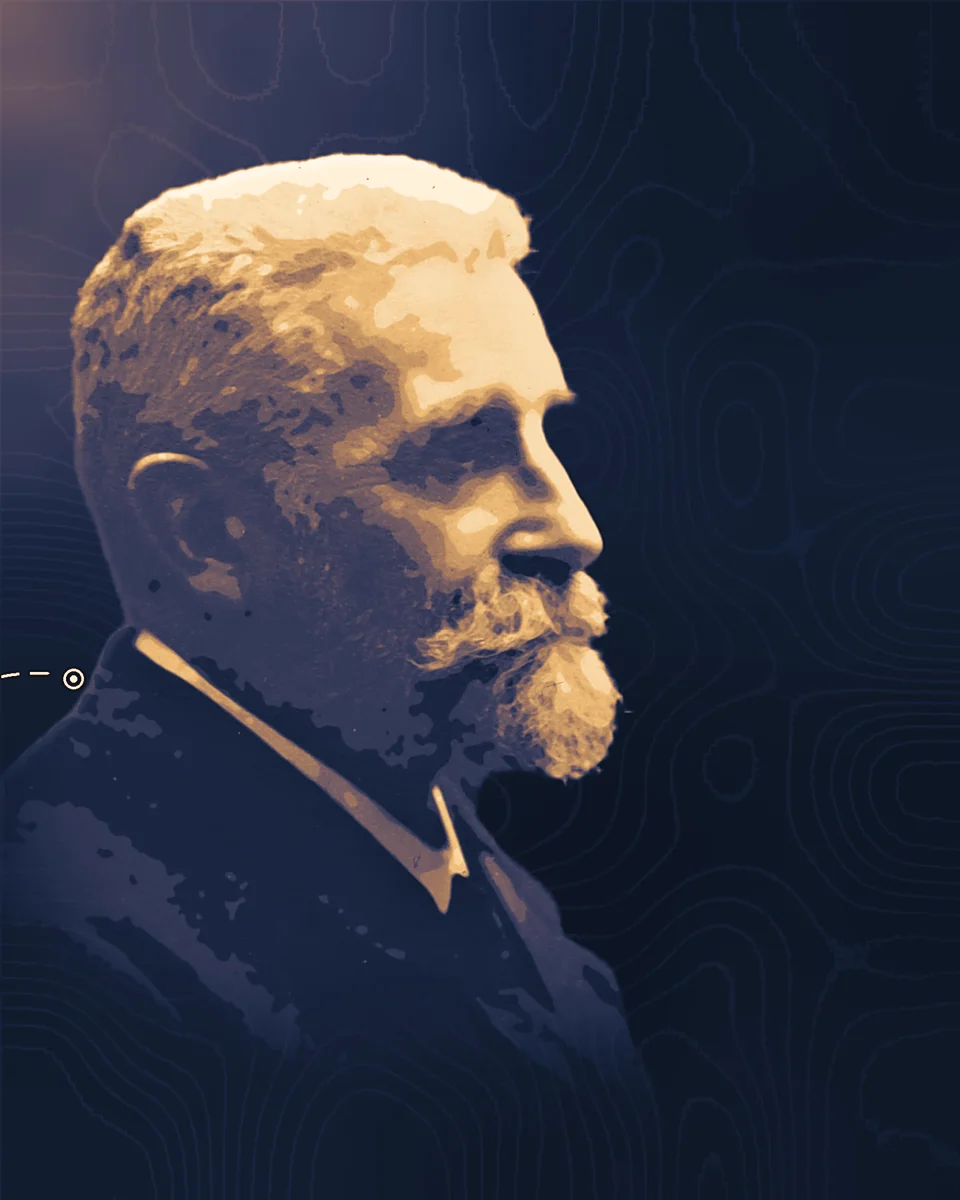
Jacques Bertillon
He drew up the shared list of causes of death, adopted in 1893 and revised every ten years, that became the International Classification of Diseases.
1851–1922
What they changed
1893
One list for every country
In 1891 the International Statistical Institute, meeting in Vienna, asked a committee chaired by Bertillon, head of statistics for the City of Paris, to prepare a classification of causes of death. He presented it at the Institute's meeting in Chicago in 1893 and it was adopted. It came in three lengths, of 44, 99 and 161 titles, so that each office could choose how much detail to keep and still compare its figures with other countries.
1893
Diseases sorted by body part
Bertillon's report argued that too little was known about the nature of diseases to sort them by cause, and that a list built on such guesses would be upset by the progress of medicine, "to the great injury of statistics, to which uniformity and continuity are very essential conditions". He followed William Farr in sorting diseases mostly by the part of the body they affect, and set rules for coding unclear certificates: an office records what the doctor wrote and does not guess at the rest.
1898
North America signs on
The Bertillon classification was taken up by several countries and many cities. Its first use in North America, by the World Health Organization's history, was by Jesús E. Monjarás for the statistics of San Luis Potosí, Mexico. In 1898 the American Public Health Association, meeting in Ottawa, recommended it to the registrars of Canada, Mexico and the United States, and proposed that it be revised every ten years.
1900
Revision every ten years
The French government called the first international conference to revise the list in Paris in August 1900. Delegates from 26 countries adopted a detailed list of 179 groups and a short one of 35 on 21 August 1900, with a parallel list for counting sickness as well as death. Bertillon led the revisions of 1900, 1909 and 1920, and as the conference's secretary-general he sent the draft for 1920 to more than 500 people for comment.
1948
The list passes to WHO
The sixth revision, adopted in Paris in April 1948 with the new World Health Organization, became a single classification of diseases, injuries and causes of death, with a standard death certificate and rules for choosing the underlying cause. Its successor, ICD-11, came into effect on 1 January 2022, and WHO describes the ICD as the basis for comparable statistics on deaths and illness between places and over time.
Life
Jacques Bertillon was born in 1851 into a family of statisticians. His grandfather, the botanist Achille Guillard, and his father, the physician Louis-Adolphe Bertillon, both helped found the Société de statistique de Paris. His brother Alphonse became known for a system of identifying criminals by body measurements. Like his father, Jacques trained in medicine and then turned to statistics. In 1883 he succeeded his father as director of the statistical bureau of the City of Paris and ran it for thirty years, until 1913.
His bureau's annual reports grew longer as it collected more data and analyzed it more closely, by the sociologist Terry N. Clark's account. Bertillon wrote a textbook on running a statistics office, the Cours élémentaire de statistique administrative of 1895, helped found the Collège libre des sciences sociales the same year and taught demography there, and was elected president of the Société de statistique de Paris in 1897. He helped organize the International Statistical Institute in 1885.
The classification was not his invention alone. The first International Statistical Congress, at Brussels in 1853, had asked William Farr of London and Marc d'Espine of Geneva to draft a uniform list, on a resolution put by Bertillon's grandfather. Bertillon built on the Paris list, which since its revision in 1885 had combined English, German and Swiss classifications, and on Farr's principle of sorting diseases by the part of the body. The three lengths of list were the suggestion of L. Guillaume, director of the Swiss federal statistics bureau.
His figures also drove a campaign. From 1873 he warned in the press that France's population was shrinking relative to its neighbors, and above all Germany's, which he argued was sapping its economic and military strength. In 1896, with four friends, he founded the Alliance nationale pour l'accroissement de la population française, a society to raise the birth rate, and in 1918 a magazine, La Femme et l'Enfant, which he called an organ of national propaganda for more births and for the rights of large families. He also studied drinking, and found that a state monopoly on selling alcohol, as in Norway, cut consumption where higher taxes did not.
During the First World War he ran the army's medical and surgical statistics. His society's obituary says the work kept him from caring for his own health. He died on 4 July 1922 after a long illness, and asked that his funeral be private and that his friends be told only afterwards. The Rockefeller Foundation's International Health Board wrote to the society that he was one of the greatest statisticians who had ever lived. WHO's history says his death left the revision conferences "without a guiding hand", until the League of Nations' health organization took up the work with the Institute.
Read more
5 accounts
History of the development of the ICD, World Health Organization, 2004.
WHO's own account, from the first lists to ICD-10, with Bertillon's committee and the revisions he led.
who.int
The Bertillon classification of causes of death, American Public Health Association, 1899.
The North American edition, with an abstract of Bertillon's 1893 report to the Institute in Chicago and his rules for doubtful cases.
archive.org
International classification of causes of sickness and death, Jacques Bertillon and the international revision commission, US Bureau of the Census, 1910.
The second revision, made in Paris in July 1909, translated from the official French edition for use from 1910 to 1919.
archive.org
Nécrologie. Jacques Bertillon, A. Barriol, Journal de la Société de statistique de Paris, 1922.
The obituary by his society's secretary-general, with the note on his life he wrote himself.
numdam.org
History of the statistical classification of diseases and causes of death, Iwao M. Moriyama, Ruth M. Loy and A. H. T. Robb-Smith, edited by Harry M. Rosenberg and Donna L. Hoyert, National Center for Health Statistics, 2011.
The book-length history of the classification.
stacks.cdc.gov