Industries / Figureheads
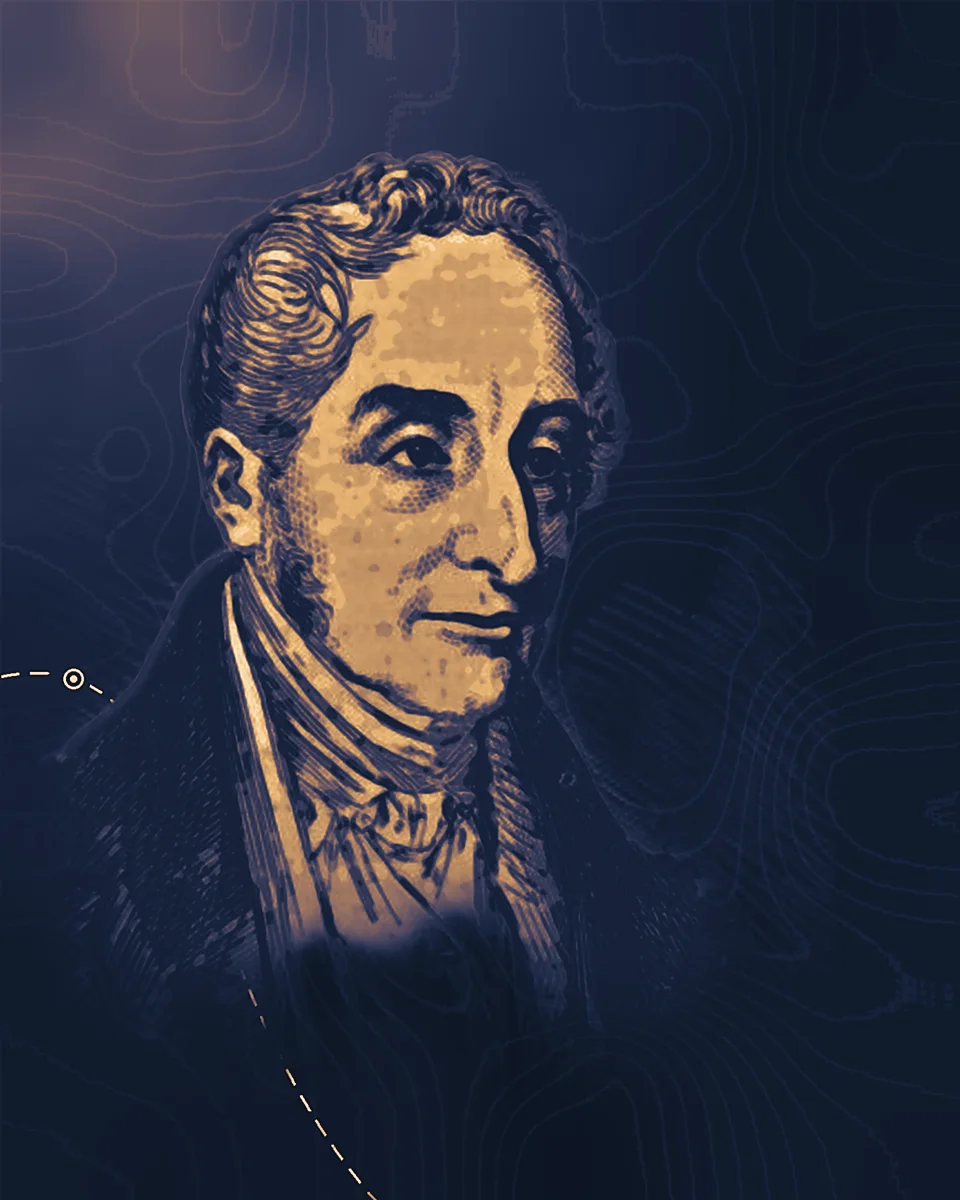
Henry Fourdrinier
A London stationer who, with his brother Sealy, paid for turning Robert's model into a working paper machine and was ruined by it; the machine still carries their name.
1766–1854
What they changed
1801
A share in the patent
Henry and Sealy Fourdrinier, wholesale stationers in the City of London, met John Gamble, who had brought the drawings of Louis-Nicolas Robert's paper machine from France and patented it in England. They bought a share of his rights and set out to build a machine that would work in a mill.
1803
A works to build machines
They paid for a workshop at Bermondsey, finished in 1803, where the engineer Bryan Donkin developed the machine and then built it for sale. The first machine to make saleable paper was set up for them at Frogmore Mill in Hertfordshire in 1804, by the account of the paper maker John Dickinson's firm.
1806
The Fourdrinier patent
A patent of 1806 in Henry Fourdrinier's name covered a machine for making paper of any length. An Act of 1807 extended the brothers' patents. The plan was that every mill using a machine would pay them a yearly royalty by its size.
1810
Ruin
Between 1800 and 1807 the brothers spent £60,000 on the machine. They went bankrupt, in 1810 by the Gentleman's Magazine and by a notice of 1812 in the London Gazette. The Robert C. Williams Museum of Papermaking says they received no royalties because of an error in their patent, while mills adopted the machine widely.
1840
A grant from Parliament
After petitions and a Commons debate on 25 April 1839, Parliament voted the Fourdriniers £7,000 in May 1840, in the words of the Gentleman's Magazine "as some compensation for their loss by the defective state of the law of patents".
Life
Henry Fourdrinier was born in Lombard Street, London, on 11 February 1766. His family were Huguenots, French Protestants who had left France for Holland and then England. He followed his father as a paper maker and wholesale stationer, in partnership with his brother Sealy.
The idea of the machine was Robert's and the engineering was Donkin's. What the Fourdriniers supplied was money, a mill to try it in and years of persistence. Grace's Guide notes that the machine came to be called the Fourdrinier "even though Bryan Donkin had done much of the hard work". Donkin was the one who prospered: he went on building the machines for decades.
Other debts went unpaid. In 1814 the Emperor of Russia's agents agreed to use two machines at the imperial paper works at Peterhof for ten years at £700 a year, and Fourdrinier's son went to Russia to set them up. The Gentleman's Magazine says the money was never paid. Henry was bankrupt a second time in 1832, as a paper maker at Hanley in Staffordshire with two of his sons.
In the 1839 debate a Mr. Brunel and a Mr. Lawson of The Times gave evidence for the brothers. The revenue's gain from the machine was put at £500,000 a year. In November 1854 members of the paper trade opened a subscription to buy annuities for Henry and his two unmarried daughters. He had died before it got far, on 3 September 1854, aged 88, at Mavesyn Ridware in Staffordshire, where he lived in a cottage and served as churchwarden.
Read more
4 accounts
Obituary of Henry Fourdrinier, The Gentleman's Magazine, July 1855, as transcribed by Grace's Guide.
The contemporary account of the machine, the bankruptcy, the Russian contract and the grant.
gracesguide.co.uk
The late Mr. Henry Fourdrinier, patentee of the paper machine, The Illustrated London News, 7 October 1854.
The memoir on page 354 and the portrait on page 345 of the issue.
archive.org
The Advent of the Paper Machine, Robert C. Williams Museum of Papermaking, Georgia Institute of Technology, undated. A short account of Robert, the Fourdriniers and Donkin and who gained what.
paper.gatech.edu
Henry Fourdrinier, Grace's Guide to British Industrial History, undated. A dated outline with the London Gazette notices of the patents and bankruptcies.
gracesguide.co.uk