Industries / Figureheads
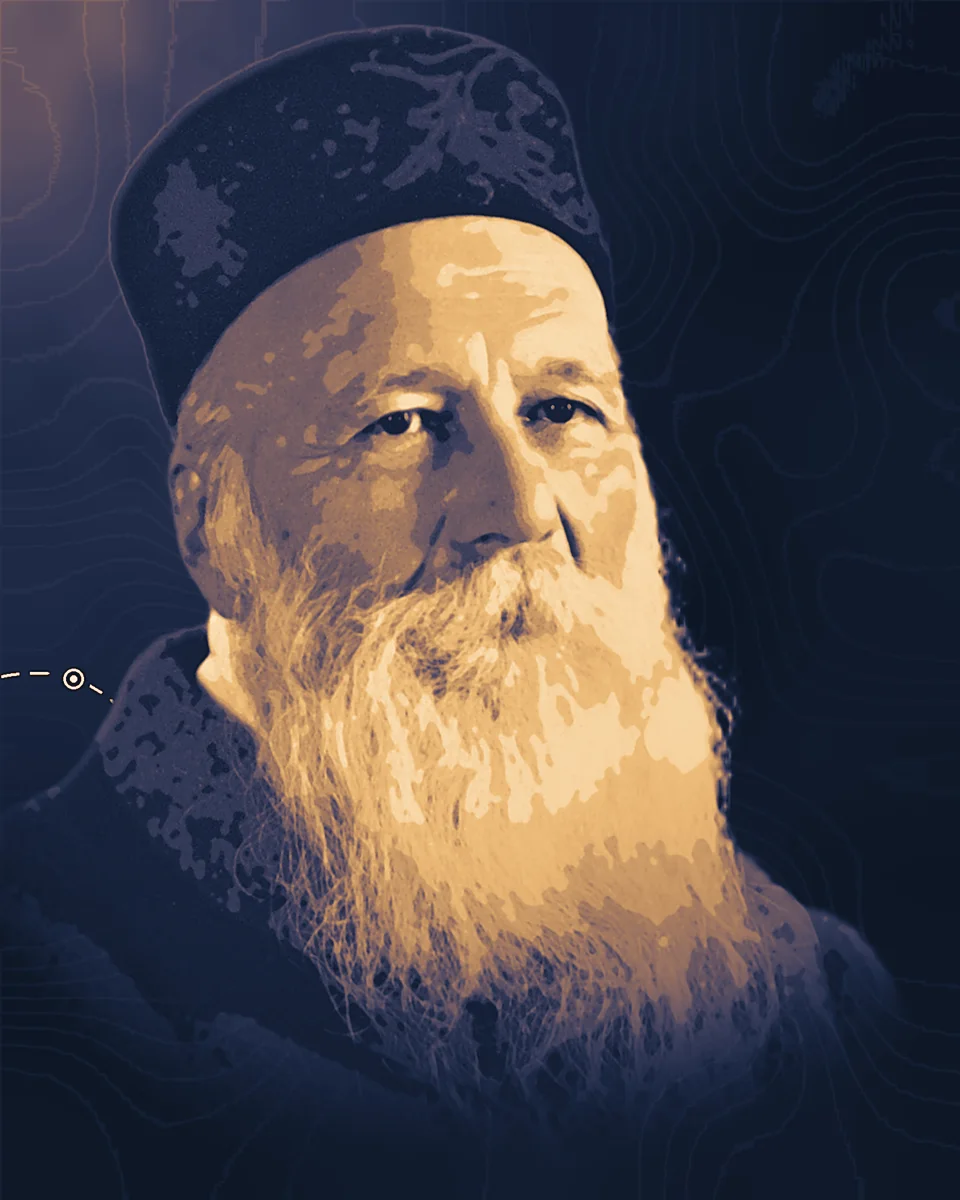
Henry Dunant
He proposed national relief societies of trained volunteers for the wounded of war, and helped found the Geneva committee that became the Red Cross.
1828–1910
What they changed
1862
A plan for relief societies
Dunant saw the battle of Solferino in northern Italy on 24 June 1859 and, with people from the nearby villages, gave first aid to the wounded left on the field. In his book A Memory of Solferino he proposed that every nation form a relief society, led by its leading citizens, that would ask everyone to volunteer and would train the volunteers to care for wounded soldiers.
1863
The committee of five
In February 1863 the Geneva Public Welfare Society set up a committee of five to study his ideas: Dunant, the lawyer Gustave Moynier, General Guillaume Henri Dufour and the doctors Louis Appia and Théodore Maunoir. The committee called a conference for October 1863, at which 16 nations were represented, and it became the International Committee of the Red Cross.
1863
Volunteer societies in every country
The October conference asked all nations to form voluntary units to help the sick and wounded of war, and these became the national Red Cross societies. The first was founded in the German state of Württemberg in November 1863. Their federation, the IFRC, now counts 191 national societies and more than 18 million volunteers.
1864
The first Geneva Convention
At a diplomatic conference called by the Swiss government, twelve states signed the first Geneva Convention on 22 August 1864. It obliged armies to care for wounded soldiers of any side, guaranteed the neutrality of medical staff and supplies, and made a red cross on white the emblem of medical services.
1901
The first Peace Prize
Dunant shared the first Nobel Peace Prize with the French peace campaigner Frédéric Passy, "for his humanitarian efforts to help wounded soldiers and create international understanding".
Life
Jean Henry Dunant was born in Geneva on 8 May 1828, into a family the Nobel Foundation's biography calls "religious, humanitarian, and civic-minded". He did poorly at school, left the Collège Calvin and was apprenticed to a money-changing firm. As a young man he worked for a time for the Young Men's Christian Association, travelling in France, Belgium and the Netherlands. At 26 he went into business for a Geneva company with land in Algeria and Sicily.
He then set up a milling company of his own in Algeria. It needed water rights, and he went to ask Emperor Napoleon III for them in person, at the French army's headquarters in northern Italy. So he reached Solferino in June 1859, in time for the battle. Back in Geneva he wrote A Memory of Solferino, published in 1862, and paid for much of the campaign that followed himself, travelling across Europe to persuade governments to send delegates to Geneva.
The organization was not his work alone. The Nobel Foundation's history of the Red Cross says the committee was "guided by Moynier's talent for organization", and Moynier was its president from 1864 to 1910. Dufour presided in its first year. Dunant's biographer Gérard Jaeger told swissinfo that without Dunant the other four would never have gone so far, and that the Red Cross would probably have come about elsewhere fifty years later: "he simply accelerated history".
His business failed. In April 1867 the collapse of the Geneva finance house Crédit Genevois drew him into a scandal, he was declared bankrupt, and on 17 August 1868 a Geneva court condemned him for deceptive practices in the bankruptcies. Many of his Geneva friends lost money with him. Jaeger says Moynier judged that the scandal would harm the new Red Cross and pushed Dunant away from the committee. Within a few years, by the Nobel biography's account, he was living "at the level of the beggar".
He left Geneva in 1875 and settled in Heiden, a village in eastern Switzerland, where a teacher, Wilhelm Sonderegger, found him in 1890. Ill, he moved in 1892 into the village hospital and lived in its Room 12 for the rest of his life. An article by the German journalist Georg Baumberger in 1895 was taken up by newspapers around the world, and honours followed, among them the Peace Prize in 1901. He died at Heiden on 30 October 1910. He had spent none of his prize money: he left gifts to those who had nursed him, a free bed for the poorest sick of the village, and the rest to charities in Norway and Switzerland.
Read more
6 accounts
A Memory of Solferino, Henry Dunant, 1862.
The book that set out the plan for relief societies, kept in print in English by the ICRC.
icrc.org
Henry Dunant: biographical, Nobel Lectures, Peace 1901–1925, edited by Frederick W.
Haberman, 1972. A short life by the Nobel Foundation, with a list of the main biographies and of where his papers are held.
nobelprize.org
International Committee of the Red Cross: history, Nobel Lectures, Peace 1926–1950, edited by Frederick W.
Haberman, 1972. The Nobel Foundation's account of the committee of five and the first Geneva Convention, with each founder's part.
nobelprize.org
Dunant: The Story of the Red Cross, Martin Gumpert, Oxford University Press, 1938.
A full life, translated from a German book that its author called a novel of the Red Cross, with a list of Dunant's works.
archive.org
Dunant's Dream: War, Switzerland and the History of the Red Cross, Caroline Moorehead, Carroll & Graf, 1999.
A 780-page history of the Red Cross from Dunant onward.
archive.org
Who was the father of the Red Cross?, Simon Bradley, swissinfo.ch, 2009.
A short account of his bankruptcy and exile, with interviews with his biographer Gérard Jaeger.
swissinfo.ch