Industries / Figureheads
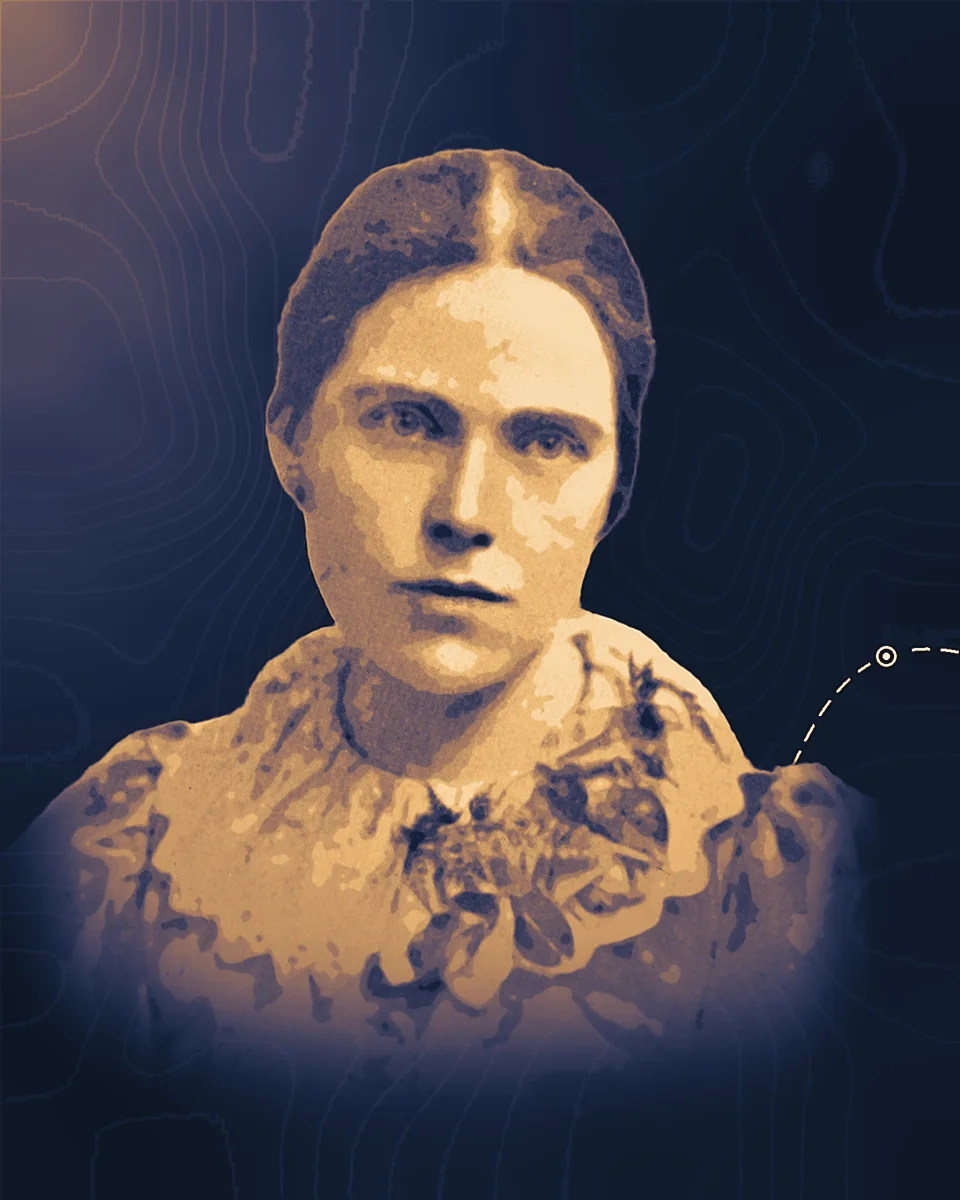
Henrietta Barnett
She co-founded Toynbee Hall with her husband Samuel, started the scheme that became the Children's Country Holiday Fund, and ran volunteer work for the girls and women of Whitechapel.
1851–1936
What they changed
1877
Country holidays for city children
Henrietta suggested sending sick children from the Whitechapel parish to the country, and her husband found cottagers to take them through a letter to The Guardian. Nine children went in 1877, 33 in 1878 and 173 in 1879. The committee formed to run it took the name Children's Country Holiday Fund in 1884, and by 1918 had sent 956,253 London children away, by her count. Toynbee Hall says the Fund worked from its building for more than 100 years.
1878
Friends for girls in service
From 1874 Henrietta found places in domestic service for girls from the poorest courts of the parish. In 1878, with the work beyond her and her friends, she opened a Whitechapel branch of the Metropolitan Association for Befriending Young Servants, whose volunteers kept in touch with each girl after she was placed. Toynbee Hall describes it as a long-running scheme to help young women "escape the lure of prostitution and find respectable work in service".
1884
Co-founding Toynbee Hall
Henrietta and Samuel Barnett founded Toynbee Hall in 1884, where Oxford and Cambridge graduates lived and worked among the poor of the East End. By her own account it was she who thought of naming it after the economist Arnold Toynbee, at his memorial service in Balliol chapel on 10 March 1884. The Jane Addams Papers Project credits the settlement "run [by] Rev. Samuel Barnett and his wife Henrietta Barnett" as the model for Hull-House in Chicago.
1901
Art for the East End
Henrietta chose the pictures for the Barnetts' annual Whitechapel art exhibitions, and in 1901 the two founded the Whitechapel Gallery, to show "the finest art of the world for the people of the East End".
Life
Henrietta Rowland was born in Clapham, south London, on 4 May 1851, a daughter of Alexander and Henrietta Rowland, into a wealthy family. She took an early interest in social work, and her life of her husband tells of their meeting at a party given by the housing reformer Octavia Hill, in whose Marylebone circle he worked. They married on 28 January 1873 and moved to St Jude's parish in Whitechapel.
Toynbee Hall writes that she was "shocked by the squalid living conditions and horrendous poverty" there and threw herself into work with the women and children of the East End. Her reports used the moral language of the charity of her day: in 1874 she described the girls of the parish's courts as "of the roughest description", with parents who were "for the most part beggars, or something worse". She wrote essays on poverty, workhouses and charitable work, published with her husband's in Practicable Socialism (1888).
Her share in the work has been underrated. Toynbee Hall says her contribution "has often been overlooked in favour of a focus on her husband", and the first university settlement is usually credited to him alone; the memorial to him in Westminster Abbey calls him its founder, and her name was added only after her death.
After the Barnetts left Whitechapel she was the moving spirit of Hampstead Garden Suburb in north London, planned as a place where rich and poor would live side by side, and she founded the Henrietta Barnett School there. The prime minister H. H. Asquith called her "the unofficial custodian of the children of the state". She published her husband's life in 1918, five years after his death, and was made a Dame of the British Empire in 1924. She died on 10 June 1936 and was buried beside him at St Helen's church, Hangleton, near Hove.
Read more
5 accounts
Canon Barnett: His Life, Work, and Friends, Henrietta Barnett, John Murray, 1918.
Her two-volume life of her husband, which is also the fullest record of her own work.
archive.org
Practicable Socialism: Essays on Social Reform, Samuel and Henrietta Barnett, Longmans, 1888.
Their essays, among them hers on the poverty of the poor, workhouse girls and charitable effort.
archive.org
Founder of Toynbee Hall: Henrietta Barnett, Toynbee Hall, undated. The settlement's own account of her work, written to correct the focus on her husband.
explore.toynbeehall.org.uk
Toynbee Hall: The First Hundred Years, Asa Briggs and Anne Macartney, Routledge & Kegan Paul, 1984.
A history of the settlement the Barnetts founded.
archive.org
Samuel and Henrietta Barnett, Westminster Abbey, undated. The Abbey's account of their shared memorial, with a short life of each.
westminster-abbey.org