Industries / Figureheads
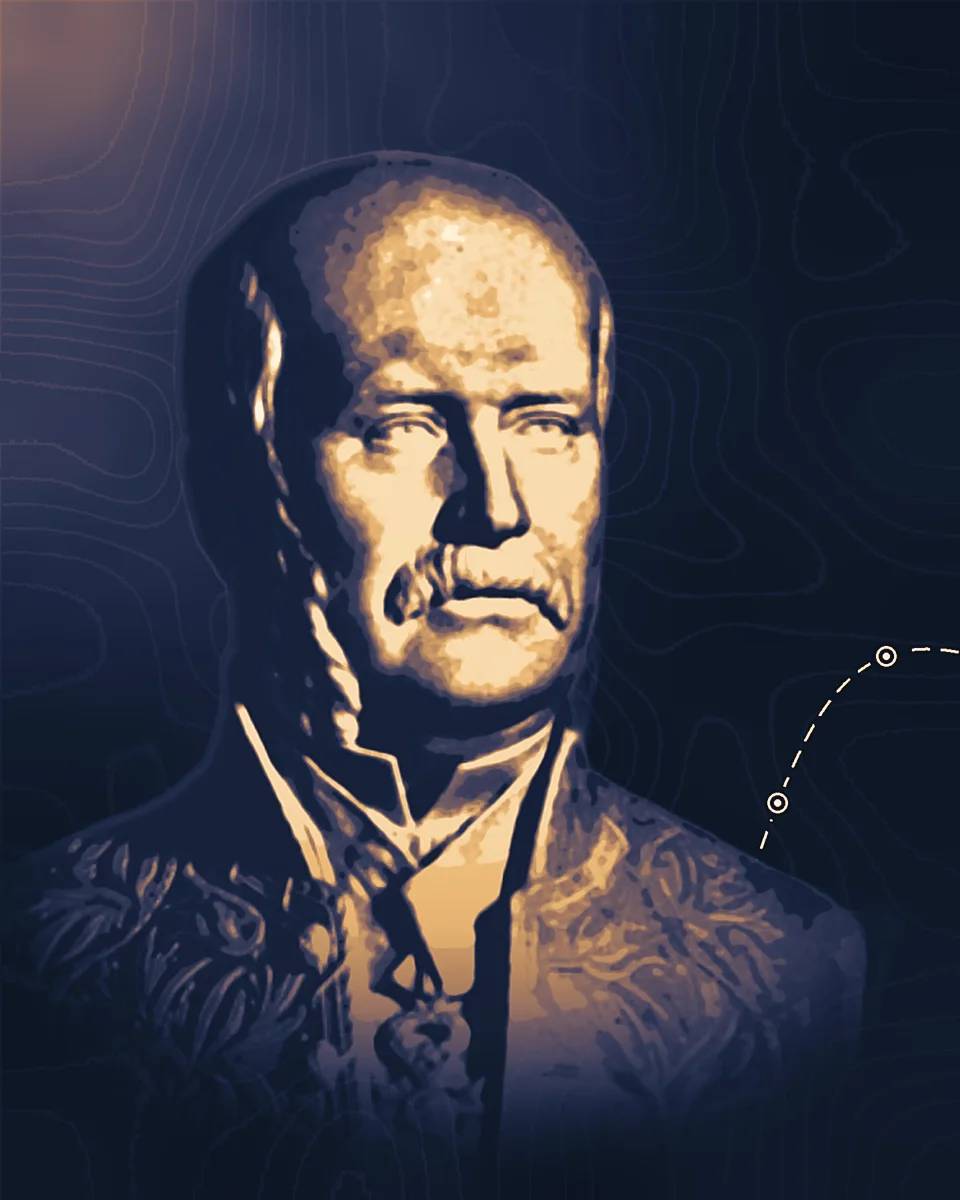
Eugène Belgrand
He brought spring water to Paris by aqueducts from the Dhuis and the Vanne, kept it in a supply separate from river water, and built the city's network of large walk-through sewers and collectors.
1810–1878
What they changed
1846
Hydrology of the Seine
His study of the upper Seine basin was presented to the Academy of Sciences in 1846, and from 1851 he kept up a series of hydrological studies for 27 years. He found that impermeable ground makes a flood and permeable ground only sustains it, and from this drew rules to forecast floods on the Seine, still in use when the École polytechnique wrote its history in 1897. René Coulomb counts him among the first hydrologists in the present sense of the word.
1854
Springs instead of the river
In 1854 Baron Haussmann, prefect of the Seine, asked Belgrand to find springs that could supply Paris. Five schemes then proposed to draw from the Seine, and the corps of state engineers and the doctors favoured them; Haussmann wanted spring water instead. That year, on the prefect's orders, he carried out a statistical survey of the springs of the Seine basin that could be brought to Paris.
1865
Aqueducts from distant springs
The Dhuis aqueduct, 131 km long with a fall of only 20 m, was approved in 1862 and was due to bring its first 20,000 cubic meters of water to the Ménilmontant reservoir on 2 August 1865. The Vanne aqueduct, 178 km long, was approved in 1866 and opened in 1874 after the war of 1870 to 1871 halted work; its springs gave at least 100,000 cubic meters a day into the Montsouris reservoirs, which hold 275,000. By his colleague Léon Lalanne's count, Paris received less than 87,000 cubic meters of water a day when Belgrand took over its water service and at least 400,000 when he died.
1865
Two waters, two networks
At Ménilmontant the Dhuis reservoir, holding 100,000 cubic meters, stood above a second one of 31,000 that took water pumped from the Marne at Saint-Maur. Paris kept spring water for household use and pumped water from the Seine and the Marne, less pure, for washing streets and watering gardens. The two supplies ran in separate pipes through every street and were kept apart in normal working. The École polytechnique's centenary history credited Belgrand as the real creator of the city's drinking water and its general distribution.
1878
Sewers you can walk through
Director of the city's water and sewers from 1867, he built the network out from under 25 km at the start of the century to more than 600 km by 1878. Three main collectors took the flow: one on the right bank to Asnières, one from the left bank that crossed under the Seine by a siphon at the Pont de l'Alma and joined it at Clichy, and a northern one to Saint-Denis. Every street narrower than 20 m was to have a sewer and wider streets two, in fifteen cross-sections sized for the clean-water mains laid inside them. The large sewers were cleaned by rail wagons and boats that pushed a sluice gate along the channel, and their galleries later carried telegraph and telephone lines and pneumatic tubes.
Life
Marie François Eugène Belgrand was born at Ervy, in the Aube, on 23 April 1810. He studied at the Lycée Louis-le-Grand alongside the mathematician Évariste Galois, entered the École polytechnique in 1829 and the École des ponts et chaussées in 1831. As a student he took part in the July Revolution of 1830.
His early posts were in the Puy-de-Dôme and the Côte-d'Or. Posted to Avallon in the Yonne in 1845, he gave the town a water supply from springs 4 km away, carried across the valley of the Cousin by a siphon with a fall of 88 m, and published a description of it in 1849. There, in 1850, he met Haussmann, then also serving in the Yonne. In 1852 he became chief engineer of the Seine navigation between Paris and Rouen, and from 1854 until his death he ran the hydrometric service of the Seine basin.
The Paris works were not his alone. The École polytechnique's history names Girard, Emmery, Mary, Dupuit and Michal as the predecessors who opened the way for the sewers, and the engineer Adolphe Alphand as Haussmann's other chief executant. Pierre-Alain Roche records that Belgrand and Haussmann each claimed the idea of carrying the left bank's sewage under the Seine to Clichy.
The sewers took Paris's sewage out of the river inside the city and poured it, untreated, into the Seine below it. The same history of 1897 says that part was by then cleaned by spreading it on the sandy land near the city for farming, "sans danger, peut-on espérer, pour la santé publique" ("without danger, one may hope, to public health"); Lalanne records that the northern collector already sent most of its flow to the fields at Gennevilliers. During the siege of Paris in 1870 and 1871 Belgrand kept the water, sewers and night-soil services running, and was made a commander of the Legion of Honour.
He was elected to the Academy of Sciences. He wrote a history of the waters of Paris, Les Travaux souterrains de Paris, whose five volumes appeared from 1872 to 1887, the last of them after his death. He died suddenly, in his office, on 8 April 1878. His name is among those of scientists and engineers engraved on the Eiffel Tower.
Read more
5 accounts
Notice sur la vie et les travaux de M. E. Belgrand, Léon Lalanne, Annales des ponts et chaussées, 1881.
A memoir by his classmate and fellow engineer, with the figures of his works and a list of his writings.
archive.org
Eugène Belgrand (1829), ingénieur, hydrologue et géologue, Pierre-Alain Roche, La Jaune et la Rouge, 2010.
A life from the École polytechnique's alumni magazine, on the aqueducts, the sewers and his science.
lajauneetlarouge.com
Eugène Belgrand (1810-1878), René Coulomb, Bulletin de la SABIX, 2011.
An account of his hydrology and his flood studies.
journals.openedition.org
Les travaux souterrains de Paris, volume 5, Eugène Belgrand, Dunod, 1887.
The last volume of his own history of the waters of Paris.
archive.org
École polytechnique: Livre du centenaire 1794–1894, volume 3, 1897.
The school's centenary history, with its chapter on the state engineers and the biography and portrait of Belgrand.
archive.org