Industries / Figureheads
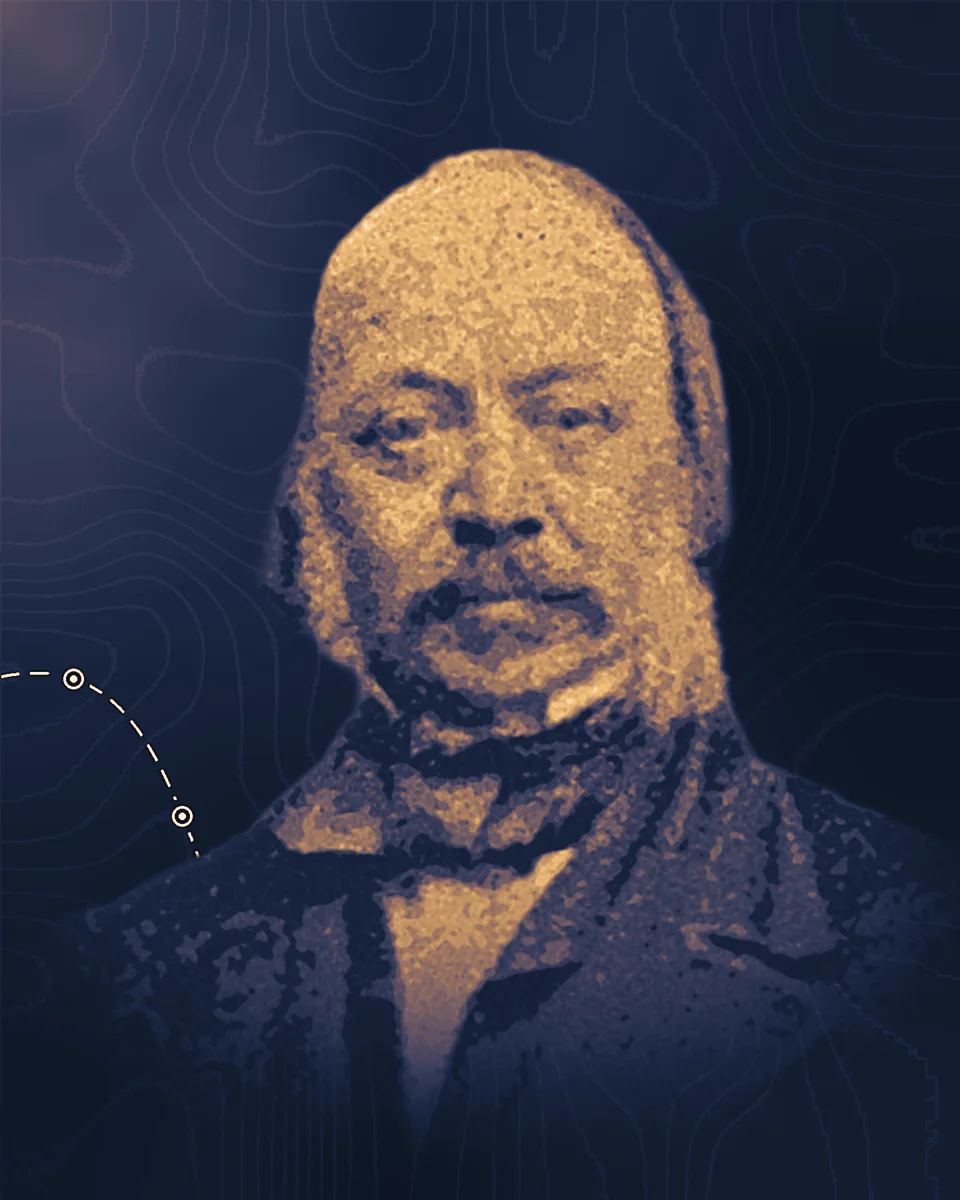
Edwin Chadwick
His 1842 report argued that towns should carry away their sewage in water through cheap closed pipes and bring clean water into every house, the plan that sanitary systems were built on.
1800–1890
What they changed
1842
Sewage carried by water
The Poor Law Commissioners asked their secretary, Chadwick, to sift the evidence of their inquiry into the health of Britain's working poor and write its report, which he signed and they presented to Parliament in July 1842. It concluded that "the primary and most important measures" were "drainage, the removal of all refuse of habitations, streets, and roads, and the improvement of the supplies of water". It argued that carting filth away by hand could be cut to a twentieth or a thirtieth of the cost "by the use of water and self-acting means of removal by improved and cheaper sewers and drains", and that sewage "held in suspension in water" could be carried out of towns to be used on farmland. The Dictionary of National Biography says the report "forthwith became a text-book of sanitation throughout the country".
1842
Water laid on in houses
The same report held that better water supplies were "absolutely necessary" for drainage and for domestic use, that water laid on in houses would pay for itself by cutting the costs of sickness and early death, and that drainage should be planned by geological areas, the whole of the land a system drains, rather than by parish.
1848
A central board of health
He was one of the commissioners of the first General Board of Health, formed in 1848, and served until it was merged into the Local Government Board in 1854. The year before, a commission he sat on into the health of London had argued for the "separate system": rainwater in its own channels, and foul water and excreta in separate, self-cleansing house drains and sewers.
1871
The separate system for Cawnpore
Sent a plan for the drainage of Cawnpore (now Kanpur), in northern India, by the Duke of Argyll, he proposed the separate system instead. By the Dictionary of National Biography's account the government approved it and the army sanitary commission carried it out.
Life
Edwin Chadwick was born at Longsight, Manchester, on 24 January 1800. His family moved to London in 1810. He worked in an attorney's office, was called to the bar at the Inner Temple in 1830, and wrote for newspapers and reviews to pay his way. He became a follower of the philosopher Jeremy Bentham, lived with him for a time, and was with him when he died in 1832.
His public career began with the poor law. He was an assistant commissioner on the royal commission on the poor laws from 1832 and, from 1834, secretary of the new Poor Law Commission and chief executive officer under the Poor Law Amendment Act. The national biography records that his zeal, his impatience with those who resisted his plans and his belief in central control helped break up the commission in 1846.
He was wrong about how disease spread. Like most of his contemporaries he held that it came from foul air: his 1842 report warned of "the subtle gas which spreads disease from the accumulations in the sewers". In 1858 a letter to The Lancet praising John Snow contrasted Snow's work with "the fallacies of theory, propounded by Mr. Chadwick, which referred to fetid odors as the dwelling-place of cholera".
He also had the causes of death, not only their number, recorded under the new registration act, and argued for competitive examinations for the civil service. In Paris in 1864 he told Napoleon III that if he found Paris stinking and left it sweet he would outdo Augustus, and the emperor ordered an inquiry. He was knighted only in 1889, and was a corresponding member of the institutes of France and Belgium. He died at East Sheen, Surrey, on 6 July 1890. His son Osbert Chadwick became a sanitary engineer.
Read more
3 accounts
Report on an Inquiry into the Sanitary Condition of the Labouring Population of Great Britain, Poor Law Commissioners (written by Edwin Chadwick), 1842.
The report itself; its conclusions are on pages 369 to 372.
archive.org
Chadwick, Sir Edwin, Dictionary of National Biography, 1901 supplement.
The national biography's account of his career.
en.wikisource.org
The Health of Nations: a Review of the Works of Edwin Chadwick, Benjamin Ward Richardson, 1887.
Two volumes condensing his writings, with a biographical introduction by the physician Benjamin Ward Richardson.
archive.org