Industries / Figureheads
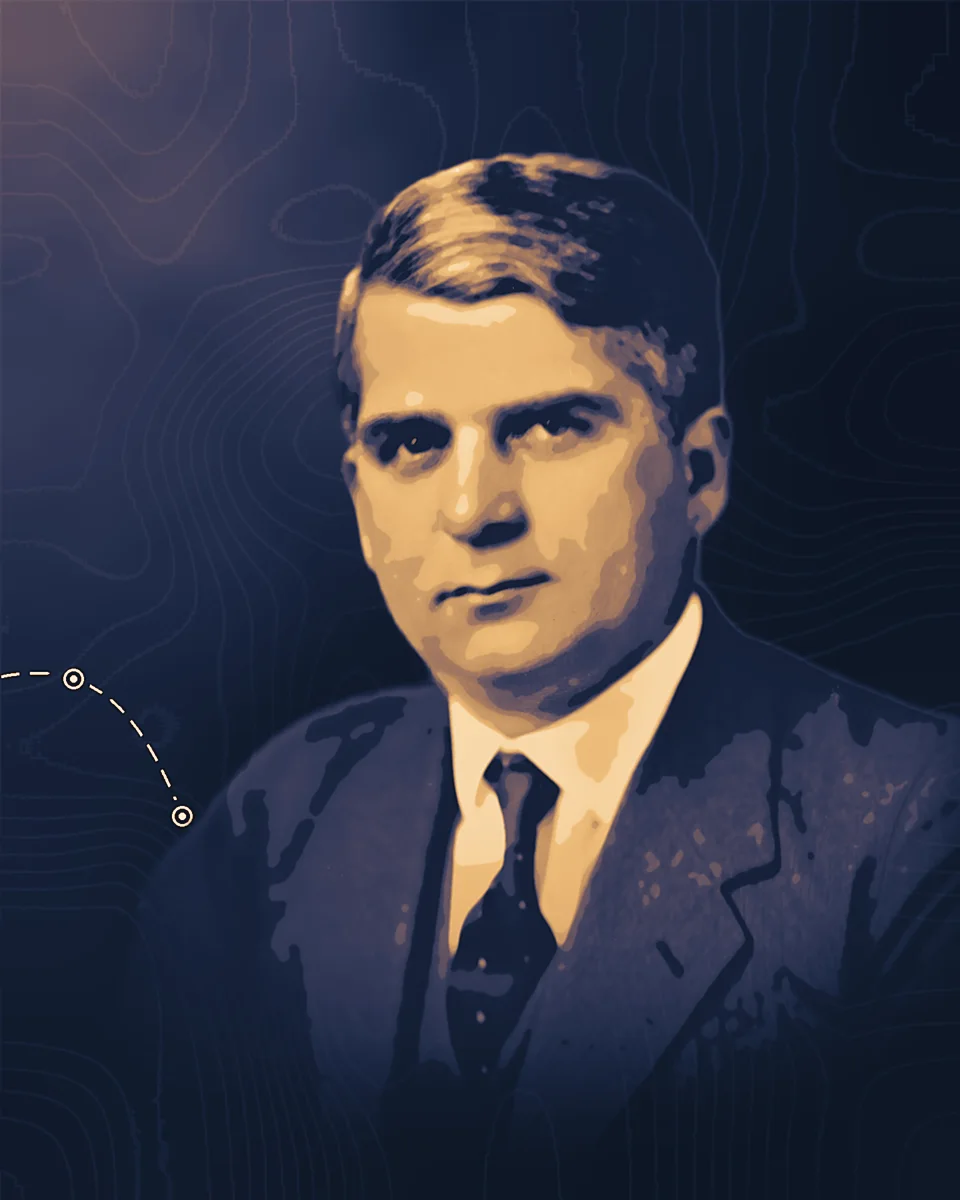
Clarence Saunders
He opened the Piggly Wiggly grocery in Memphis in 1916, where shoppers walked the aisles, took goods from marked shelves and paid on the way out, the self-service layout most shops now use.
1881–1953
What they changed
1916
Shoppers serve themselves
Saunders opened the first Piggly Wiggly in Memphis on 11 September 1916. Shoppers came in through a turnstile, followed a path along shelves on which every item was clearly priced, chose their own goods and took them to a clerk at the exit to be totalled, wrapped and paid for. The Tennessee Encyclopedia says Piggly Wiggly "is credited with being the first self-service grocery chain." American Heritage writes that grocers before him sold on credit and delivered, which he thought "massively wrong-headed"; at his store customers "took what they wanted and paid cash."
tennesseeencyclopedia.nettennesseeencyclopedia.netamericanheritage.com
1917
Self-service patented
He filed for a patent on 21 October 1916, and US Patent 1,242,872, "Self-serving store," was issued on 9 October 1917. Its stated object was a store "by which the customer will be enabled to serve himself", taking goods "while making a circuitous path through the store" to a "checking and paying station", so as "to dispense with the employment of many clerks." American Heritage says its claims were later challenged in court and partly voided.
1922
A chain by the book
Saunders formed the Piggly Wiggly Corporation and licensed the system to other grocers. By 1922 it had 1,200 stores in 29 states, by the Tennessee Encyclopedia's count, and by 1923 1,268 stores selling about $100 million of groceries a year. American Heritage says his instruction manuals spelled out "every aspect of the operation in exhaustive detail."
tennesseeencyclopedia.nettennesseeencyclopedia.netamericanheritage.com
Life
Clarence Saunders was born in 1881 to a poor family in Virginia that moved to Palmyra, in Montgomery County, Tennessee. He found work in a wholesale grocery house in Clarksville and later took a sales job with a grocery company in Memphis.
American Heritage calls his store on Jefferson Street in Memphis "what is generally thought to have been the first self-service grocery in the United States." Self-service did not spread through him alone. The same history traces the supermarket of the 1930s to Michael Cullen and to the big chains: A&P had cut credit and delivery in its "economy stores" from 1912, and by 1918 all its stores were cash-and-carry.
In 1923 Saunders lost the company. Piggly Wiggly's stock traded on the New York Stock Exchange, and he set out to hold up its price by buying the shares himself. The Exchange declared a corner, he was called on to pay for shares bought on margin, and, in American Heritage's words, "the whole precarious construction came tumbling down." The Tennessee Encyclopedia says the failed corner cost him millions of dollars; he resigned from Piggly Wiggly and filed for bankruptcy.
tennesseeencyclopedia.netamericanheritage.comtennesseeencyclopedia.net
He began again at once with the Clarence Saunders Sole Owner of My Name Stores, which failed. He never lived in the pink mansion he had built in Memphis. For the rest of his life he worked on an automated store he called the Keedoozle, a system like a vending machine that never ran at a profit. He died on 15 October 1953.
Read more
4 accounts
The Rise of the Supermarket, Tevere MacFadyen, American Heritage, October/November 1985.
A history of American food retailing from the general store to the supermarket, with Saunders at its turning point.
americanheritage.com
Clarence Saunders, Mike Freeman, Tennessee Encyclopedia, Tennessee Historical Society, 2017.
The state encyclopedia's life of Saunders.
tennesseeencyclopedia.net
Piggly Wiggly, Scarlett C. Miles, Tennessee Encyclopedia, Tennessee Historical Society, 2017.
The history of the chain, with the layout of the first store.
tennesseeencyclopedia.net
Self-serving store, US Patent 1,242,872, Clarence Saunders, 1917.
The patent, with the drawings of the store's path, shelves and checking station.
patents.google.com