Industries / Figureheads
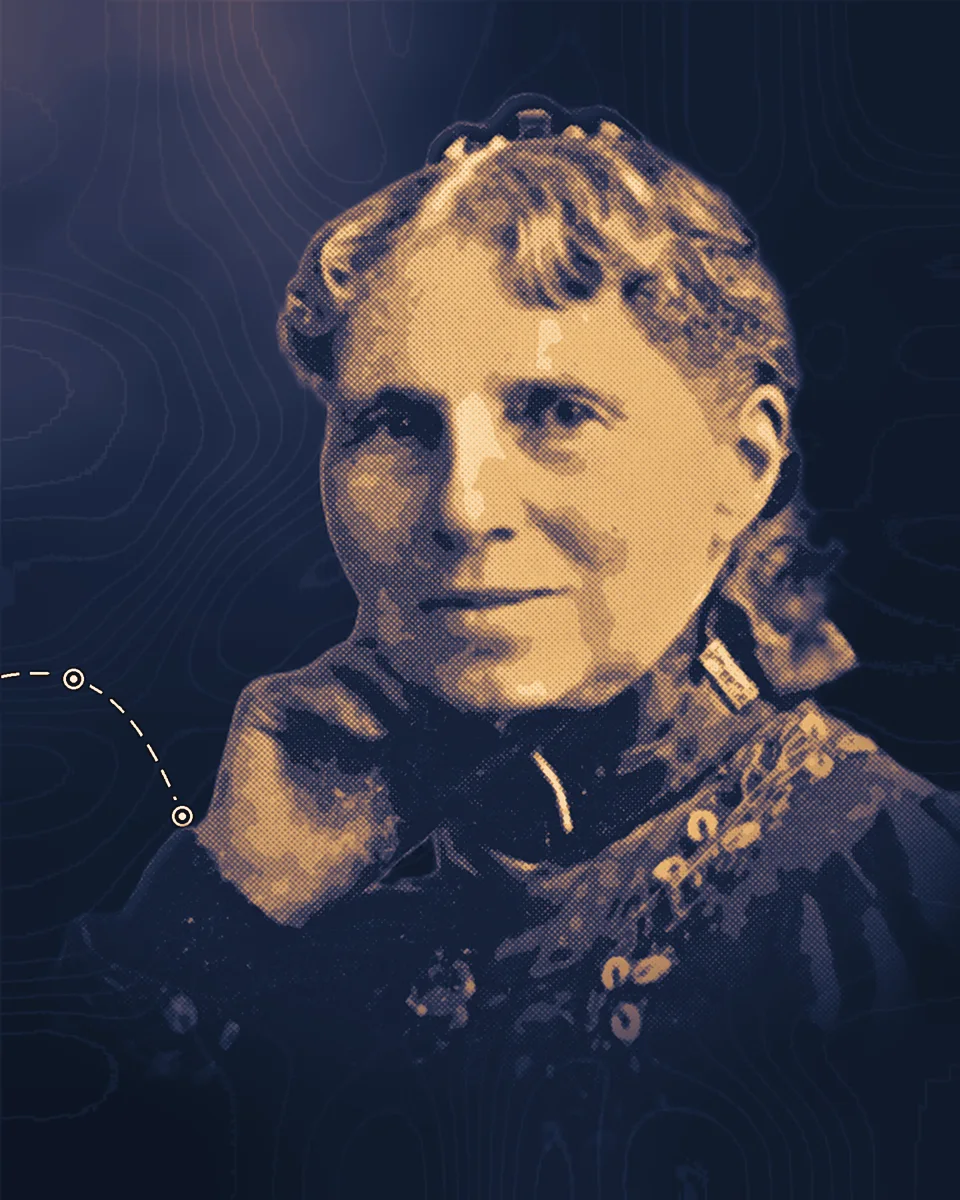
Clara Barton
She founded the American Red Cross and led it for 23 years, and turned it from war relief toward help after floods, fires and other disasters in peacetime.
1821–1912
What they changed
1865
Finding the missing
When the Civil War ended, Barton opened an office, with President Lincoln's permission, to answer families' letters about missing soldiers. The American Red Cross says it reconnected more than 20,000 soldiers with their families, and that she helped identify nearly 13,000 graves at the Andersonville prison camp. The Library of Congress notes that her fame came mainly from her postwar lectures and this search for the dead and missing.
1881
A Red Cross for America
In Switzerland in 1869 Barton learned of the Red Cross, and she worked with it in civilian relief during the Franco-Prussian War. Back home she wrote pamphlets, lectured and met President Rutherford B. Hayes to win support. The American Association of the Red Cross was formed on 21 May 1881 and elected her president in June, and in 1882 the United States joined the Geneva Convention.
1884
Relief in peacetime
The International Red Cross Conference of 1884 adopted what the American Red Cross calls the "American Amendment", which let Red Cross societies give relief after disasters in peacetime as well as in war. The American Red Cross credits Barton's work in the United States for it. The Nobel Foundation's life of Henry Dunant records that he, too, backed extending the Red Cross to natural disasters.
1889
Johnstown
After the Johnstown Flood of 1889 in Pennsylvania, Barton arrived five days later with a team of fifty doctors and nurses. She set up hospitals and built six Red Cross hotels with running water, kitchens and laundries to house and feed survivors, and stayed five months. The National Park Service says the Red Cross gave out nearly half a million dollars in supplies and money.
1904
First aid for everyone
After leaving the Red Cross, Barton founded the National First Aid Association of America, which taught emergency preparedness and made first aid kits.
Life
Clarissa Harlowe Barton was born on 25 December 1821 in Oxford, Massachusetts, the youngest of five children of a farmer, Stephen Barton, and his wife Sarah. As a girl she nursed her brother David through a long illness. She became a teacher, and in 1852 opened the first free school in Bordentown, New Jersey; she resigned when the school hired a man to run it at twice her salary. In 1854 she became a recording clerk at the US Patent Office, the first woman appointed to such a post, at the same $1,400 a year as the men. She was demoted the next year and her post was abolished in 1857.
When the Civil War began she was a forty-year-old clerk in Washington. Impatient with official delays, she gathered supplies for the Union army and took them to the battlefields herself, nursing the wounded, which earned her the name "Angel of the Battlefield". In 1864 she was made head nurse for one of General Benjamin Butler's units, without formal medical training, and she worked with Frances Gage to help formerly enslaved people.
As president of the Red Cross she led relief at disasters across the country, and in 1896 she directed relief for victims of unrest in Turkey and Armenia, allowed, under close government scrutiny, to give aid only as an individual. During the Spanish–American War of 1898 the Surgeon General, George M. Sternberg, who held that women nurses did not belong on the battlefield, rebuked the Red Cross, and the Library of Congress records that in her last years it was criticized for inefficiency. A power struggle with Mabel Thorp Boardman, a new member of its executive committee, ended with Barton's departure in 1904 and Boardman's leadership.
She was a supporter of women's suffrage. She died at her home in Glen Echo, Maryland, on 12 April 1912. The house became the Clara Barton National Historic Site in 1974, the first national historic site given to the achievements of a woman.
Read more
5 accounts
The Red Cross: A History of This Remarkable International Movement in the Interest of Humanity, Clara Barton, American National Red Cross, 1898.
Her own history of the movement and of the American society's relief work.
archive.org
The Life of Clara Barton, Percy H. Epler, Macmillan, 1915.
A full biography published three years after her death.
archive.org
Clara Barton: Professional Angel, Elizabeth Brown Pryor, University of Pennsylvania Press, 1987.
A modern scholarly biography.
archive.org
Clara Barton, Debra Michals, National Women's History Museum, 2015.
A short life with dates from her teaching years to her death.
womenshistory.org
Clara Barton, Johnstown Flood National Memorial, National Park Service, undated. An account of her five months in Johnstown in 1889.
nps.gov