Industries / Figureheads
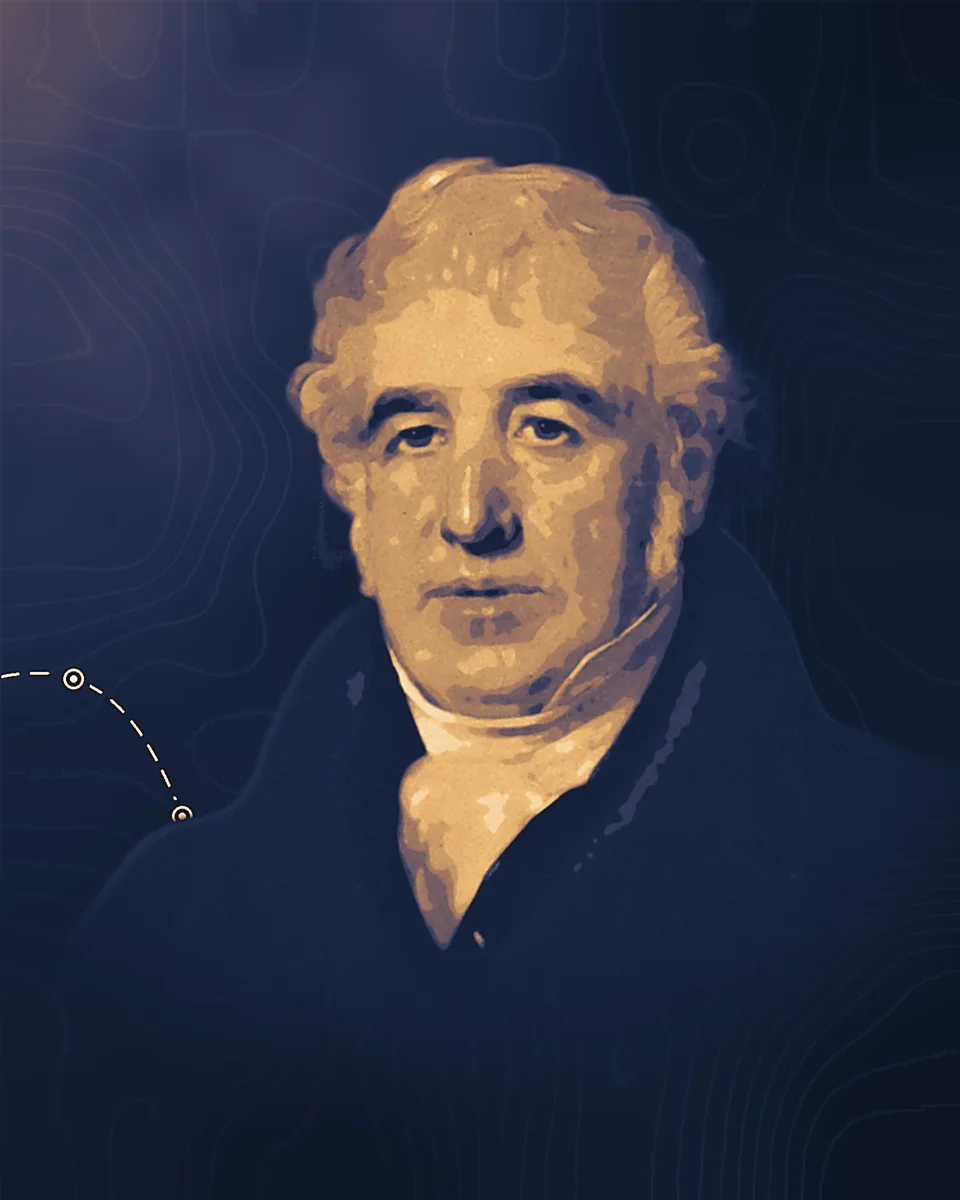
Charles Macintosh
He dissolved rubber in coal-tar naphtha and used it to stick two cloths together, the waterproof fabric that gave the rubber trade its first large product.
1766–1843
What they changed
1823
Waterproof double cloth
Macintosh's patent of 1823, number 4804, was for cementing two fabrics together with india-rubber dissolved in naphtha, a thin oil distilled from coal tar. The rubber sat between the two cloths.
1824
A rubber factory in Manchester
A works was set up in Manchester, with part of the money put up by the Birley family of cotton spinners. A description of the process was in print by July 1824. The raincoat made from the cloth took his name, with a k added.
1825
Hancock joins
Thomas Hancock, who had learned to work raw rubber by machine, took a licence under the patent in 1825 and became a partner in Charles Macintosh and Company in 1831. The firm then held the leading British patents in rubber, including Hancock's vulcanization patent of 1843.
1836
The patent upheld
He won an action for infringement in 1836 against Everington and Son, silk merchants in London.
Life
Charles Macintosh was born in Glasgow on 29 December 1766, the son of a merchant. He went to the grammar school in Glasgow and to a school in Yorkshire, and heard the chemistry lectures of William Irvine in Glasgow and Joseph Black in Edinburgh. He was placed as a clerk and gave it up before he was twenty to make chemicals.
Rubber was a small part of a long career in industrial chemistry. He made sal ammoniac, brought the making of sugar of lead from Holland in 1786, and in 1797 started the first alum works in Scotland, at Hurlet near Paisley. The Dictionary of National Biography says he was the actual inventor of the bleaching powder patented in Charles Tennant's name in 1799. He left that business in 1814.
The waterproof cloth came out of waste. Gas for lighting was made from coal, and the gasworks were left with tar. Macintosh was looking for uses for it when he found that naphtha from the tar dissolved rubber. The early cloth had faults. Grace's Guide records that it let water in where it was stitched, went stiff in cold weather and sticky in hot. Vulcanization cured the last two after 1843.
He was elected a fellow of the Royal Society in 1823. In 1825 he patented a way to turn iron into steel with gases, which did not pay, and from 1828 he helped James Beaumont Neilson bring in the hot blast for iron furnaces and shared that patent. The lawsuits over the hot blast ended in May 1843. He died at Dunchattan, near Glasgow, on 25 July 1843. Hancock, on his way to see him, heard at Lancaster that he was too late.
Read more
4 accounts
Biographical Memoir of the Late Charles Macintosh, George Macintosh, 1847.
His son's account of his life and inventions, printed for private circulation in Glasgow.
archive.org
Macintosh, Charles (1766–1843), R.
B. Prosser, Dictionary of National Biography, volume 35, 1893. The national biography's entry, by a historian of patents.
en.wikisource.org
Charles Macintosh, William B. Ashworth Jr., Linda Hall Library, 2023.
A short illustrated life by a historian of science.
lindahall.org
Personal Narrative of the Origin and Progress of the Caoutchouc or India-Rubber Manufacture in England, Thomas Hancock, 1857.
His partner's account of the firm they built.
archive.org