Industries / Figureheads
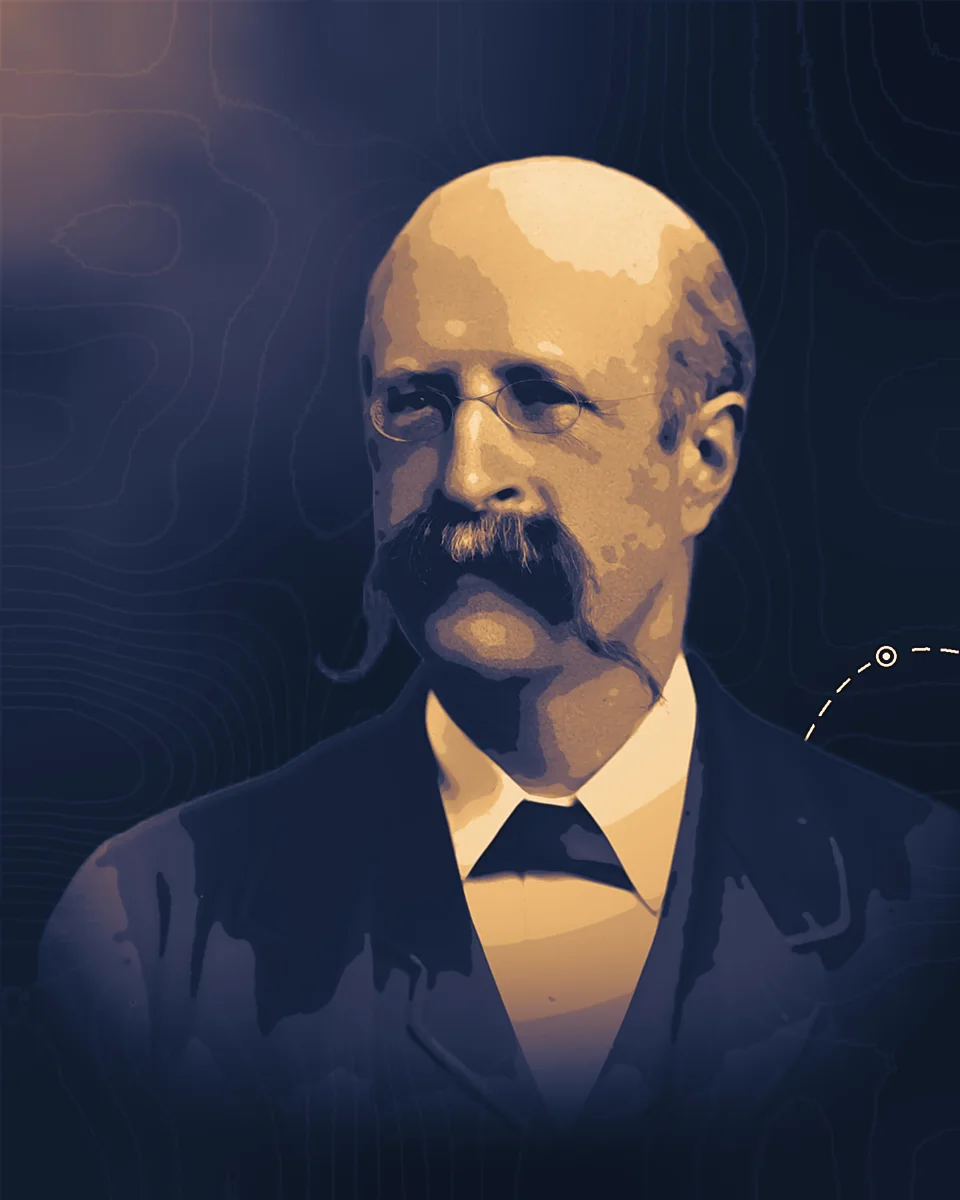
Carl Daniel Ekman
A Swedish chemist who made sulfite cooking of wood work on a mill scale at Bergvik in 1874 and took the process to England.
1845–1904
What they changed
1872
A sulfite method at Bergvik
Ekman was the chemist at the Bergvik wood pulp works in Sweden from 1871. In 1872 he worked out a way to free the fibres of spruce by cooking the wood under pressure in a solution of magnesium bisulfite, a salt of sulfurous acid.
1874
Sulfite pulp at mill scale
Bergvik used the method from 1874. Sweden's official handbook of 1914 says sulfite cooking, first proposed by the American Tilghman, "did not become of any practical importance until 1874", when Ekman produced a satisfactory pulp on a large scale. By 1914 Sweden had about 65 sulfite mills.
1880s
The process goes to England
Ekman moved to England in 1879. The Ekman Pulp and Paper Company was registered in London on 15 June 1883 and built works at Northfleet in Kent about 1884, where he and George Fry ran the process commercially. He also advised a number of other sulfite mills as a consulting engineer.
gracesguide.co.ukdiscovergravesham.co.uksverigesingenjorer.se
Life
Carl Daniel Ekman was born at Kalmar in Sweden on 17 March 1845, the son of a provincial doctor. He went to school in Kalmar, worked as a pharmacy apprentice in Stockholm, and studied at the Technological Institute there, now the Royal Institute of Technology, from 1865 to 1868. He then worked at the Liljeholmen wine factory until 1871 and patented two paraffin cooking stoves on the side.
He was chemist at Bergvik from 1871 to 1879. The idea of cooking wood in sulfurous acid was not his: Benjamin Chew Tilghman had patented it in the United States in 1867 and given it up when the acid destroyed his equipment. Ekman's contribution was a process that ran. The 1914 handbook says he "kept his invention a secret", and that the German chemist Alexander Mitscherlich, working independently, got good results "some time afterwards" with calcium bisulfite, which became the usual cooking chemical. The German national biography calls Mitscherlich the founder of the sulfite pulp industry.
From 1879 until his death he was chemist to the Ekman Pulp and Paper Company at Northfleet, near Gravesend. He married Rosina Nobel in 1888, and they had three sons. The company changed its name to Northfleet Paper Mills on 1 March 1904. Ekman died at Northfleet on 3 November 1904.
In 1927 the Swedish association of pulp and paper engineers founded the Ekman fund to support research in the field, and it awards a gold medal in his name. Tekniska museet in Stockholm holds his experimental digester, made from a length of flanged pipe, with other equipment of his.
capybera-pepper-njwx.squarespace.comsverigesingenjorer.sedigitaltmuseum.se
Read more
4 accounts
Ekman, Carl Daniel, Svenska Teknologföreningen, 1937.
The entry in the Swedish technologists' register of members, with his schooling, posts and family. In Swedish.
sverigesingenjorer.se
Sweden: historical and statistical handbook, second part, edited by J. Guinchard, 1914.
The official handbook's chapter on wood pulp, which sets Ekman beside Tilghman and Mitscherlich.
runeberg.org
Porträtt av C.D. Ekman, Tekniska museet, photographed 1897.
The museum's record of the portrait, with links to his digester and laboratory equipment in its collection. In Swedish.
digitaltmuseum.se
Pulping, Carl Houtman, US Forest Products Laboratory, 2018.
A review chapter on the chemical pulping processes and why sulfite gave way to kraft.
research.fs.usda.gov