Industries / Figureheads
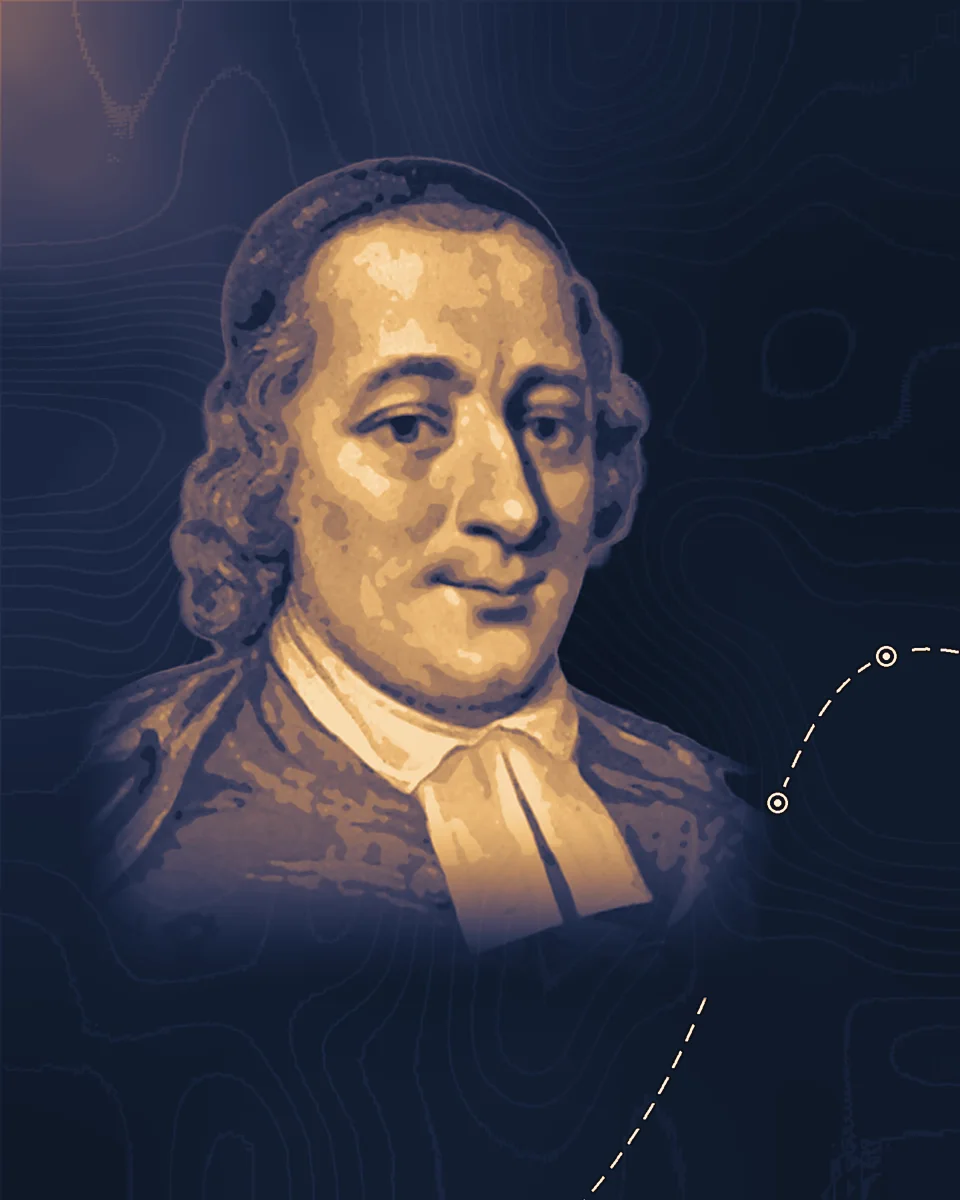
Anders Chydenius
A country parson in Finland, then part of Sweden, he led the parliamentary committee that wrote the 1766 law giving citizens the right to read and copy government records.
1729–1803
What they changed
1765
A memorial against censorship
At the Diet of 1765–66, Sweden's parliament of four estates, Chydenius wrote a memorial, a written proposal, on the freedom of the press. It was presented in the name of another member, Anders Kraftman of Porvoo. Of three memorials on the subject that spring, the historian Juha Manninen finds that his was the only one to ask for political censorship to be abolished altogether.
1765
A committee for open records
On 26 August 1765 the Diet's Great Committee set up a committee on the freedom of the press and made Chydenius a member. On 9 December 1765 it declared that decisions of committees and courts could be printed freely and that citizens should have access to archives and be able to copy them. Chydenius acted as its secretary at its December meetings and drew up its report of 21 March 1766.
1766
Archives open by law
The ordinance on the freedom of writing and of the press, issued on 2 December 1766, abolished censorship of political writing and said, in its Article 10, that "free access should be allowed to all archives", to copy documents or take certified copies. The Library of Congress calls it the first act to establish access to public documents for a country's citizens.
1766
Officials' votes made public
Article 7 of the same ordinance ended secret voting records in courts and public bodies: once a decision was made, anyone could have the votes printed with each member's full name, and an official who refused or obstructed it would lose office. Article 11 opened the minutes and votes of the estates to print.
Life
Anders Chydenius was born on 26 February 1729 in Sotkamo, in the north of Finland, where his father Jacob was a chaplain. He studied at the Academy of Turku from 1745 and at Uppsala University, reading mathematics, natural sciences, Latin and philosophy. In 1753 he became preacher at the chapel of Alaveteli (Nedervetil in Swedish), a dependent parish in Ostrobothnia. There he cleared marshes, tried new crops and breeds, and inoculated country people against smallpox.
He went to the Diet in Stockholm in 1765 sent to win free trading rights for the towns of Ostrobothnia, and Kokkola, Vaasa, Pori and Oulu won rights of navigation. In July 1765 he published The National Gain, which rejected the mercantilist view of his time that economic life should be planned and directed from above. For it he is often compared with Adam Smith.
The 1766 law was not his alone. Manninen traces the right of access to an earlier memorial by Anders Schönberg at the Diet of 1760–62, and to Chydenius's talks with the historian Johan Arckenholtz and Bishop Jacob Serenius, who cut parts of his draft. Manninen concludes that "no single ingredient of the Act was especially invented by Chydenius", but that the way he combined them "produced something unprecedented". The Library of Congress says the act "has been described as having been written by" him.
The law kept limits. It forbade writing against the Lutheran faith, the king and the estates, and the Council of the Realm banned overly free writing about government as early as March 1767. Before the act took effect Chydenius was expelled from the Diet, officially for an article that criticised the estates' monetary policy; Manninen thinks the press law, which the leaders of his own party had not wanted, was the probable real reason. King Gustav III ended the law's constitutional standing after taking power in 1772, and it returned in the constitution of 1809.
In 1770 he became rector of Kokkola (Gamlakarleby). At the Diet of 1778–79 he argued for the rights of servants and for an open labour market, and, at the king's suggestion, brought a bill giving foreigners limited freedom of worship, which led to the Toleration Edict of 1781. He sat in the Diet again in 1792 and died in Kokkola on 1 February 1803.
Read more
4 accounts
The World's First Freedom of Information Act: Anders Chydenius' Legacy Today, edited by Juha Mustonen, Anders Chydenius Foundation, 2006.
Peter Hogg's English translation of the 1766 ordinance, with Juha Manninen's history of how it was made.
chydenius.net
Anticipating The Wealth of Nations: The Selected Works of Anders Chydenius, 1729–1803, edited by Maren Jonasson and Pertti Hyttinen, Routledge, 2011.
Eleven of his writings in English, on trade, money, the press, servants' rights and religious freedom, with a biography.
routledge.com
Anders Chydenius Selected Works, Chydenius Institute, undated. The online edition of his main works in Swedish, Finnish and English, translated by Peter C. Hogg, with a biography and notes by Lars Magnusson.
kootutteokset.chydenius.fi
250 Years of Press Freedom in Sweden, Elin Hofverberg, Library of Congress, 2016.
A law librarian's account of the 1766 act, its articles and its later constitutional history.
blogs.loc.gov