Industries / Figureheads
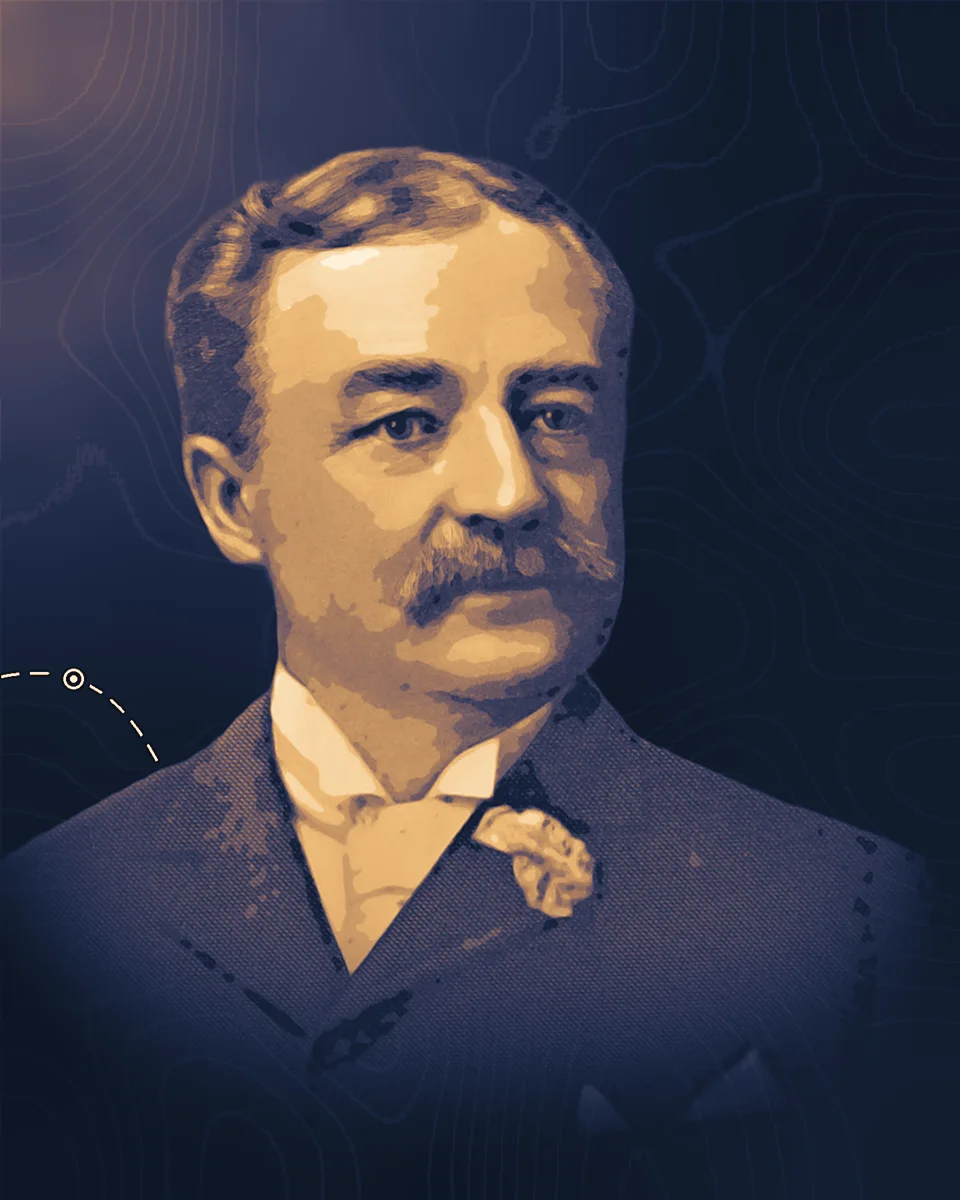
Aaron Montgomery Ward
A Chicago dry-goods salesman who in 1872 began selling general goods to farm families by mail from a printed catalog, with the promise to take back anything that did not satisfy.
1843–1913
What they changed
1872
A catalog for farm families
On 18 August 1872 Ward issued his first catalog in Chicago, a single sheet listing 163 items, by the Chicago History Museum's count. The US Postal Service calls Montgomery Ward "the first mail-order company." The idea, as a 1925 Illinois biography puts it, was to sell goods of nearly every sort direct to the consumer, "eliminating the middleman".
1875
Goods guaranteed or refunded
The firm's catalog for spring and summer 1875 reads: "We Guarantee All of Our Goods. If any of them are not satisfactory after due inspection we will take them back, pay all expenses, and refund the money paid for them." Goods went by express cash on delivery, to be paid for only after the buyer had examined them. The Chicago History Museum gives the later slogan, "satisfaction guaranteed or your money back," and calls it "an industry first."
1875
Selling through the Grange
The 1875 catalog calls the firm "The Original Grange Supply House" and says the business began with "the growing combination of farmers to deal directly with a house near the base of supplies". The Grange, the Patrons of Husbandry, was a farmers' association; a Grange secretary could order catalogs for all its members, and orders under the Grange seal could travel by cheaper freight.
1876
A catalog of 3,000 items
The catalog grew to 32 pages by 1874 and to 152 pages with 3,000 items by 1876, and by the early 1900s more than 3 million people were on the mailing list, by the Chicago History Museum's figures. When Parcel Post began in 1913, the Postal Service says, it "spurred the growth of the great mail-order houses."
Life
Aaron Montgomery Ward was born at Chatham, New Jersey, on 17 February 1843, by the Historical Encyclopedia of Illinois. When he was eight the family moved to Niles, Michigan. He left school at fourteen to help support it, worked in a barrel-stave factory for 25 cents a day and then in a general store at St. Joseph, Michigan, where within two years he was in charge at $100 a month and board.
He moved to Chicago in 1865 and worked two years for Field, Palmer and Leiter, the dry-goods house that became Marshall Field and Company, and then for wholesale firms, some of the time travelling to country stores. In 1872 he married Elizabeth J. Cobb, and the same year, by the encyclopedia's account, he and his brother-in-law George R. Thorne founded the business. The Chicago History Museum says he founded it to make goods easier to get for rural and farming customers.
Ward had rivals and a predecessor's claim to answer. Sears, Roebuck and Company followed him into general mail order in 1893, by the Postal Service's account. In Britain, the Welsh draper Pryce Pryce-Jones was selling flannel by post from Newtown from the 1860s, and the "first mail-order business" is claimed for both. The curator of the Newtown Textile Museum calls the question of who founded mail order "debatable".
about.usps.comarchive.orgbiography.walesnewtowntextilemuseum.co.uk
From 1890 Ward fought a twenty-year legal battle to keep buildings off Chicago's lakefront park, now Grant Park, and took it four times to the Illinois Supreme Court. The Chicago Park District says he won the fourth suit in 1910, and that he said in 1909 he doubted he would have begun had he known how long it would take to "preserve a park for the people against their will." The Encyclopedia of Chicago records that only the Art Institute's building went up there in 1893.
Ward was president of the company from 1872 until his death, though he gave up active management in 1901. He died on 7 December 1913. The firm went on to open stores: by the early 1930s it ran more than 500 and was the country's largest retailer, by the Chicago History Museum's account. It issued its last catalog in 1985 and filed for bankruptcy in 1997.
Read more
4 accounts
Catalogue no. 13, spring and summer, 1875, Montgomery Ward and Co., 1875.
One of the firm's early catalogs, with its rules of trade, its guarantee and its dealings with the Grange, from the Winterthur Museum Library.
archive.org
Montgomery Ward's First Catalog, Jojo Galvan, Chicago History Museum, 2022.
A short history of the first catalog and the firm's growth, from the museum that holds its records.
chicagohistory.org
Historical Encyclopedia of Illinois, with Commemorative Biographies, volume 2, Munsell Publishing Company, 1925.
Holds the biography of Ward used here, with his portrait.
archive.org
Aaron Montgomery Ward bust, Chicago Park District. The park district's account of his lakefront lawsuits.
chicagoparkdistrict.com