Industries / Figureheads
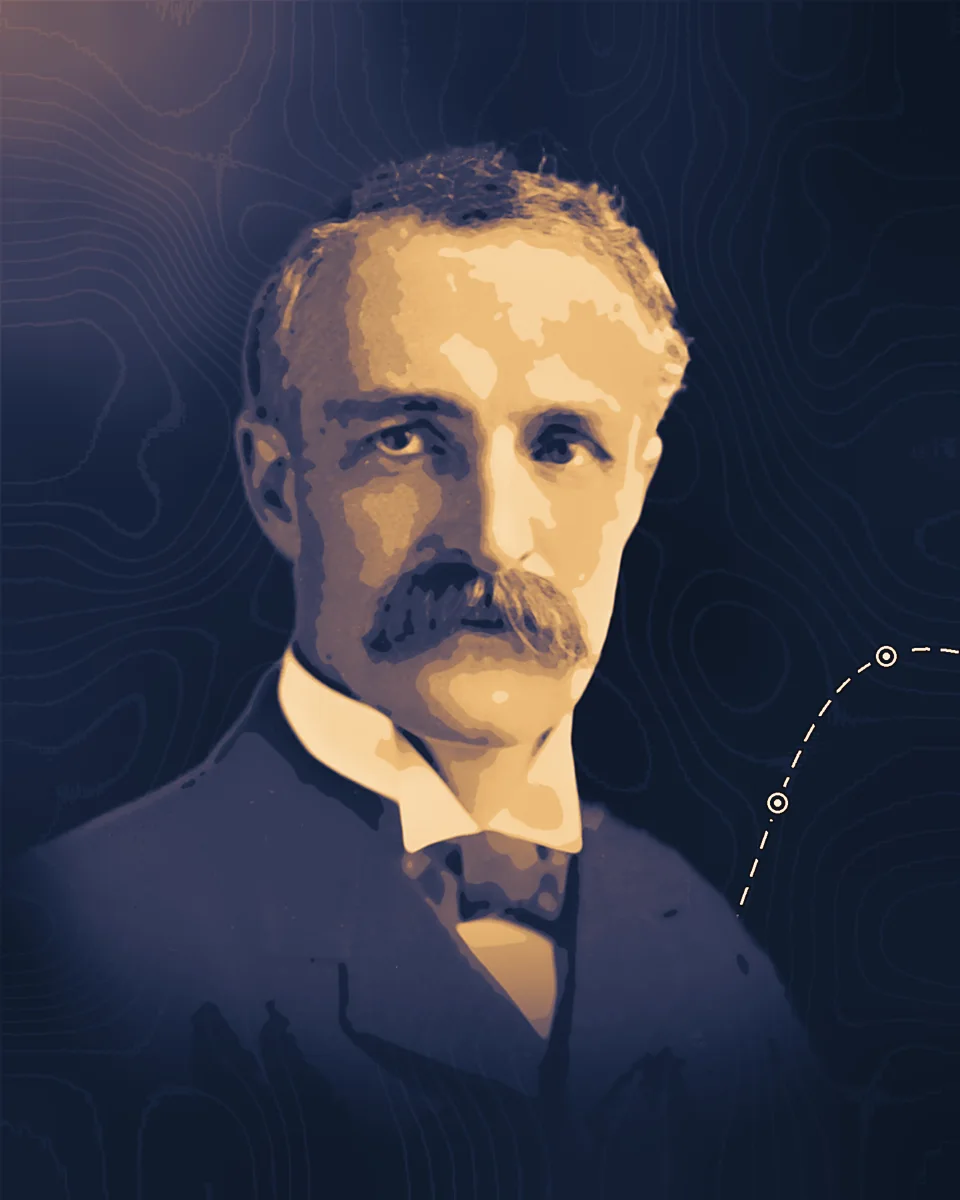
Gifford Pinchot
He built the US Forest Service and set the rule that public forests are to be used, and managed so the use can last.
1865–1946
What they changed
1892
Forestry at Biltmore
There was no American forester by profession when Pinchot trained in France. Back home he worked three years as forester on George Vanderbilt's Biltmore Estate in North Carolina. The Forest History Society credits him there with the first large-scale forest management plan in the United States.
1900
A profession and a school
In November 1900 Pinchot founded the Society of American Foresters. The same year he and his family founded the Yale Forest School, which trained three later chiefs of the Forest Service.
1905
Forests under foresters
On 1 February 1905 the federal forest reserves moved from the Interior Department to Agriculture, and the Forest Service was set up with Pinchot as chief. A letter of that date, signed by the Secretary of Agriculture and generally assumed to be Pinchot's own, told him to settle conflicts "from the standpoint of the greatest good of the greatest number in the long run".
1905
Rules for use
The service's manual, The Use Book, told its officers and the public how the forests could be used. Pinchot said of people who disliked seeing trees cut that "you cannot practice forestry without it".
1910
145 million acres
In 1905 there were 60 forest reserves covering 56 million acres. When Pinchot left in 1910 there were 150 national forests covering 145 million acres, by the Forest History Society's count.
Life
Gifford Pinchot was born on 11 August 1865 in Simsbury, Connecticut. The family fortune came in part from selling forest products, and it was his father who asked him, "How would you like to be a forester?" He graduated from Yale in 1889. No American university taught forestry, so on the advice of Dietrich Brandis, who had built the forest service of British India, he spent a year at the French national forestry school at Nancy and toured forests in Germany and Switzerland.
He did not copy what he saw. In Europe a state forest administration decided and citizens had little say. Pinchot held that in the United States forestry needed the consent of the public and of private owners, and that owners would plant trees only if it paid. In 1896 he was the only forester on the National Forest Commission. In 1898 he followed the German-trained Bernhard Fernow as chief of the federal Division of Forestry, which had foresters and no forests: the reserves belonged to another department. He spent seven years building support in Congress to move them.
He worked closely with President Theodore Roosevelt, and made "conservation", meaning the wise use of natural resources, a public word. President William Howard Taft removed him in 1910 after Pinchot clashed with the Interior Secretary, Richard Ballinger, in a controversy over coal claims in Alaska.
His rule of use had opponents then and has them now. He told Congress that a dam and reservoir in the Hetch Hetchy Valley, inside Yosemite National Park, was "the greatest good for the greatest number". John Muir led the fight against the dam, and the act that allowed it became law on 19 December 1913. The Forest Service's own centennial material calls the question of who decides the greatest good the "core dilemma (some might say fatal flaw)" of his philosophy.
He also lent his name to the eugenics movement, which sought to control who had children. A compiled list of American Eugenics Society members records him on the general committee of the Second International Congress of Eugenics in New York in 1921 and on the society's advisory council from 1927 to 1935.
Pinchot was Pennsylvania's commissioner of forestry from 1920 to 1922 and its governor from 1923 to 1927 and from 1931 to 1935. He married Cornelia Bryce in 1914. He died in New York City on 4 October 1946. His account of his forestry years, Breaking New Ground, came out in 1947.
Read more
5 accounts
Gifford Pinchot (1865–1946), Forest History Society, undated.
The society's life of the first chief, with links to The Use Book, his Primer of Forestry and his biographical file.
foresthistory.org
The Use of the National Forest Reserves, US Department of Agriculture, Forest Service, 1905.
The first Use Book, the rules Pinchot and a committee issued in his first year as chief, scanned by the Forest History Society from its own rare copy.
foresthistory.org
Gifford Pinchot and the greatest good, USDA Forest Service, 2005.
The centennial film's fact sheet, with the 1905 letter and the later criticism of it.
fs.usda.gov
Governor Gifford Pinchot, Pennsylvania Historical and Museum Commission, undated. The state's record of his two terms and his life outside forestry.
phmc.state.pa.us
Remember Hetch Hetchy: the Raker Act and the evolution of the national park idea, National Park Service, 2013.
The dam fight, told by the park that lost the valley.
nps.gov