Industries / Figureheads
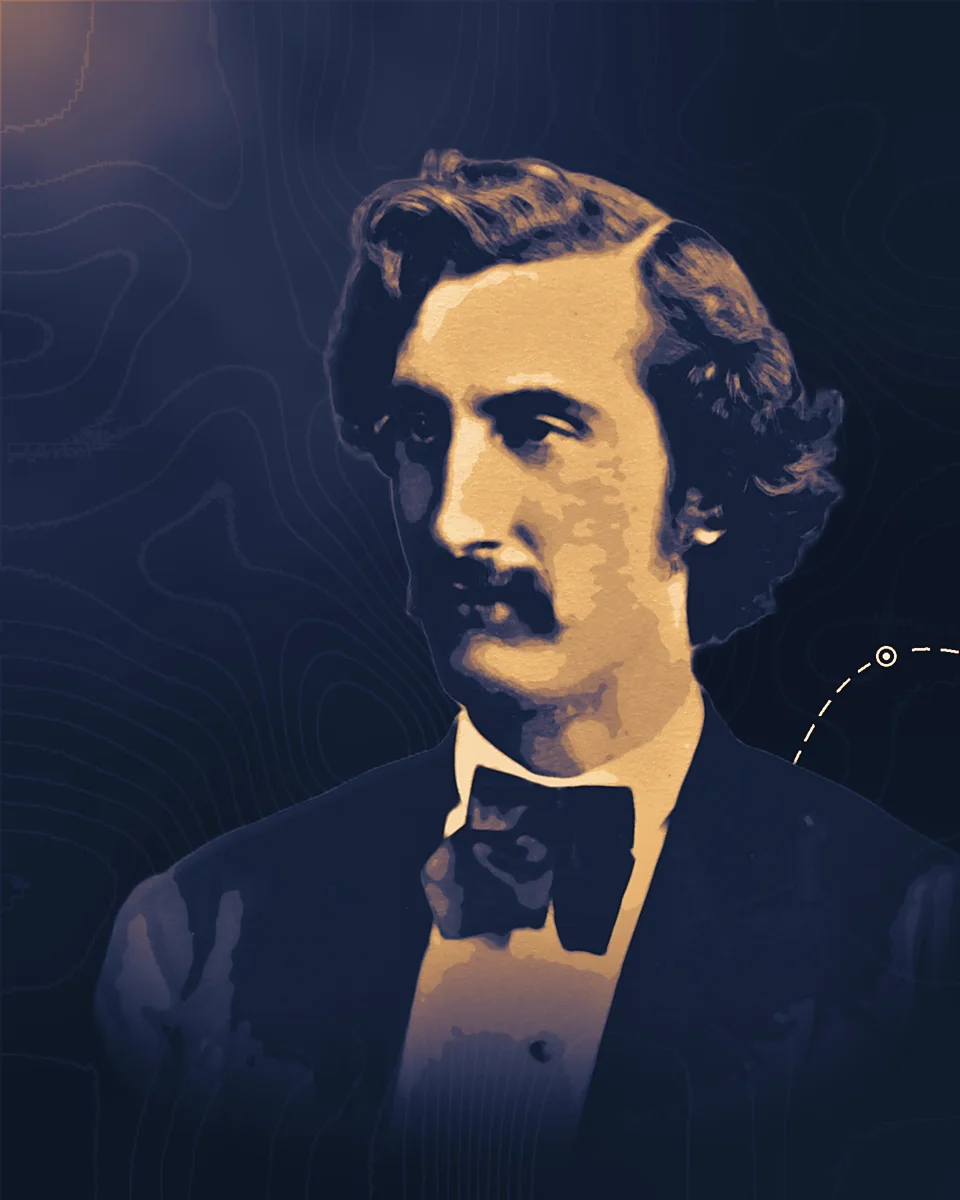
Charles Valentine Riley
He showed that the insect killing France's vines was a native American pest and urged grafting European vines onto the roots of American vines that resist it.
1843–1895
What they changed
1870
One insect, two continents
French writers suspected that the root louse killing their vines was the leaf-gall louse of American vines. Riley sent American specimens to Victor Signoret in Paris, who judged them the same species, and found that the American insect also fed on the roots of American vines. In his Third Missouri Report (1871) he wrote that this left "no doubt in my mind that the insects of the two continents are really identical."
1871
Checked in France
Riley travelled to Europe in 1871 to study the insect there. Planchon later wrote that he and Jules Lichtenstein had suspected the identity, and that it was confirmed when Riley came to Europe for that purpose and assured them the insects of the two countries were the same.
1872
Graft onto resistant roots
In his Fourth Missouri Report Riley described a Missouri grower, N. DeWyl of Jefferson City, grafting tender varieties onto the roots of Taylor and Concord vines, and wrote that the benefits of grafting susceptible varieties onto roots "which best resist the Phylloxera, must be patent to all." In 1874 he predicted that using a resistant stock would become as much a custom among grape growers as quince stock was among pear growers.
1873
Guide to the French mission
When the French government sent Planchon to study American vines, Riley met him in New York on 30 August 1873, the day after he landed, and travelled with him. Planchon wrote that Riley alone had made it possible to settle the main questions in so short a time, and dedicated his 1875 report to him.
Life
Charles Valentine Riley was born in Chelsea, London, on 19 September 1843. He went to boarding schools in Dieppe, in France, and Bonn, in Germany, where he won prizes for drawing. At 17 he emigrated to the United States and worked on a farm in Illinois, about 50 miles (80 km) from Chicago. At 21 he moved to Chicago to work for the Prairie Farmer as reporter, artist and editor of its insect pages, and he served for some months as a private in the 134th Illinois Volunteers in the Civil War.
In 1868, with the backing of the Illinois state entomologist Benjamin Walsh, whom he called his master, he became the first state entomologist of Missouri. His nine annual reports, from 1868 to 1877, made his name. He moved to the US Department of Agriculture in 1878, resigned after a year over a quarrel with the commissioner, and came back in 1881 as chief of its entomology service, a post he held until 1894. He gave his insect collection of about 115,000 mounted specimens to the US National Museum.
The vine work was a small part of what he did, but it was what France honoured. By his colleague George Brown Goode's account, the vine growers of France gave him a gold medal in 1873 for his work on phylloxera, and later a bronze statue, and the French government made him a knight of the Legion of Honour. He was not alone in the work. His 1871 account starts from the earlier American descriptions by Asa Fitch of New York, by a Dr. Shimer and by Walsh, and leans on Signoret's judgement and Lichtenstein's view that the French insect came from America. Planchon credited the Bordeaux grower Léo Laliman with first noticing that some American vines resisted it.
His best-known success outside the vineyard was in California's citrus groves. In 1888 he sent Albert Koebele to Australia to find natural enemies of the cottony cushion scale, and the vedalia beetle Koebele brought back brought the pest under control. Goode wrote in 1896 that the credit for some of Riley's achievements "has been claimed by others", among them people Riley employed to carry out his ideas, and that some of them were perhaps owed more credit than the official reports gave them.
On 14 September 1895 his bicycle struck a paving block on a hill in Washington and threw him to the road. He fractured his skull and died at home the same day, aged 51, leaving his wife and six children. Goode counted more than 1,600 published papers in 1896; the National Agricultural Library's register counts more than 2,400 publications.
Read more
5 accounts
A Memorial Appreciation of Charles Valentine Riley, G. Brown Goode, Science, 1896.
A colleague's address to Washington's scientific societies, with the French honours and the disputes over credit.
archive.org
The Papers of Charles Valentine Riley: A Register of His Papers in the National Agricultural Library, Judith Ho and Willie Yuille, 1990.
A biographical sketch and a folder-by-folder list of his papers, including his phylloxera notes.
archive.org
Third Annual Report on the Noxious, Beneficial and Other Insects of the State of Missouri, C. V. Riley, 1871.
Bound with the first two reports; holds his account of the grape phylloxera and the identity of the American and French insects.
archive.org
Fourth to Sixth Annual Reports on the Insects of the State of Missouri, C. V. Riley, 1872 to 1874.
His fuller studies of the grape phylloxera and his case for grafting onto resistant roots.
archive.org
The Botanist and the Vintner: How Wine Was Saved for the World, Christy Campbell, 2005.
A history of the phylloxera crisis built around Planchon and Riley.
archive.org